



Perpetual Protocol is a pioneer among perpetual decentralized exchanges (Perp DEXs), designed to bring the efficiency of centralized exchanges to the transparency of the Ethereum ecosystem. Launched in 2019, the protocol has evolved from a virtual Automated Market Maker (vAMM) pioneer to a highly efficient concentrated liquidity model on the Optimism Layer 2. By removing the need for traditional order books or centralized clearinghouses, Perpetual Protocol provides a permissionless environment for 24/7 leveraged trading.
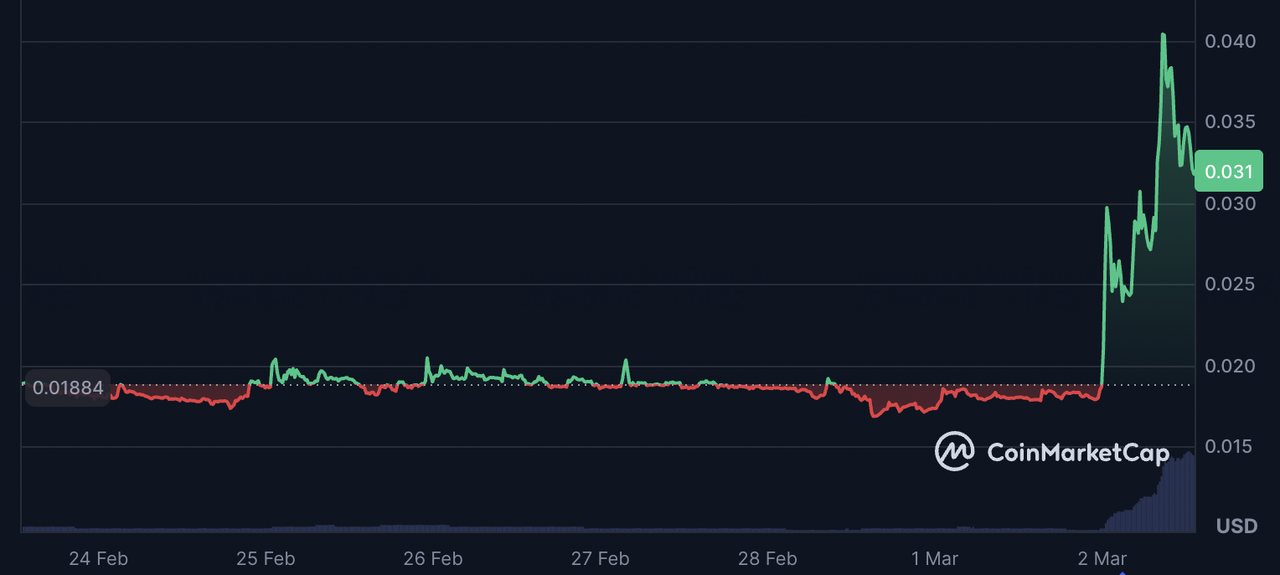
PERP price surges over 75% in early March 2026 | Source: Coinmarketcap
$PERP is currently experiencing a massive resurgence in the DeFi and Layer 2 narratives. In early March 2026, the token witnessed a 24-hour surge of over 94%, significantly decoupling from a flat broader market. While Bitcoin and the total crypto market cap showed slight negative bias, PERP triggered a high-volume technical breakout, reclaiming its 7-day and 30-day SMAs. This alpha-driven move highlights the token’s role as a high-beta play within the decentralized perpetuals (Perp DEX) sector, which has seen trillions in notional volume growth throughout 2025.
This article breaks down the mechanics of Perpetual Protocol's Smart Liquidity Framework, the utility of the $PERP token, and a guide on how to trade top Perp DEX tokens on BingX spot and futures markets.
What Is Perpetual Protocol (PERP) Perp DEX and How Does It Work?
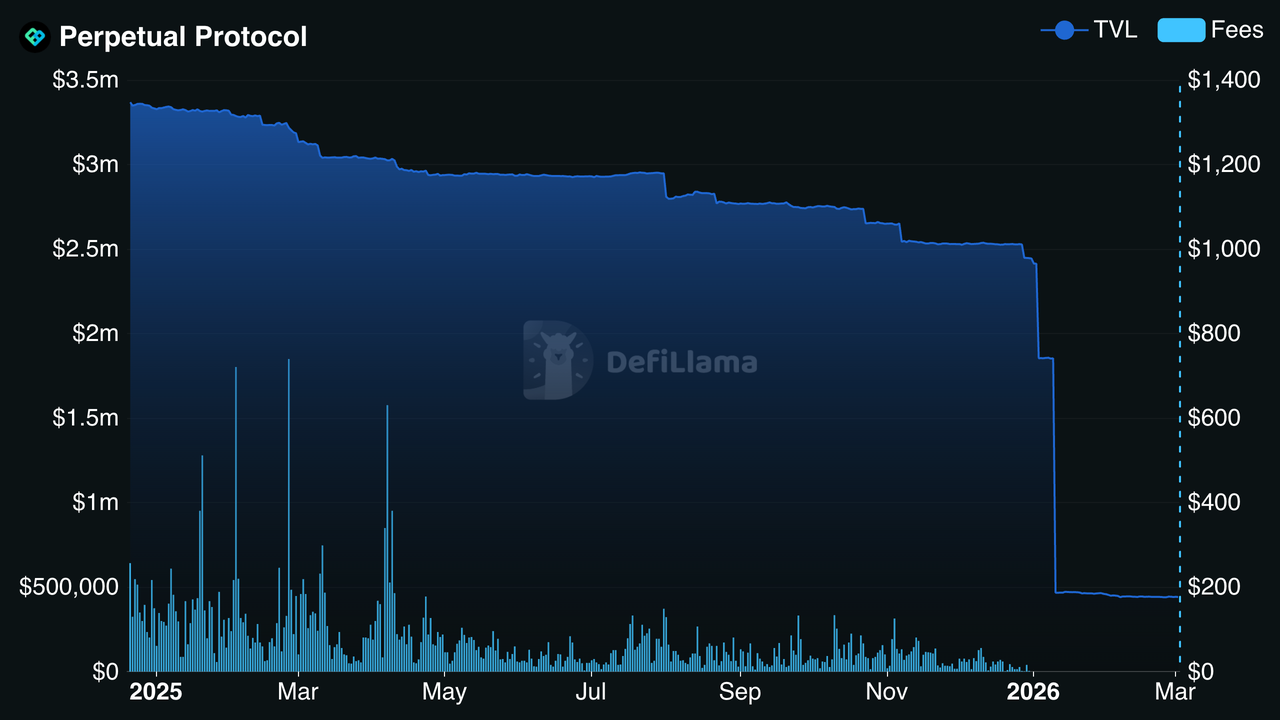
Perpetual Protocol TVL and fees | Source: DefiLlama
Perpetual Protocol functions as a non-custodial clearinghouse for synthetic assets. Unlike spot DEXs where you swap actual tokens, Perpetual Protocol allows you to trade the price action of assets using USDC as collateral. It operates through three core pillars:
• vAMM and Concentrated Liquidity: Originally famous for the vAMM (virtual AMM) in v1, the protocol now utilizes a Uniswap v3-based model in v2 (Curie). This allows Liquidity Providers (LPs) to provide concentrated liquidity at specific price ranges, drastically increasing capital efficiency and reducing slippage for traders.
• Smart Liquidity Framework (v3): The latest evolution of the protocol, focusing on a reimagined future under Perp Labs. It introduces a modular architecture that separates the execution layer from the liquidity layer, allowing for faster integration of new assets and yield strategies.
• Optimism Foundation: By building on Optimism Ethereum L2, the protocol achieves near-instant transaction finality and gas fees that are up to 100x cheaper than Ethereum Mainnet, making high-frequency leveraged trading viable on-chain.
By utilizing a Market Neutral design, the protocol ensures that for every long position, there is a corresponding short or a liquidity provider taking the other side, balanced by a Funding Rate mechanism that keeps the perp price tethered to the index spot price.
What Is the PERP Token?
The PERP token is the native utility and governance asset that fuels the ecosystem. It is designed to align the interests of traders, stakers, and developers:
• Governance: Token holders can vote on protocol parameters, such as new market listings, fee structures, and treasury allocations through the Perpetual Protocol DAO.
• Staking & Lazy River 2.0: Users can lock their PERP to receive vePERP or vote-escrowed PERP. This allows them to earn a share of the protocol’s trading fee revenue, paid out weekly in USDC, a concept known in DeFi as Real Yield.
• Incentives (Pool Party): PERP is used to bootstrap liquidity. LPs who provide concentrated liquidity in high-volume pairs earn PERP rewards on top of their trading fees.
• Collateral Backstop: In extreme black swan events where the insurance fund is depleted, the protocol can mint and sell PERP to recapitalize the system, ensuring the protocol remains solvent.
Perpetual Protocol vs. Centralized Exchanges (CEXs): Key Differences
| Feature | Centralized Exchanges (CEX) | Perpetual Protocol (PERP) |
| Control of Funds | Custodial (Exchange holds keys) | Non-Custodial (User holds keys) |
| Execution | Central Limit Order Book (CLOB) | vAMM / Concentrated Liquidity |
| Transparency | Black Box | Fully On-Chain & Auditable |
| KYC Requirements | Mandatory | None (Permissionless) |
| Fees | Variable (often includes hidden spread) | Transparent (Gas + Protocol Fee) |
| Settlement | Internal Database | On-Chain (Optimism L2) |
Centralized Exchanges (CEXs) operate as custodial black boxes where users surrender private keys to a central entity, relying on internal databases and limit order books for execution. In contrast, Perpetual Protocol (PERP) is a non-custodial, on-chain clearinghouse where traders maintain 100% control of their assets via an Ethereum-compatible wallet. It replaces traditional market makers with a Smart Liquidity Framework on the Optimism Layer 2, utilizing concentrated liquidity pools to enable up to 10x leverage. This infrastructure ensures that all liquidations, funding rates, and trades are transparently verifiable on a public ledger, eliminating the risk of exchange-side price manipulation often suspected in centralized environments.
The economic efficiency of PERP is driven by Lazy River 2.0, a Real Yield model that differs fundamentally from CEX profit structures. While CEXs retain the majority of trading fees for corporate revenue, Perpetual Protocol distributes a portion of protocol fees directly to vePERP stakers in USDC, creating a mathematical link between platform volume and token holder rewards. Data-wise, the protocol eliminates the spread common in CEXs by using a vAMM-based pricing curve, though traders must account for Layer 2 gas fees around typically <$0.10 and protocol fees, which are often more competitive than the taker fees on major centralized platforms for high-volume derivatives.
How Does Perpetual Protocol Differ From Other Perp DEXs?
While legacy leaders like dYdX and newer titans like Hyperliquid have pivoted toward sovereign, high-performance app-chains like Cosmos and custom L1s respectively to replicate centralized order books, Perpetual Protocol differentiates itself through its Smart Liquidity Framework built on the Optimism Layer 2. Unlike dYdX’s off-chain matching or Hyperliquid’s sub-second HyperBFT consensus, Perpetual Protocol focuses on a hybrid vAMM (virtual Automated Market Maker) and concentrated liquidity model.
This design allows it to prioritize deep, on-chain composability with the broader Ethereum DeFi ecosystem, meaning it can easily integrate with yield vaults and rewards cards like its upcoming Wilde engine, whereas competitors like Aster focus on extreme retail features like 1001x leverage and 24/7 stock perpetuals primarily on the BNB Chain. Practically, while Hyperliquid and dYdX aim for maximum execution speed, Perpetual Protocol targets capital efficiency and Real Yield, distributing protocol revenue in USDC to vePERP stakers to ensure sustainable long-term value.
How to Trade Leading Perp DEX Tokens on BingX
As Perpetual Protocol (PERP) is currently not listed for trading on BingX, investors can capitalize on the booming decentralized derivatives sector by trading alternative industry leaders. Tokens like Hyperliquid (HYPE), Aster (ASTER), and dYdX (DYDX) offer high-beta exposure to the same Real Yield and on-chain trading narratives.
Leverage BingX’s advanced trading suite, including BingX AI-powered price analysis and automated grid bots, to navigate this high-volatility sector. By integrating real-time market sentiment and machine-learning signals, BingX AI helps traders identify optimal entry points for $HYPE or $DYDX during technical breakouts while managing risk through intelligent stop-loss suggestions.
Buy or Sell Perp DEX Tokens on the Spot Market
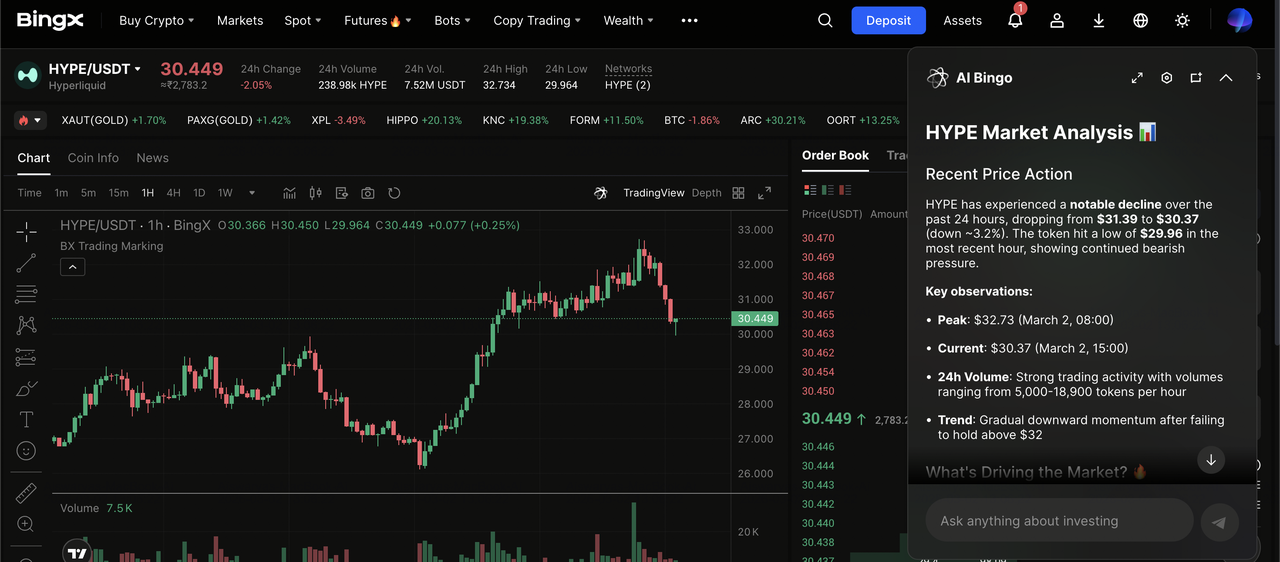
HYPE/USDT trading pair on the spot market featuring BingX AI analysis
For investors looking to back the infrastructure of decentralized futures, such as Hyperliquid's high-performance L1 or dYdX's transition to a sovereign chain, the BingX Spot market provides the most direct entry.
1. Fund Your Account: Ensure your Spot Account is funded with USDT.
3. Execute: Use a Limit Order to accumulate near key historical support levels or a Market Order to capture immediate momentum during sector-wide rallies.
Trade Perp DEX Futures for Narrative Volatility
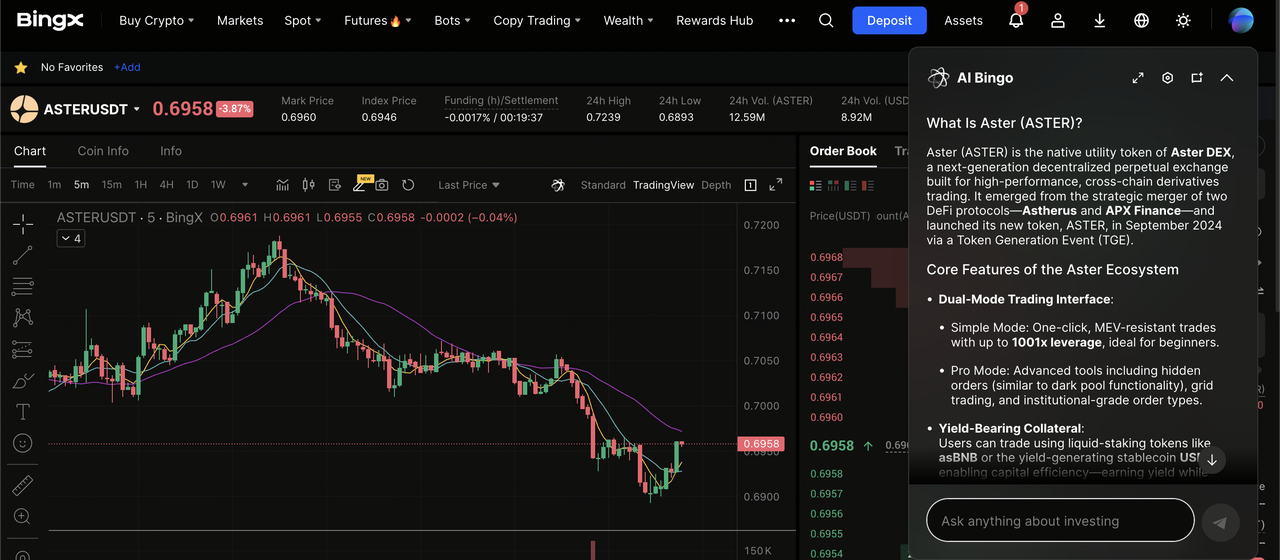
ASTER/USDT perpetual contract on the futures market featuring BingX AI insights
Traders looking to capitalize on the rapid price swings of tokens like HYPE or ASTER, which often see double-digit daily moves, can utilize BingX’s high-liquidity perpetual contracts.
1. Log in and Open Futures: Sign in to BingX and navigate to the Futures tab from the top menu.
2. Search for the Contract: In the search bar, type your preferred ticker, and select the USDT-M Perpetual contract, such as HYPE/USDT perpetuals or ASTER/USDT perps.
3. Transfer Margin: Move USDT from your Spot wallet to your Futures wallet to provide collateral for your positions.
4. Choose Margin Mode & Leverage:
- Isolated Margin: Limits risk to a specific trade.
- Cross Margin: Shares collateral across all open positions.
Note: Set leverage cautiously; while Perp DEX tokens offer high returns, 10x+ leverage significantly increases liquidation risk.
5. Select Order Type:
- Limit: Set a specific entry price to optimize your cost basis.
- Market: Enter the trade instantly at current prices.
- Trigger Orders: Use these to automate entries during a breakout above key resistance.
6. Set Risk Controls: Enter your position size and immediately set Take Profit (TP) and Stop Loss (SL) levels. BingX AI can suggest these levels based on recent Average True Range (ATR) data.
7. Open Long or Short:
- Long: If you expect the Perp DEX sector to outperform.
- Short: If you are hedging against a broader DeFi market pullback.
8. Monitor & Close: Track your Margin Ratio and PNL in real-time. Use the Close All feature for instant exits during high-volatility events, or use Limit exits to scale out of profitable trades.
Trade Perp DEX Futures for Narrative Volatility
Pro Tip: These tokens often react sharply to DeFi + perp DEX narratives, so use tight risk controls, avoid over-leverage, and plan entries around liquidity and key levels.
3 Key Considerations Before Trading PERP
Success in trading $PERP requires a strategic approach that balances its explosive technical momentum with the project’s fundamental structural transitions.
1. Technical Breakout vs. Fundamentals: The current rally is primarily technical. While Perp Labs is building Wilde and Nekodex, no major news dropped today. This move is a liquidity squeeze, meaning it can be as volatile on the way down as it was on the way up.
2. Structural Pivot & Liquidity Migration: As of March 2026, Perp Labs is currently sunsetting Perp v2 (Curie) and Hot Tub to focus on the v3 Smart Liquidity Framework. While this streamlines the roadmap, it creates a migration gap where Total Value Locked (TVL) may temporarily dip as liquidity moves between versions. Monitor the protocol’s USDC Insurance Fund and active TVL on Optimism; a significant drop during this pivot could increase slippage for large orders, making the token more sensitive to whale movements.
3. Competitive Real Yield & Ecosystem Moat: PERP’s long-term floor price is mathematically tied to the adoption of Nekodex and the Wilde rewards card. Unlike competitors like Hyperliquid (which use app-chains), PERP relies on the Optimism L2 ecosystem. Traders should evaluate the vePERP staking yield via Lazy River 2.0 relative to competitors; if the USDC rewards-to-staking ratio drops below market averages for Perp DEXs, the token may face selling pressure regardless of technical breakouts.
Conclusion: Is Perpetual Protocol the Future of On-Chain Trading?
Perpetual Protocol (PERP) remains a foundational player in the decentralized derivatives landscape, characterized by its long-standing security record and its shift toward a Smart Liquidity architecture. By consolidating its ecosystem into the Perp Labs framework and introducing consumer-facing products like the Wilde rewards engine and Nekodex mobile interface, the project is moving beyond pure-play trading to capture broader DeFi utility. Its success in the 2026 cycle depends on whether these new integrations can drive consistent trading volume to sustain the vePERP Real Yield model amidst fierce competition from app-chain-based competitors.
While the recent technical breakout demonstrates significant market interest and high-beta volatility, the absence of a fundamental news catalyst suggests the move is driven primarily by speculative momentum and liquidity conditions. Traders should monitor whether the protocol can maintain its support levels on the Optimism network as it completes its transition to v3. As with all high-leverage DeFi assets, PERP is subject to extreme price fluctuations and protocol-specific risks.
Risk Reminder: Trading decentralized perpetuals involves high market risk and the potential for total loss of collateral. The $PERP token's recent volatility highlights the risk of liquidity squeezes and sharp reversals. Always perform independent research and utilize BingX AI risk management tools, such as automated stop-losses, to protect your capital.