Indiferent dacă faci plăți transfrontaliere, explorezi DeFi, sau doar vrei un euro digital în care să ai încredere, stablecoin-urile ancorate la euro devin instrumente esențiale în portofelul tău cripto.
În acest ghid, vei învăța ce sunt stablecoin-urile garantate cu Euro, de ce sunt importante sub MiCA și principalele stablecoin-uri Euro care merită urmărite în acest an.
Ce sunt stablecoin-urile ancorate la Euro?
Stablecoin-urile ancorate la euro sunt active digitale care urmăresc valoarea euro-ului (EUR). Fiecare token este conceput să rămână cât mai aproape posibil de €1, oferindu-ți un activ stabil și de încredere pentru utilizarea pe blockchain.
Ele funcționează la fel ca stablecoin-urile ancorate la dolar (precum USDT sau USDC), dar în loc să urmeze dolarul american, sunt legate de euro. Acest lucru le face deosebit de utile pentru utilizatorii și afacerile din Europa care preferă să opereze în moneda lor locală.
Majoritatea stablecoin-urilor în euro sunt garantate 1:1 de euro deținut în conturi bancare reglementate. Unele folosesc alte metode, precum obligațiunile tokenizate sau coșurile de rezerve, pentru a-și menține ancora. Scopul este întotdeauna același: să mențină prețul stabil, permițându-ți să muți, să deții sau să tranzacționezi euro pe blockchain.
Cu MiCA (Markets in Crypto-Assets) acum în vigoare în întreaga UE, nu toate stablecoin-urile sunt create egale. Stablecoin-urile conforme cu MiCA trebuie să respecte reguli stricte privind susținerea rezervelor, transparența și auditarea. Acest lucru îți oferă mai multă încredere când alegi ce stablecoin în euro să folosești și ajută schimburile și portofelele să știe care sunt sigure de susținut.
Pe scurt, stablecoin-urile ancorate la euro sunt podul tău între euro-ul tradițional și instrumentele moderne cripto. Și în 2025, ele sunt în sfârșit gata pentru lumina reflectoarelor.
Ce este reglementarea MiCA, standardul UE pentru încredere și siguranță?
MiCA (Markets in Crypto-Assets) a stabilit reguli noi în întreaga UE. A devenit complet aplicabilă pe 30 decembrie 2024. Această reglementare își propune să te protejeze. De asemenea, aduce claritate și încredere pe piața cripto.
Pentru a fi conforme, stablecoin-urile trebuie să respecte aceste reguli cheie:
• Rezerve complete: Fiecare euro-coin trebuie să fie susținut 1:1 de euro deținut în conturi bancare reglementate.
• Autorizare: Emitentii trebuie să fie licențiați ca instituții de credit sau de monedă electronică. Trebuie să publice white paper-uri, reguli de guvernanță și planuri de rezervă.
• Transparență: Emitentii trebuie să publice audituri regulate, să arate dovada rezervelor și să raporteze orice probleme. Meriți informații clare și oneste.
Pe măsură ce MiCA a intrat în vigoare, multe platforme au început să elimine monedele neconforme. Unele schimburi cripto au început să elimine din listă USDT și alte tokenuri la începutul anului 2025. Această schimbare face ca stablecoin-urile conforme cu MiCA precum EURC, EURR și EURQ să fie mai accesibile pe platformele europene.
Utilizarea stablecoin-urilor în euro conforme cu MiCA îți oferă un acces mai bun la portofelele și schimburile europene, împreună cu o încredere mai mare în modul în care sunt gestionate rezervele. De asemenea, reduce riscul de eliminări din listă sau perturbări reglementare. Dacă locuiești în UE sau folosești servicii cripto bazate pe euro, alegerea unui stablecoin conform este acum un pas inteligent și necesar.
Top 7 stablecoin-uri Euro de urmărit în 2025
Cauți să folosești stablecoin-uri în euro în loc de dolari? Aceste șapte stablecoin-uri euro conforme cu MiCA sau pregătite pentru reglementare conduc în 2025. Fiecare oferă puncte forte diferite în funcție de nevoile tale, fie că este vorba de trading, economisire sau accesarea DeFi în UE.
1. Euro Coin (EURC)
EURC (Euro Coin de la Circle) este unul dintre cele mai de încredere și utilizate pe scară largă stablecoin-uri garantate cu euro în 2025. Emis de Circle, aceeași companie din spatele USDC, EURC este complet susținut 1:1 de euro deținut în instituții financiare europene reglementate. Este conform cu MiCA și operează sub un model de rezerve complete cu atestări lunare divulgate public. EURC este disponibil pe mai multe blockchain-uri, inclusiv Ethereum, Solana, Avalanche, Base și Stellar, făcându-l foarte accesibil pentru utilizatori și dezvoltatori. Poți cumpăra, stoca și tranzacționa EURC pe platforme majore precum BingX și Uniswap, sau să îl folosești pentru tranzacții FX, împrumuturi și credite DeFi și plăți transfrontaliere.
Ceea ce diferențiază EURC este poziția sa puternică de conformitate, disponibilitatea pe mai multe blockchain-uri și raportarea transparentă a rezervelor de către Circle. Este construit pentru viteză și încredere, cu caracteristici de răscumpărare instantanee și API-uri care susțin schimburile blockchain fără probleme. Afacerile pot integra EURC în operațiunile lor de plăți sau trezorerie prin Circle Mint, în timp ce indivizii îl pot folosi pentru a deține valoare în euro sau pentru a face transferuri eficiente pe blockchain. Deși adoptarea EURC încă rămâne în urma USDC și perechile de tranzacționare pot fi limitate pe platforme mai mici, rămâne stablecoin-ul euro lider pentru piețele de capital cripto și o alegere inteligentă pentru cei care caută stabilitatea euro-ului în spațiul Web3.

Citește mai mult: Circle IPO (2025) Tot ce trebuie să știi despre CRCL, evaluarea și ce înseamnă pentru piața cripto
2. STASIS Euro (EURS)
Stasis Euro (EURS) este unul dintre cele mai vechi și transparente stablecoin-uri ancorate la euro de pe piață. Emis de STASIS, o companie europeană fintech, EURS este un token susținut de fiat conceput atât pentru utilizare instituțională, cât și pentru retail. Operează sub jurisdicția UE și este pregătit pentru MiCA, cu un accent puternic pe conformitatea legală și transparența. EURS rulează pe mai multe blockchain-uri, inclusiv Ethereum, Polygon, Algorand, XRP Ledger, Arbitrum și Gnosis, și este disponibil pe platforme populare precum aplicația Stasis, Uniswap și Curve. Token-ul este susținut 1:1 de euro deținut în instrumente financiare lichide, cu verificări zilnice și audituri trimestriale efectuate de BDO Malta.
Ceea ce diferențiază EURS este istoria sa operațională lungă și poziția reglementară puternică. Oferă suport complet pentru plățile SEPA și SWIFT, făcându-l util pentru decontările transfrontaliere și aplicațiile DeFi. STASIS pune accent pe transparență cu patru niveluri de verificare și expunere zero la riscurile bancare bazate pe USD. EURS este utilizat pe scară largă în peste 175 de țări și integrat cu peste 30 de platforme DeFi și CeFi. Cu toate acestea, are un volum de tranzacționare ușor mai mic decât EURC, iar unele caracteristici sunt limitate la ecosistemul STASIS. Totuși, rămâne o alegere de top pentru utilizatorii care caută un stablecoin euro pur cu susținere legală și financiară solidă.
3. StablR Euro (EURR)
StablR Euro (EURR) este un stablecoin euro susținut de fiat emis de StablR, conceput de la zero pentru a îndeplini standardele de conformitate MiCA. Construit pe Ethereum folosind un smart contract ERC-20, EURR combină viteza blockchain-ului cu garanții de nivel instituțional. Stablecoin-ul este complet susținut de rezerve euro deținute în instituții financiare UE reglementate, oferind utilizatorilor o alternativă transparentă și sigură pe blockchain la euro-ul tradițional. Este deja listat pe platforme precum BingX și este integrat în mai multe aplicații DeFi, cu suport multichain mai larg pe foaia de parcurs.
Ceea ce diferențiază EURR este accentul său puternic pe alinierea reglementară și utilitatea în lumea reală. StablR vizează atât utilizatorii retail, cât și afacerile, oferind plăți transfrontaliere rapide, taxe mici și disponibilitate continuă. Tranzacțiile sunt verificabile public, imuabile și înregistrate pe blockchain, crescând transparența și încrederea. Cu toate acestea, EURR este încă în faza sa timpurie de creștere. Volumul său de tranzacționare și capitalizarea de piață rămân modeste comparativ cu jucători mai mari precum EURC și EURS, iar accesul la schimburi poate varia în funcție de regiune. Dacă cauți un stablecoin conform, ancorat la euro, cu un accent puternic pe securitate și utilizabilitate, EURR merită urmărit în 2025.

4. Euro Tether (EURT)
Euro Tether (EURT) este un stablecoin centralizat ancorat la euro emis de Tether, compania din spatele USDT, unul dintre activele digitale cel mai mult tranzacționate din lume. La fel ca omologul său USD, EURT este conceput să fie susținut 1:1 de rezerve fiat și servește ca instrument pentru transferuri digitale euro fără probleme pe blockchain-uri. Este disponibil în prezent pe Ethereum și TRON, și susținut de schimburi majore precum BingX. EURT beneficiază de recunoașterea globală a mărcii Tether și de lichiditatea profundă pe multe platforme de tranzacționare, făcându-l ușor de accesat pentru utilizatori și comercianți.
Cu toate acestea, EURT vine cu avertismente. Nu este încă complet conform cu MiCA, iar circulația sa netă rămâne relativ scăzută, în jur de 6,2 milioane de dolari începând cu iunie 2025. Deși Tether pretinde susținerea completă și publică date zilnice ale rezervelor, transparența sa a fost un punct frecvent de critică. Auditurile sunt mai puțin regulate comparativ cu concurenții pregătiți pentru MiCA precum EURC sau EURS. În plus, incertitudinea reglementară se profilează: fără aprobarea formală sub MiCA, EURT se confruntă cu riscuri de eliminare din listă în întreaga UE. Dacă te bazezi pe stablecoin-uri euro pe piețele europene reglementate, ia în considerare acești factori înainte de a alege EURT.

Citește mai mult: USDC vs. USDT: Diferențele cheie și ce stablecoin să alegi în 2025?
5. Quantoz Euro (EURQ)
Quantoz Euro (EURQ) este un stablecoin susținut de euro emis de Quantoz Payments, o instituție de monedă electronică (EMI) licențiată, reglementată de banca centrală olandeză (DNB). Conceput pentru a respecta standardele MiCA, EURQ oferă o soluție sigură, transparentă și conformă pentru tranzacțiile digitale în euro. Operează pe Ethereum și alte blockchain-uri compatibile EVM, și este susținut de platforme majore precum Kraken, oferind accesibilitate globală. Susținut 1:1 de rezerve deținute în bănci europene de primul nivel și obligațiuni guvernamentale, EURQ pune accent pe siguranța financiară și fiabilitatea de nivel instituțional. Focusul său principal este pe cazuri de utilizare la nivel de întreprindere, inclusiv operațiuni de trezorerie în timp real, decontări B2B și plăți transfrontaliere programabile.
Ceea ce diferențiază EURQ este utilitatea sa în eficientizarea finanțelor globale pentru era digitală. Permite decontări instantanee 24/7, elimină întârzierile asociate cu sistemul bancar tradițional și reduce costurile pentru salarii globale, plăți în lanțul de aprovizionare și gestionarea garanțiilor. Cu transferuri programabile și integrarea în mai multe platforme financiare, EURQ ajută afacerile să deblochez lichiditatea blocată și să optimizeze fluxurile de numerar globale. Cu toate acestea, deși claritatea sa reglementară și focusul pe întreprinderi sunt puncte forte majore, vizibilitatea pentru retail în DeFi rămâne limitată comparativ cu stablecoin-uri euro mai mari precum EURC sau EURS. Totuși, pentru utilizatorii instituționali care caută un activ stabil, de încredere, denominat în euro, EURQ oferă o soluție robustă și scalabilă.

6. EUR CoinVertible de SG-Forge (EURCV)
EUR CoinVertible (EURCV) este un stablecoin ancorat la euro emis de Societe Generale-Forge (SG-Forge), o subsidiară reglementată a uneia dintre cele mai mari bănci din Europa. Conceput specific pentru aplicații financiare de nivel instituțional, EURCV oferă conformitate completă MiCA, colateralizare robustă și transparență cu divulgări zilnice ale rezervelor. Construit pe Ethereum, token-ul aduce standardele finanțelor tradiționale pe blockchain-urile publice menținând în același timp garanții legale puternice, inclusiv segregarea activelor și eligibilitatea riguroasă a garanțiilor. Cu structura sa nativă bancară, EURCV este proiectat să facă legătura între sistemul financiar moștenit și finanțele digitale reglementate.
Ceea ce face EURCV unic este combinația sa de încredere, reglementare și funcționalitate pe blockchain. Susținut 1:1 de depozite în numerar euro și actualizat zilnic, oferă valoare sigură și auditabilă pentru operațiuni financiare de mare amploare. Actualizările recente au eliminat restricțiile anterioare de transfer, îmbunătățind utilitatea sa pentru un public mai larg, deși rămâne focusat în primul rând pe cazuri de utilizare instituționale. Deși nu este încă disponibil pe scară largă pentru utilizatorii retail, platforme precum Bitstamp facilitează răscumpărarea, iar token-ul este pregătit pentru adoptarea mai largă pe măsură ce cadrul MiCA al Europei se maturizează. Pentru afacerile care caută un stablecoin euro stabil, transparent și reglementat în primul rând, EURCV este o opțiune de primul nivel.
7. Monerium EUR emoney (EURE)
Monerium EUR emoney (EURE) este un activ digital complet reglementat denominat în euro emis ca monedă electronică de Monerium, o instituție licențiată de monedă electronică (EMI) în Spațiul Economic European. Spre deosebire de stablecoin-urile tradiționale, EURE este considerată monedă electronică legală, ceea ce înseamnă că deținătorii au dreptul să răscumpere tokenurile direct în conturile lor bancare prin transferuri SEPA. Ceea ce face Monerium unic este integrarea sa fără probleme între sistemul bancar și rețelele blockchain. Utilizatorii pot trimite euro la un IBAN emis de Monerium, care tokenizează automat fondurile și le transferă la un portofel blockchain conectat, permițând operațiuni financiare în timp real, programabile.
Token-ul EURE este activ pe mai multe blockchain-uri majore, inclusiv Ethereum, Gnosis, Polygon, Arbitrum și Linea, făcându-l larg accesibil în ecosistemele Web3. Conceput cu dezvoltatorii și instituțiile în minte, Monerium oferă API-uri și medii sandbox pentru automatizarea decontărilor transfrontaliere, salariilor și altor fluxuri de bani fără a se baza pe schimburi centralizate. Cu auditare zilnică, susținere reglementară puternică și un accent pe conformitatea de nivel de întreprindere, EURE este ideal pentru cazuri de utilizare care necesită plăți euro transparente, eficiente și programabile pe blockchain. Poziția sa ca monedă electronică, nu doar stablecoin, oferă protecții legale mai puternice și o punte directă către sistemul financiar tradițional.
Cum să folosești stablecoin-urile Euro pe BingX: Un ghid pas cu pas
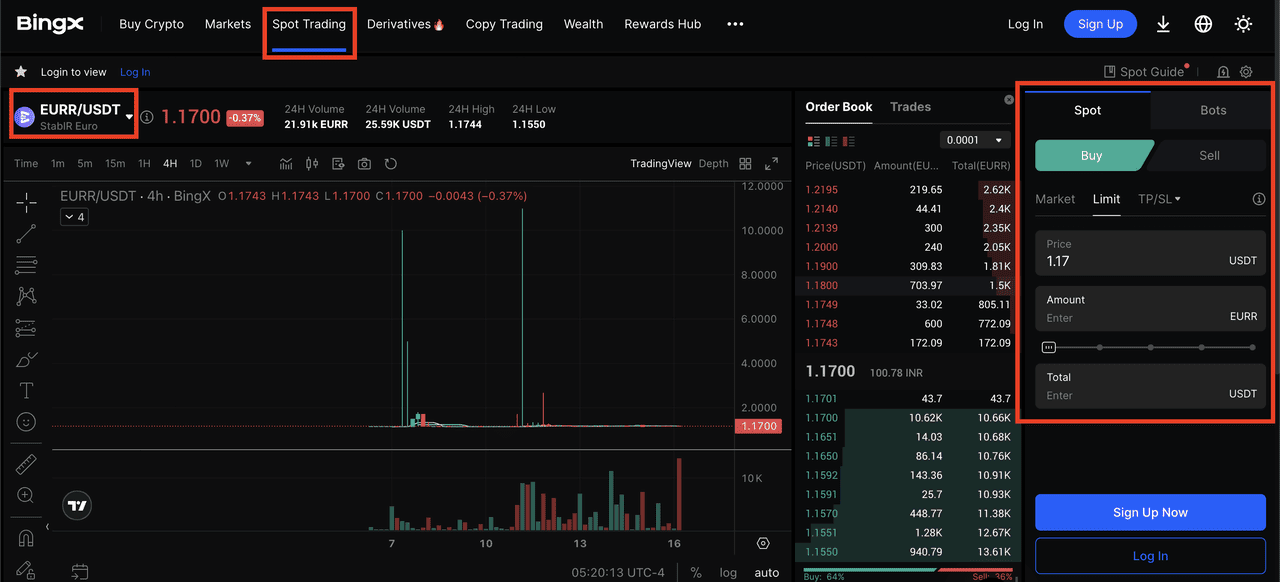
Să începi cu stablecoin-urile euro pe BingX este ușor. Urmează acești pași simpli:
1. Alege un stablecoin conform cu MiCA pe BingX
BingX listează stablecoin-uri ancorate la euro care se aliniază cu reglementările MiCA ale UE. Caută opțiuni de încredere precum EURC, EURR și EURQ, care sunt complet susținute și auditate transparent. Poți cumpăra, vinde sau deține aceste stablecoin-uri direct din contul tău BingX.
2. Cumpără și răscumpără stablecoin-uri EUR cu BingX
• Cumpără: Depune euro folosind transferuri SEPA, Visa/Mastercard sau alte metode de plată susținute pe BingX. Mergi la piața Spot și schimbă EUR pentru stablecoin-ul euro ales (de ex., EURR/USDT).
• Răscumpără: Când ești gata să converți înapoi, vinde stablecoin-ul pentru fiat sau cripto pe piața Spot. Apoi poți retrage euro direct în contul tău bancar prin partenerii de off-ramp fiat ai BingX.
3. Stochează stablecoin-ul tău EUR în siguranță și gestionează fondurile
Poți deține stablecoin-urile tale euro direct în portofelul tău BingX Spot pentru tranzacționare și transferuri rapide, sau să le retragi într-un portofel de auto-custodie precum MetaMask dacă preferi controlul complet. Doar asigură-te să verifici compatibilitatea rețelei și să îți stochezi fraza seed în siguranță. Pentru securitate pe termen lung, în special cu solduri mai mari, ia în considerare utilizarea unui portofel hardware pentru stocare offline.
BingX susține atât strategiile de tranzacționare activă, cât și cele de deținere pasivă. Alege ce se potrivește obiectivelor tale și păstrează mereu securitatea în minte.
Cum să alegi stablecoin-ul Euro potrivit pentru tine
Alegerea stablecoin-ului euro potrivit depinde de cum plănuiești să îl folosești. Dacă faci plăți sau remitențe, optează pentru monede care oferă tranzacții rapide și taxe mici, cum ar fi opțiuni precum EURC sau EURQ. Dacă vrei să câștigi venit pasiv, EURS ar putea fi o alegere mai bună cu integrările sale DeFi. Pentru utilizatorii activi DeFi, concentrează-te pe stablecoin-urile care susțin mai multe blockchain-uri și oferă acces la pool-uri de lichiditate pentru tranzacționare mai fluentă.
De asemenea, ar trebui să iei în considerare reputația emitentului și nivelul de transparență. Caută monede susținute de bănci licențiate sau firme reglementate și asigură-te că publică audituri regulate. Rezervele puternice și raportarea clară ajută la construirea încrederii. În final, verifică dacă stablecoin-ul este conform cu MiCA. Acest lucru asigură suportul legal în întreaga UE și evită problemele cu disponibilitatea schimburilor. Tokenurile neconforme se pot confrunta cu restricții sau eliminări din listă, în special pe piețele europene.
Cât de sigure sunt stablecoin-urile ancorate la Euro?
Stablecoin-urile euro oferă comoditate și stabilitate, dar nu sunt fără riscuri. O preocupare majoră este schimbarea reglementară. Cu MiCA acum în vigoare, tokenurile neconforme precum USDT sunt deja eliminate din lista principalelor schimburi europene. Chiar și stablecoin-urile conforme cu MiCA ar putea face față unor actualizări ale regulilor de licențiere sau raportare în viitor. Dacă folosești un stablecoin în UE, este important să rămâi informat și să acționezi rapid când politicile se schimbă; altfel, ai putea pierde accesul la funcțiile de tranzacționare sau retragere.
Un alt risc este legat de vulnerabilitățile smart contract-urilor și centralizare. Unele stablecoin-uri euro sunt controlate de emitenți centralizați, care gestionează rezervele și auditurile. Dacă există o breșă de securitate, insolvență sau gestionare defectuoasă, deținerile tale ar putea fi în pericol. Chiar și monedele descentralizate depind de smart contract-uri, care pot fi exploatate dacă nu sunt auditate corespunzător. De asemenea, ține minte că stablecoin-urile euro au încă lichiditate mai mică decât opțiunile populare USD precum USDC sau USDT. Aceasta înseamnă că ai putea întâlni tranzacții mai lente, spread-uri mai largi sau mai puțină flexibilitate în perioadele de volatilitate a pieței.
Perspectiva de viitor pentru stablecoin-urile alimentate de Euro
Stablecoin-urile euro câștigă un avânt serios în acest an, cu mai multe bănci tradiționale care intră în acest spațiu. În Germania, firma de investiții DWS Group (susținută de Deutsche Bank) lucrează la un stablecoin euro reglementat, destinat clienților instituționali și conform cu MiCA din prima zi. Proiecte similare sunt în desfășurare în întreaga UE, inclusiv active digitale complet licențiate susținute de instituții financiare majore.
Adoptarea crește și rapid. În 2025, plățile cu stablecoin euro au crescut cu 25% pe platformele de e-commerce și cripto. Adoptarea portofelelor a crescut cu 53% la nivel global, cu mai mulți utilizatori care aleg euro digitale stabile pentru economii, plăți și transferuri transfrontaliere.
Privind înainte, una dintre cele mai mari schimbări ar putea veni de la Banca Centrală Europeană (BCE). Un Euro Digital de Bancă Centrală (CBDC) este așteptat până în 2028. Dacă va fi lansat, ar oferi un euro digital complet susținut de stat. Dar spre deosebire de stablecoin-urile private, ar putea veni cu reguli stricte de utilizare sau programabilitate limitată. De aceea stablecoin-urile euro emise privat, conforme cu MiCA, rămân opțiunea mai flexibilă, deocamdată.
Concluzie
Stablecoin-urile ancorate la euro câștigă tracțiune pe măsură ce Europa îmbrățișează reglementări cripto mai clare. Cu MiCA complet în vigoare, schimbarea către active digitale reglementate, transparente și susținute de euro se accelerează. Dacă vrei să economisești, să trimiți sau să tranzacționezi euro pe blockchain, opțiuni precum EURC, EURS și EURQ oferă o cale conformă și accesibilă înainte. Aceste stablecoin-uri sunt concepute să se integreze fără probleme cu portofelele, schimburile și platformele DeFi, oferindu-ți mai mult control asupra activității tale cripto denominate în euro.
Acestea fiind spuse, stablecoin-urile încă poartă riscuri. Cadrele reglementare pot evolua, și chiar monedele conforme cu MiCA se pot confrunta cu restricții viitoare sau probleme tehnice. Rezervele centralizate, vulnerabilitățile smart contract-urilor sau lichiditatea limitată ar putea afecta cât de ușor accesezi sau îți muți fondurile. Folosește mereu platforme de încredere precum BingX, monitorizează actualizările și alege active bine auditate. Dacă ești în UE sau te bazezi pe servicii bazate pe euro, stablecoin-urile conforme cu MiCA oferă cea mai clară cale către utilizabilitatea pe termen lung și incertitudinea redusă.
Lecturi conexe
Întrebări frecvente despre stablecoin-urile susținute de Euro
1. Ce face un stablecoin conform cu MiCA?
Un stablecoin conform cu MiCA respectă reguli stricte stabilite de UE. Trebuie să fie complet susținut 1:1 de active lichide, de obicei fiat precum euro, și emis de o entitate financiară reglementată. Emitentul trebuie să publice rapoarte de audit, să urmeze standardele de transparență și să obțină licență de la autoritățile UE. Monede precum EURC, EURS și EURI sunt concepute să îndeplinească aceste cerințe.
2. Pot încă să folosesc Tether (USDT) în Europa?
S-ar putea, dar accesul se micșorează. Unele schimburi de criptomonede au început să elimine USDT pentru utilizatorii europeni pentru a respecta regulile MiCA. Încă poți deține sau tranzacționa USDT pe unele platforme, dar suportul poate fi limitat. Dacă vrei acces fiabil în UE, este mai sigur să treci la stablecoin-uri euro sau dolar conforme cu MiCA.
3. Sunt sigure stablecoin-urile euro?
Da, dacă alegi pe cele potrivite. Stablecoin-urile euro conforme cu MiCA sunt concepute să te protejeze. Sunt complet susținute, auditate regulat și emise de firme sau bănci de încredere. Dar fă mereu cercetarea ta. Chiar și monedele reglementate poartă riscuri precum bug-uri de smart contract sau probleme de lichiditate. Rămâi la nume de top cu istoric solid.
4. Cum diferă stablecoin-urile Euro de un CBDC precum euro-ul digital?
Stablecoin-urile euro sunt emise de companii private. Un CBDC (Central Bank Digital Currency), precum euro-ul digital viitor, ar veni direct de la Banca Centrală Europeană. Stablecoin-urile sunt mai flexibile, utilizate pe scară largă în DeFi și disponibile pe mai multe blockchain-uri. Un CBDC ar oferi stabilitate susținută de stat, dar poate limita programabilitatea sau confidențialitatea.