The crypto market welcomes everyone. With just a smartphone, an internet connection, and a small amount of capital, anyone can start trading digital assets. But while the barriers to entry are low, the learning curve is steep.
Many new crypto traders jump in without understanding how to read charts, manage risk, or stick to a trading plan. As a result, they often make costly decisions, blow up their accounts, and learn painful lessons far too late.
If you’re serious about improving your trading strategy, this guide outlines 10 common technical analysis mistakes and shows you how to avoid them. Whether you’re analysing BTC/USDT or building a long-term crypto portfolio, understanding these errors will help you trade smarter, protect your capital, and grow with confidence.
1. Rushing In Before Trying the Demo Account
New crypto traders often jump into the market with excitement. That energy is great, but acting too fast can lead to costly mistakes.
Trading cryptocurrencies requires more than just enthusiasm. Technical analysis is a skill-based process that blends mathematics, finance, and pattern recognition. It’s not something you master overnight. Many beginners enter their first trade too soon, only to watch their confidence turn into frustration or panic after early losses.
Instead of rushing in, take a step-by-step approach. Use a demo account to practice reading charts, applying indicators, and managing your trades. This helps you develop your trading strategy in a risk-free environment before you commit real capital.
2. Trading Crypto Based on Unclear Patterns or Indicators
Many new crypto traders struggle with reading charts accurately. It’s common to spot patterns or signals that aren’t actually there, especially when you lack context or experience with technical analysis.
Misinterpreting a trendline or forcing a head-and-shoulders pattern into a messy chart often leads to poor trade decisions. The crypto market is already volatile, and guesswork only adds to the risk.
Start with a simple trading system. Focus on clear, easy-to-verify concepts like support and resistance levels or widely used tools like the Exponential Moving Average (EMA). These help you stay objective and reduce emotional decisions.
Tip: Don’t act on any pattern or indicator you don’t fully understand. Learn one tool at a time and practice identifying it correctly across different market conditions using a demo account. That’s how strong technical skills are built.
3. Lack of Portfolio Rebalancing
Successful crypto traders don’t just focus on entry and exit points; they also manage their overall portfolio health. That means keeping a balanced asset allocation, even when it’s uncomfortable.
Rebalancing is the process of adjusting your cryptocurrency holdings to align with your original investment strategy. It often requires selling part of a top-performing cryptocurrency and reinvesting in underperforming ones. Many beginners avoid this step because it feels counterproductive, but it’s essential for long-term consistency.
For example, let’s say you start with a 50/50 portfolio split between Bitcoin (BTC) and Ethereum (ETH). Over a few months, Bitcoin steadily gains while Ethereum lags slightly. Your portfolio shifts to 58% BTC and 32% ETH.
To maintain your original allocation and manage risk, you rebalance by selling a portion of BTC and using those profits to buy more ETH. This helps lock in some gains from the outperforming asset (BTC) while maintaining a balanced exposure, ensuring you're not overly reliant on a single coin's performance. Rebalancing like this doesn't always mean selling at the top or buying the dip perfectly, it’s about discipline, reducing concentration risk, and sticking to a long-term strategy.
Tip: Review your crypto portfolio monthly or after significant price swings. Rebalancing helps protect your capital and keeps you aligned with your long-term goals, even when market emotions pull you in the opposite direction.
4. Not Using a Crypto Trading Journal to Monitor Your Performance
Every successful crypto trader needs more than a strategy. You need accountability. The most effective way to stay disciplined is by keeping a detailed trade journal.
A journal helps you record your setups, decisions, emotions, and results. This isn’t just about wins and losses. It’s about understanding what drives your choices so you can improve your trading performance over time.
For instance, suppose you bought BTC/USDT at $108,000 expecting a breakout. Instead, the price retraced to $104,500 and hit your stop-loss. Without notes, you might blame market volatility. But your journal reveals you ignored a clear resistance zone and entered too early. That reflection becomes your edge in the next trade.
Over time, journaling helps you identify patterns, whether it's emotional trading, poor risk sizing, or consistently mistimed entries.
Tip: After every trade, log your entry and exit, trade size, reason for entry, outcome, and how you felt before and after the trade. Review your journal weekly to strengthen your trading discipline and avoid repeating costly mistakes.
5. Risking More Than You Can Afford to Lose
The allure of quick gains often tempts traders to risk far more than they should. Some go all in, hoping a single trade will transform their finances overnight. However, crypto markets are notoriously volatile; even a strong setup can be disrupted by sudden news or price fluctuations.
That’s why many experienced traders follow a simple rule: only risk what you can comfortably afford to lose. This doesn’t just protect your capital—it protects your peace of mind.
Some also build in a “cooling-off” period before placing larger trades. For example, if you’re feeling overly confident or desperate to recover a loss, take a break, review your trading journal, reassess your risk exposure, and sleep on it. Emotion-led decisions are often the source of most losses.
A controlled approach might not be as exciting, but it keeps you in the game longer, which is what matters most.
Tip: Only risk what you’re prepared to lose. Use proper position sizing and set clear stop-loss levels. Smart trading is about protecting your capital and growing it steadily, not chasing overnight success.
6. Blindly Copying Other Traders’ Setups
Learning from others is smart, but copying setups you don’t understand is a recipe for losses. Strategies depend on personal risk tolerance, time frame, and market conditions. What works for someone else may not work for you.

On BingX, you can copy top-performing traders based on real metrics. It’s a great starting point, but remember: markets move fast, and even proven strategies can fall behind. Always do your own research and treat copy trading as a learning tool, not a guaranteed win.
Tip: Study other traders for inspiration, but test any new strategy in a demo account first. Make sure it fits your approach before risking real capital.
7. Cluttering Your Charts with Too Many Indicators
Indicators are essential tools in technical analysis, but using too many at once can do more harm than good. Some traders add new indicators after every loss, hoping for more clarity. Instead, they end up with a crowded chart and conflicting signals.
More isn't always better. A simple setup with a few well-understood tools is usually more effective.
Popular indicators many traders use include:
• Relative Strength Index (RSI) – measures momentum
• Moving Averages (MA) – smooths out price trends
• MACD – shows momentum shifts and crossovers
• Bollinger Bands – track volatility and overbought/oversold zones
• Stochastic Oscillator – helps spot trend reversals
Stick to 2–3 indicators that match your strategy, and learn how each one works before adding more. Clarity comes from focus, not clutter.
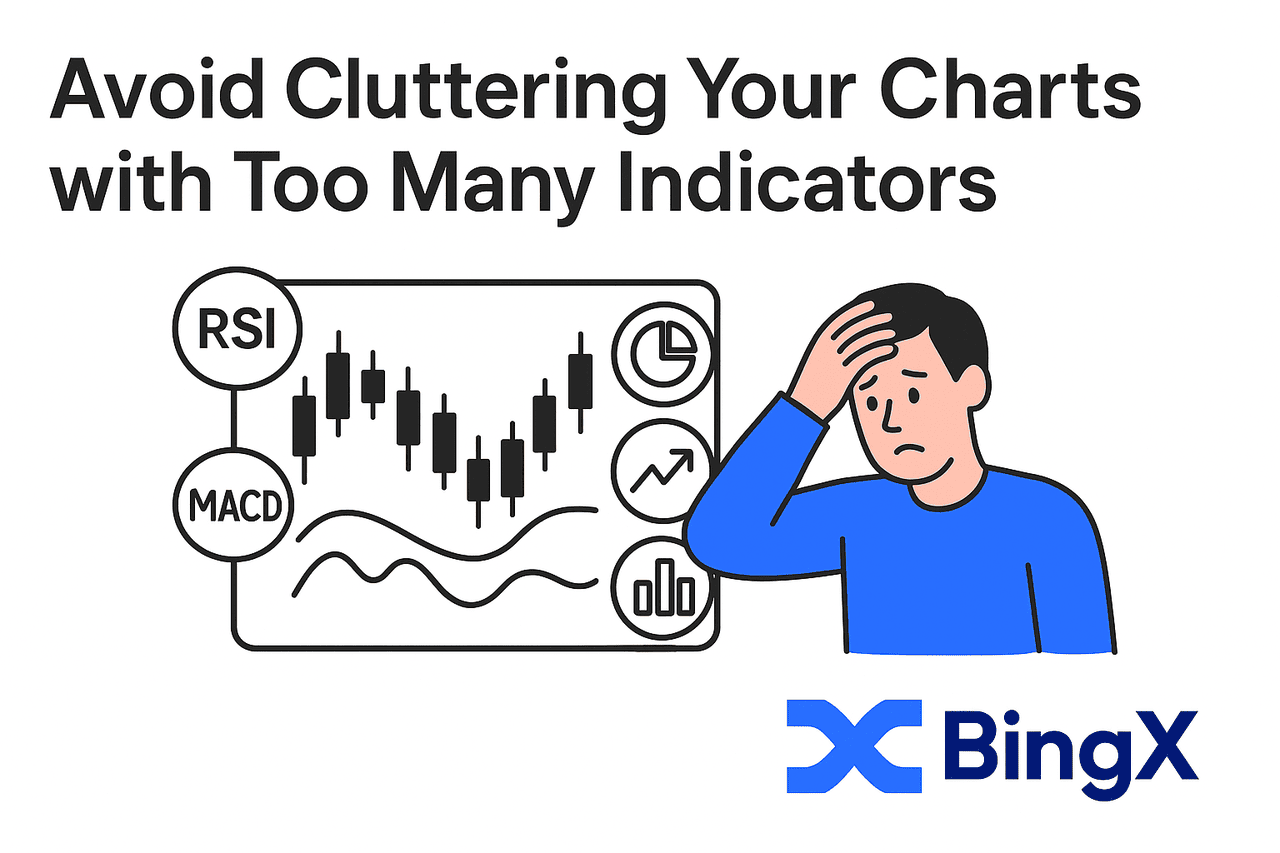
More indicators don't guarantee better decisions. They often create confusion and delay action.
Tip: Stick to two or three well-understood indicators that complement each other. For example, many traders use the Relative Strength Index (RSI) to measure momentum, combine it with a Moving Average to identify trend direction, and add Bollinger Bands to track volatility. This combination keeps your charts clean and allows you to focus on price action, trend structure, and key support or resistance levels with more confidence.
8. Falling for FOMO Psychology
Fear of missing out (FOMO) is one of the most common pitfalls in crypto trading. Watching others post wins on social media or seeing a coin suddenly pump can trigger impulsive decisions, often at the worst possible time.
Many new traders feel pressured to always be in the market, thinking more trades equal more profit. In reality, successful trading often means sitting on your hands and waiting for a high-probability setup. Some seasoned professionals take just a handful of quality trades per year, and still outperform.
FOMO leads to chasing tops, panic entries, and emotional exits. To avoid it, build a rules-based strategy, track your trades, and remember: missing a trade is better than forcing a bad one.
Patience isn’t passive, it’s a skill.
Tip: Avoid overtrading. If market conditions are unclear, it’s better to stay on the sidelines. Holding cash gives you flexibility and protects your capital until the next clear opportunity comes along.
9. Changing Strategies Frequently After a Few Losses
It’s natural to feel frustrated when a strategy doesn’t work immediately. Many traders spend weeks building a system, only to abandon it after a few failed trades. But most of the time, the issue isn’t the strategy; it’s the market environment.
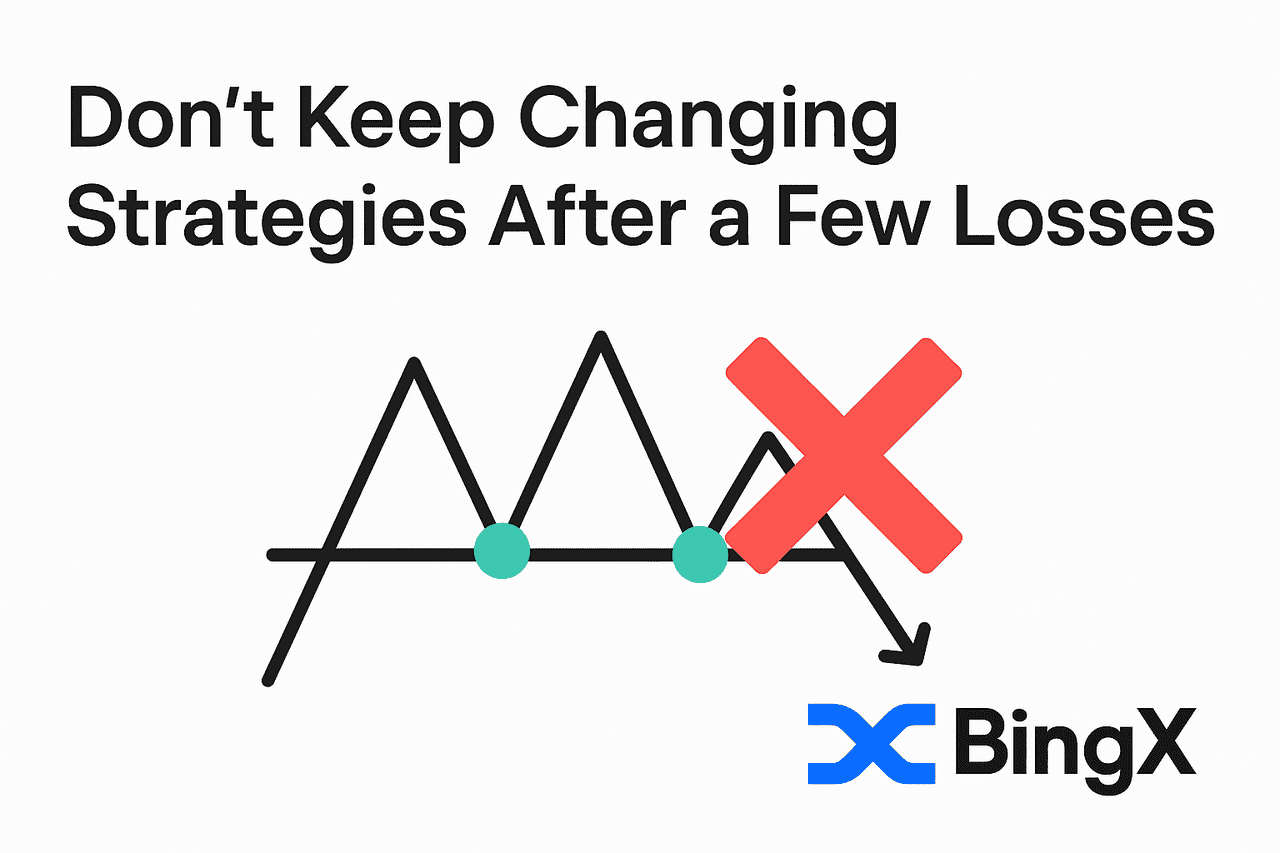
Technical analysis tools are designed for specific conditions. If your strategy was built for trending markets, it may not perform during sideways price action or high volatility driven by macro events.
Tip: Don’t make major changes unless your system consistently underperforms in the market conditions it was designed for. If the market shifts, consider pausing or adjusting your approach temporarily rather than starting from scratch.
10. Using Technical Analysis as a Prediction Tool
Technical analysis is not a prediction tool, it’s a way to understand probabilities. Even a high-probability setup can fail, and no amount of chart analysis guarantees a specific outcome.
Even the best chart patterns, like a bull flag or double bottom, can fail. Traders who assume certainty often oversize positions, ignore stop losses, or hold losing trades too long because “the chart said it should go up.”
The smarter approach is to use TA to frame scenarios, rather than making promises. For example, a breakout above resistance might suggest a bullish move, but a failed breakout could just as easily lead to a reversal. That’s why risk management matters more than being “right.”
Tip: Treat every trade as a probability play. Use stop-loss orders, keep position sizes reasonable, and never assume that your analysis is infallible. Accept uncertainty and plan around it.
Conclusion: Focus on Consistency, Not Perfection
Crypto trading requires discipline, patience, and a willingness to learn from mistakes. The ten technical analysis errors we covered are common, but avoidable.
Take a long-term approach. Build your own trading process, refine your setups, and manage your risks. Over time, you’ll develop the confidence and consistency to spot real trading opportunities, protect your capital, and grow your portfolio with purpose.
Ready to trade smarter? Use BingX to test strategies, track your trades, and refine your edge in real market conditions.
Related Reading
FAQs on Technical Analysis in Crypto Trading
1. Why is technical analysis important in crypto trading?
Technical analysis helps crypto traders identify trends, spot entry and exit points, and manage risk by using historical price data and indicators.
2. Can technical analysis guarantee accurate crypto predictions?
No. Technical analysis is based on probabilities, not guarantees. Even strong setups can fail, so it's crucial to manage risk and use stop-losses.
3. How many technical indicators should I use on a crypto chart?
Most traders use 2 to 3 complementary indicators. Using too many can clutter the chart and cause confusion or conflicting signals.
4. What’s the risk of copying another trader’s setup?
Every trader has different goals, risk tolerance, and timing. Blindly copying others without understanding the context often leads to losses.
5. Is it okay to skip demo trading and go live right away?
It’s not advisable. Practicing on a demo account helps you understand chart setups, test strategies, and avoid emotional mistakes without risking real money.