Lagrange (LA) is a modular zero-knowledge infrastructure protocol powering cross-chain interoperability, AI coprocessing, and verifiable computation.
As blockchain networks shift toward modular and AI-integrated architectures, the demand for scalable and trustless verification layers is rising. Lagrange addresses this by offering a universal ZK verification layer and coprocessor that allows smart contracts to access, verify, and compute remote data across chains without relying on bridges or centralized relayers. Its architecture is purpose-built for the next generation of decentralized applications, from AI inference to multichain DeFi.
In this article, we’ll break down what Lagrange is, how it works, what role the $LA token plays, and how to participate in the $LA airdrop. Whether you're new to modular crypto infrastructure or simply exploring new ZK-powered projects, this guide provides a clear overview of what makes Lagrange stand out.
What Is Lagrange ($LA)?
Source: Lagrange Official Site
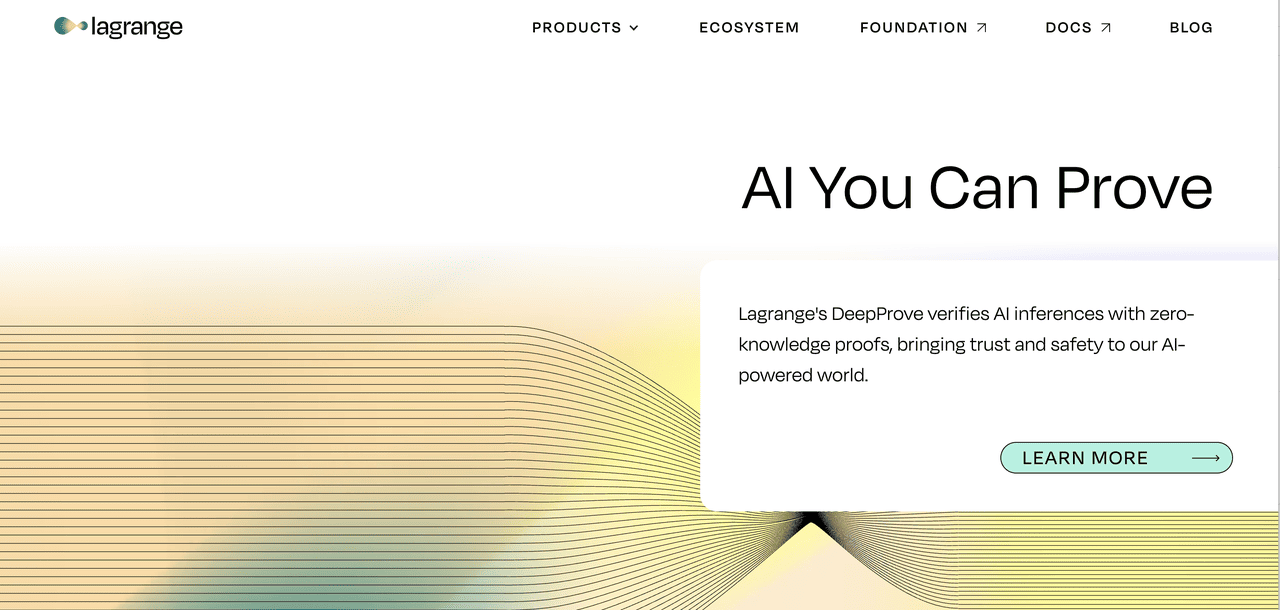
Lagrange is a modular infrastructure protocol designed to enable verifiable computation and secure cross-chain interoperability using zero-knowledge (ZK) technology. It empowers decentralized applications (dApps) to access, compute, and verify data across blockchains with speed, scalability, and trust minimization.
As AI, modular blockchains, and data-intensive applications scale across ecosystems, a new challenge emerges: how to verify computation and data across chains without relying on centralized actors or fragile bridges.
Lagrange addresses this with a zero-knowledge-first architecture that targets three key problems:
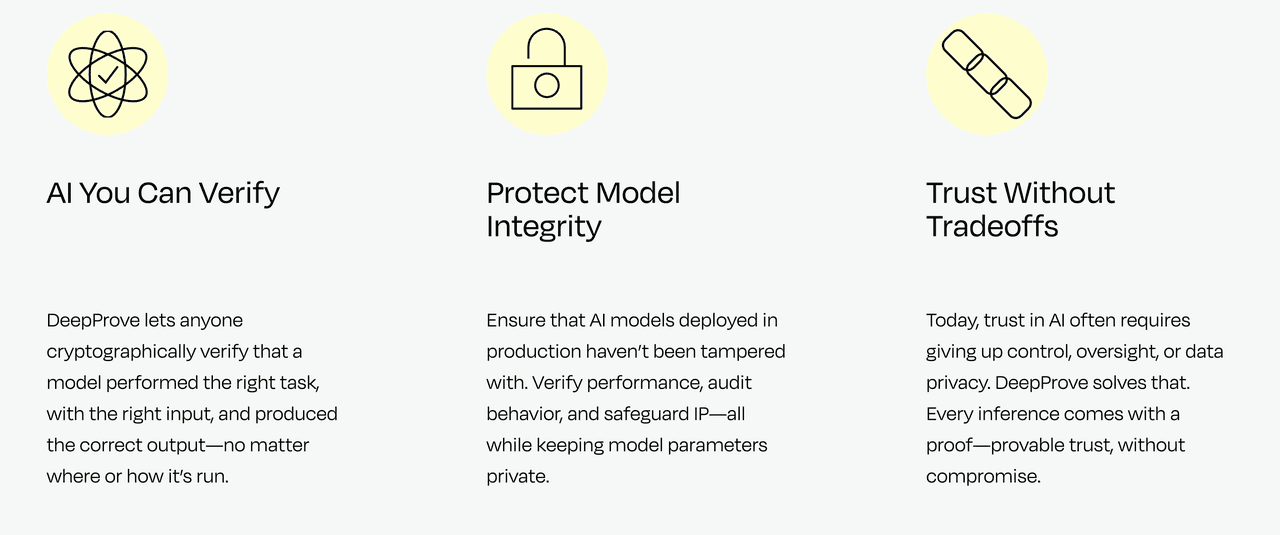
1. Lack of Trust in AI Outputs: AI models are increasingly deployed in critical systems, but most users cannot verify if the output is correct or tampered with. Lagrange’s zkML (zero-knowledge Machine Learning) system, DeepProve, lets anyone verify model behavior without exposing the model or inputs.
2. Siloed Cross-Chain Infrastructure: Traditional bridges and oracles are brittle, expensive, and often insecure. Lagrange replaces them with ZK-based messaging and data verification, enabling secure composability across chains.
3. Opaque or Unverifiable Computation: In decentralized apps, users must often trust that a computation was done correctly. Lagrange solves this by making computation verifiable by default through a universal ZK infrastructure layer.
By tackling these issues, Lagrange aims to make trust a built-in feature rather than an external assumption.
How Does Lagrange Work?
Source: Lagrange Official Site
At its core, Lagrange provides a universal ZK verification layer, designed to eliminate the need for centralized oracles, complex bridges, and siloed data systems. It focuses on solving one of the blockchain industry's most pressing problems: how to query, compute, and verify data across chains without sacrificing efficiency or decentralization.
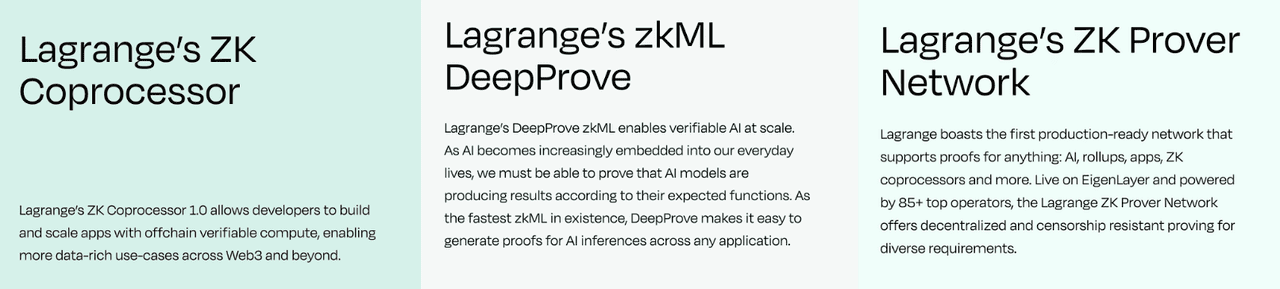
To accomplish this, Lagrange offers three main product modules:
• DeepProve: A zkML system that enables AI model inference verification with cryptographic proofs, protecting privacy and ensuring model correctness.
• ZK Prover Network: A scalable, decentralized prover network designed to handle high-throughput proof generation and verification using modular sub-networks.
• ZK Coprocessor: A high-performance off-chain query engine that allows developers to run SQL-like queries over blockchain storage, generating ZK proofs for verified results across chains.
Source: Lagrange Official Site
Key Features of Lagrange
• Modular ZK Stack: Plug-and-play infrastructure for building ZK applications across chains.
• Cross-Chain Verifiability: Trustless access to external states without bridges or full nodes.
• Verifiable AI Inference: Privacy-preserving zkML for secure AI model validation.
• Decentralized Prover Network: Efficient proof generation using a scalable and slashing-secured network.
• SQL-Based ZK Queries: Query blockchain data with verifiable results using standard syntax.
• Oracle-Free Design: Eliminates centralized data feeds for improved security and composability.
Together, these components form a foundational infrastructure layer for building secure, interoperable, and scalable ZK applications across AI, DePIN, gaming, and other emerging sectors.
What’s Lagrange ($LA) Tokenomics?
$LA is the native utility token of the Lagrange protocol, powering the economic engine behind proof generation and verification. It is designed to align incentives across provers, clients, and token holders within the Lagrange Prover Network (LPN), which supports use cases such as verifiable AI, modular execution, and cross-chain messaging. Key uses include:
• Proof Payments: Clients pay for proofs in ETH, USDC, or $LA. Provers always receive rewards in $LA, with buybacks triggered when other tokens are used.
• Staking and Delegation: Token holders can stake or delegate $LA to provers, helping fund operations and reduce circulating supply.
• Protocol Emissions: A 4% annual emission rewards provers based on output, lowering client costs and sustaining network growth.
• Governance Influence: Staked tokens grant influence over protocol decisions, aligning incentives with active network participation.
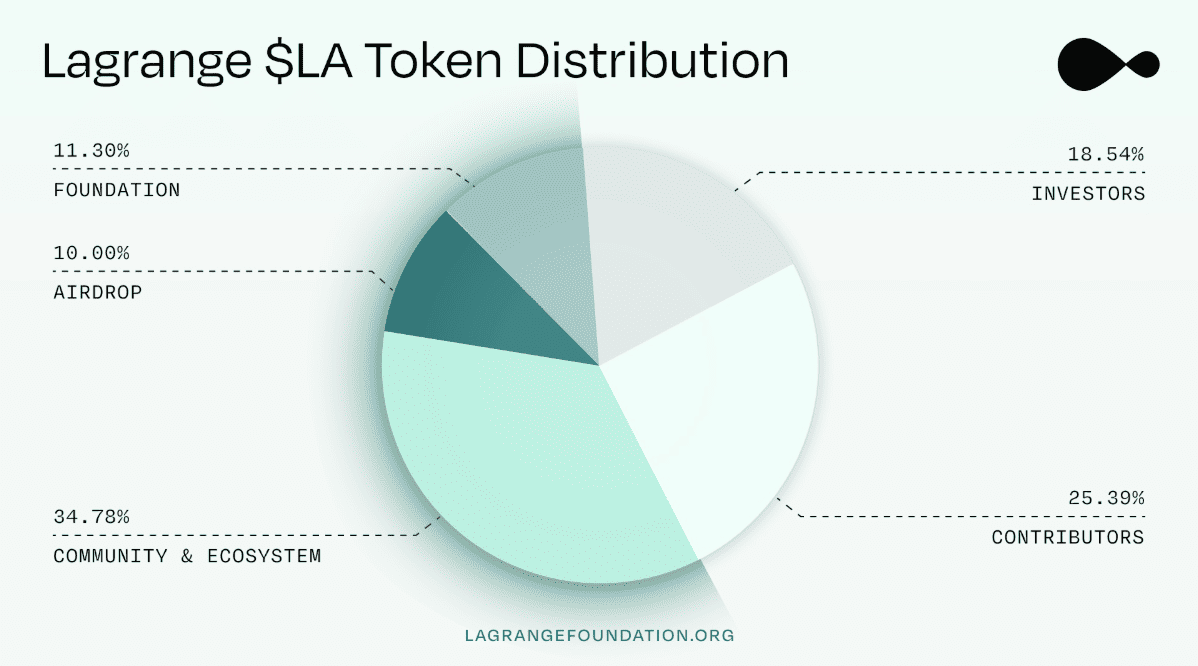
Lagrange Token Design and Distribution
Lagrange uses a work-based model where proof demand fuels $LA demand. Clients pay in ETH, USDC, or $LA, triggering buybacks to reward provers. Emissions help subsidize costs, and staking reduces circulating supply. The total supply is capped at 1 billion $LA, with 4% annual emissions supporting network growth and long-term alignment.
LA Token Allocation
• Community & Ecosystem: 34.78%. 5% unlocked at TGE, 6-month cliff, then 48-month linear release
• Contributors: 25.39%. Locked at TGE, 12-month cliff, then 24-month linear release
• Investors: 18.54%. Locked at TGE, 12-month cliff, then 24-month linear release
• Foundation: 11.30%. 4.3% unlocked at TGE, 6-month cliff, then 12-month linear release
• Public Airdrop: 10.00%. Fully unlocked at TGE

How to Claim Lagrange ($LA) Airdrop: Step-by-Step Guide
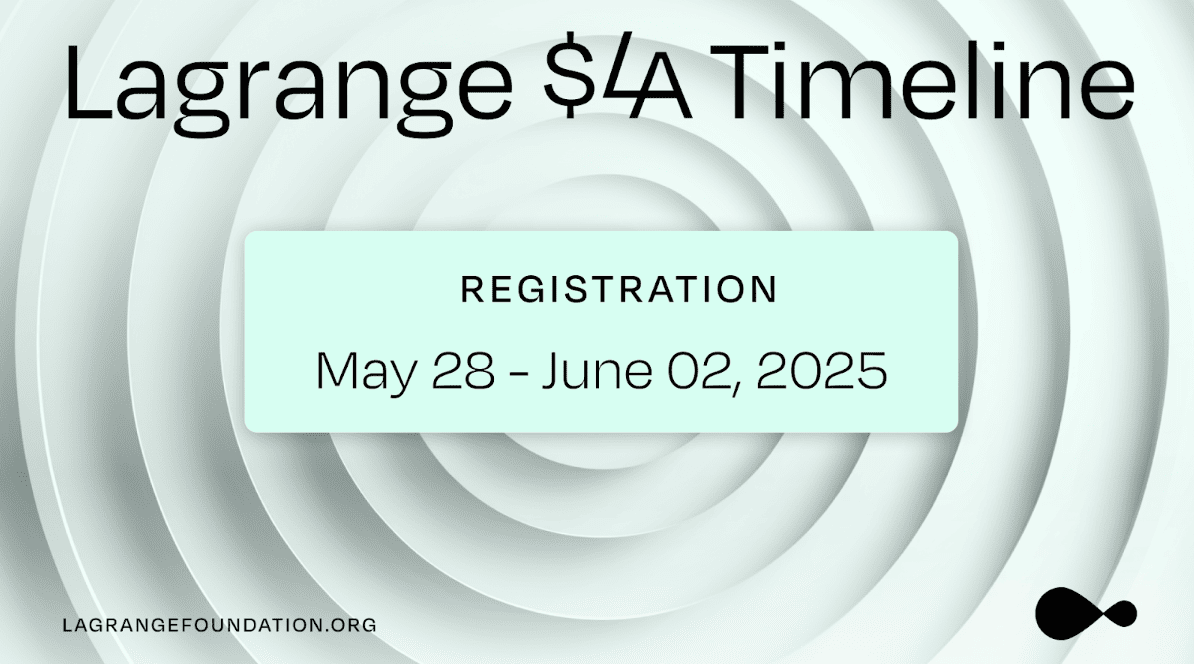
To claim your $LA airdrop, you must have completed registration and Proof of Usage (PoU) during the official registration window, which opened on May 28, 2025, and closed on June 2, 2025. If your wallet successfully registered and met the requirements, claiming is simple.
Step 1: Confirm You Completed Registration and PoU
Only wallets that have finished registration and passed PoU checks during the May 28 to June 2 window are eligible to claim. Make sure you use the same wallet that completed these steps.
Step 2: Visit the Official $LA Claim Portal
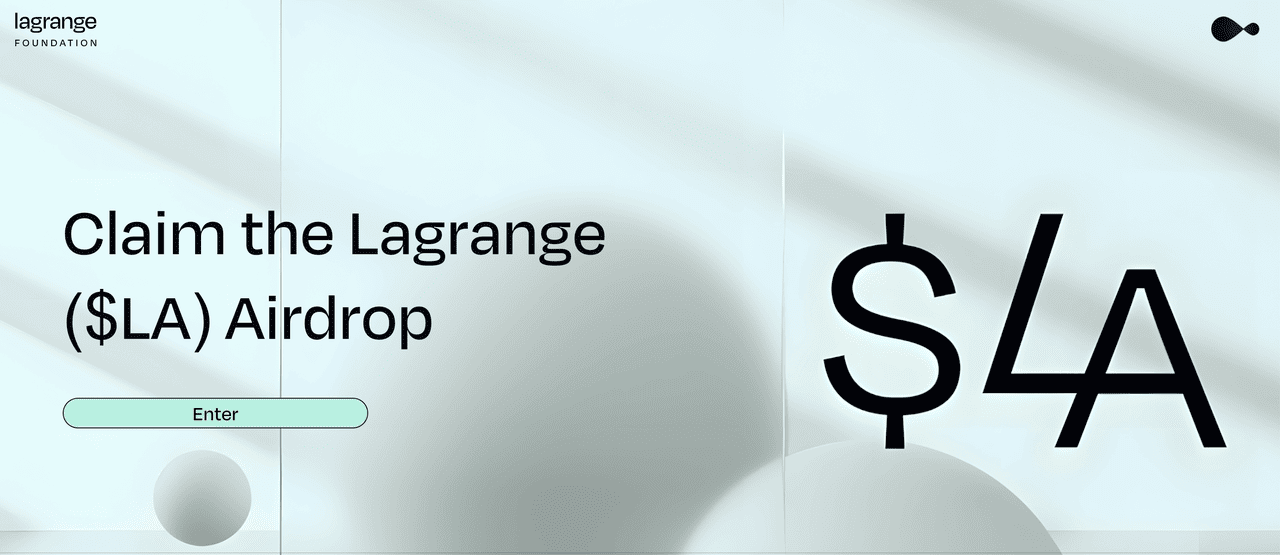
When the claim period begins, go to the Official $LA Claim Portal.
Step 3: Connect Wallet, Review and Confirm
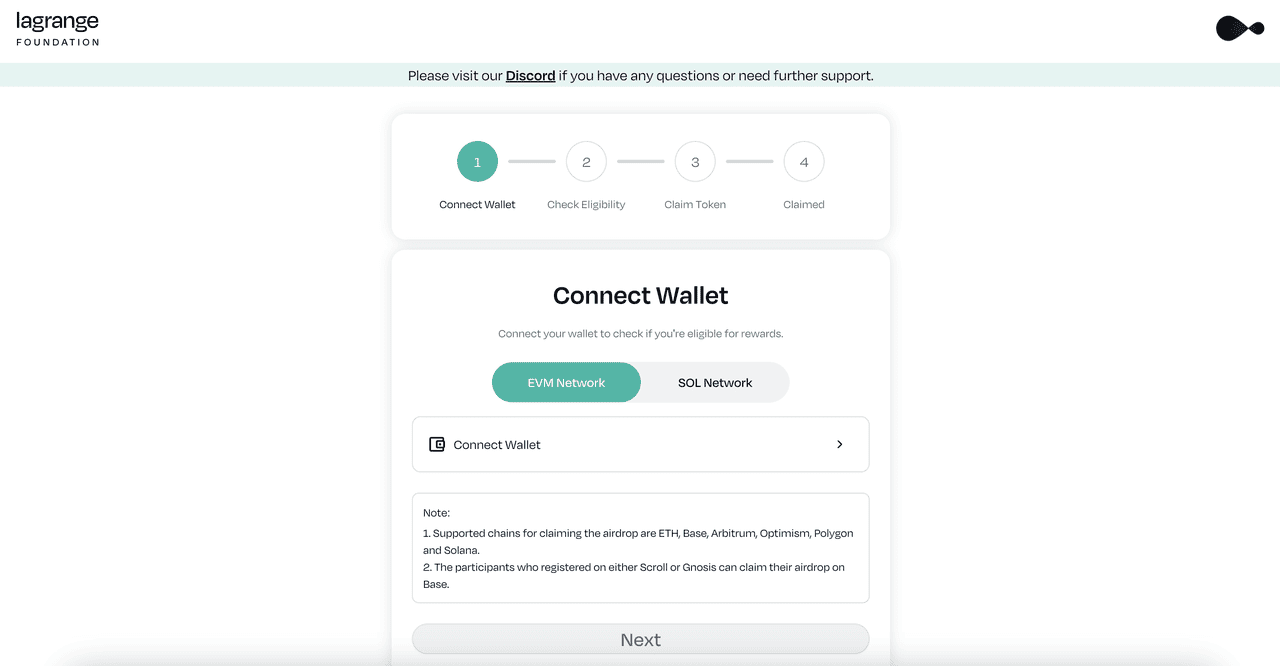
Connect your eligible wallet to check your $LA allocation. Your allocation will appear on screen. Review the amount and follow the instructions to complete the claim.
Step 4: Finalize the Claim
Approve the transaction in your wallet. Once it is confirmed, your $LA tokens will be transferred. No additional PoU is required since that step was handled during registration.
When Is the Lagrange (LA) Airdrop?
Lagrange has structured its $LA token airdrop around a registration-based process that includes Proof of Usage (PoU). Below are the major milestones to know:
• May 28, 2025: Airdrop registration opens. Eligible participants are required to complete PoU to qualify.
• June 3, 2025: Registration closes. Only users who completed the process by this date will be eligible to claim $LA.
• June 4, 2025: Claiming begins. All verified registrants will be able to claim their airdrop tokens through the official portal. Tokens are 100% unlocked at TGE.
Stay up to date through Lagrange’s official channels for the final claim deadline and any additional rounds.
Will There Be More $LA Airdrops in the Future?
As of now, Lagrange has not announced plans for additional airdrops beyond the initial TGE allocation. However, with over 34% of the total supply reserved for community and ecosystem incentives, future programs such as staking rewards, ecosystem grants, or contributor campaigns may be introduced.
For any upcoming opportunities, it’s best to stay connected to Lagrange’s official channels, where future initiatives will be announced if launched.
Lagrange ($LA) Future Roadmap: What’s Next?
Lagrange is building toward a fully decentralized, high-performance proving and interoperability network. The protocol’s upcoming milestones reflect its ambition to support ZK-powered applications across multiple verticals, including AI, modular execution, and cross-chain dApps.
Key areas of focus include:
• Mainnet Launch: The Lagrange Prover Network will go live, enabling permissionless proof generation and economic activity across supported applications.
• Ecosystem Expansion: Continued growth of integrations with rollups, AI agents, data availability layers, and DePIN projects.
• Public Prover Incentive Program: Incentivizing new provers to join the network and contribute compute resources to decentralized proof generation.
• Developer and Tooling Enhancements: Release of SDKs, integration with ZK VMs and execution layers, and improved onboarding for builders.
• Governance and Protocol Maturity: Transition toward decentralized governance, with $LA holders playing an active role in protocol evolution and incentive design.
Let me know if you'd like this further shortened or formatted for a visual roadmap.
Final Thoughts
Lagrange is not just another infrastructure protocol. It is a foundational layer designed for the next era of trust-minimized applications. By combining zero-knowledge cryptography, modular computation, and a decentralized proof network, it allows developers to build scalable, verifiable, and interoperable systems across chains.
From provable AI to cross-chain data access, Lagrange is setting the stage for use cases that require both performance and trust. With the launch of the $LA token and a rapidly growing ecosystem, the protocol is well positioned to support the future of modular blockchains, zk-powered applications, and verifiable machine intelligence.
Whether you are building AI agents, DePIN systems, or simply exploring the next generation of crypto infrastructure, Lagrange is a project worth watching.
FAQs on Lagrange ($LA)
1. Is Lagrange a Layer 2?
No, Lagrange is not a Layer 2. It is a modular verification layer focused on zero-knowledge proofs and cross-chain interoperability. It does not handle transactions or block production directly.
2. Which Blockchain Is Lagrange On?
Lagrange is chain-agnostic. It supports both EVM-compatible chains and Solana, enabling its infrastructure to serve modular blockchains, rollups, and ZK-powered applications across ecosystems.
3. Which Wallets Support $LA Tokens?
$LA tokens are available on both Ethereum and Solana. You can use any wallet that supports custom networks and these ecosystems, including EVM-wallet MetaMask, Phantom, Trust Wallet, or Solana-compatible wallets.