PayPal USD (PYUSD) este un stablecoin ataşat 1:1 la dolarul american. Poți să cumperi, să deții, să trimiți sau să îl folosești pentru plăți, totul direct din contul tău PayPal sau Venmo. Susținut de depozite în dolari americani și obligațiuni pe termen scurt, PYUSD oferă stabilitatea monedei fiat cu flexibilitatea blockchain-ului.
În 2025, PYUSD face valuri în spațiul plăților digitale. Remitențele transfrontaliere devin mai rapide și mai ieftine, iar integrările blockchain precum Solana și Stellar îi extind raza de acțiune. În iunie 2025, PYUSD a depășit pragul de 1 miliard de dolari capitalizare de piață, devenind al 10-lea stablecoin ca mărime în DeFi și unul dintre tokenurile susținute de USD cu cea mai rapidă creștere din acest an.
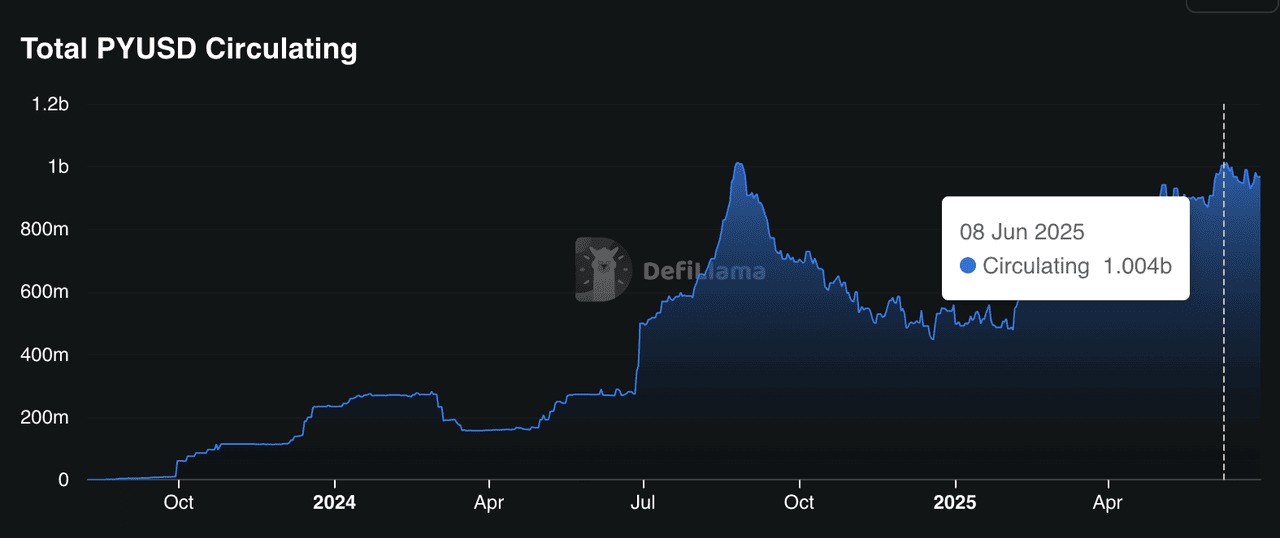 Capitalizarea de piață a PayPal USD a depășit 1 miliard de dolari în iunie 2025 | Sursă: DefiLlama
Parteneriatele cheie au ajutat la accelerarea acestei creșteri. Coinbase a adăugat PYUSD cu zero comisioane de tranzacționare, stimulând accesul la retail. Fiserv și Mastercard integrează PYUSD în sistemele de plăți mainstream, aducând stablecoin-urile în lumea finanțelor tradiționale. Platforma Xoom a PayPal permite acum utilizatorilor să trimită remitențe cu PYUSD, reducând comisioanele și crescând viteza tranzacțiilor la nivel global.
Cu o adoptare în creștere, suport reglementar și sprijin blockchain în expansiune, PYUSD devine un dolar digital de încredere pentru utilizatorii de zi cu zi.
Ce Este PayPal USD (PYUSD)?
PayPal USD (PYUSD) este un stablecoin susținut de dolarul american, emis de Paxos Trust Company, o instituție financiară reglementată. Poți mereu să cumperi sau să răscumperi 1 PYUSD pentru 1 USD folosind PayPal sau Venmo. Este conceput să ofere încrederea de nivel fiat cu utilitatea de nivel crypto.
Fiecare token PYUSD este susținut de numerar, obligațiuni americane și echivalente de numerar. Paxos oferă rapoarte mensuale ale rezervelor și atestări independente pentru a asigura transparența. PYUSD este, de asemenea, reglementat de Departamentul de Servicii Financiare din Statul New York (NYDFS), același organism care supraveghează alți emitenți majori de active digitale. Această supraveghere de reglementare oferă utilizatorilor încredere suplimentară în stabilitatea și conformitatea sa.
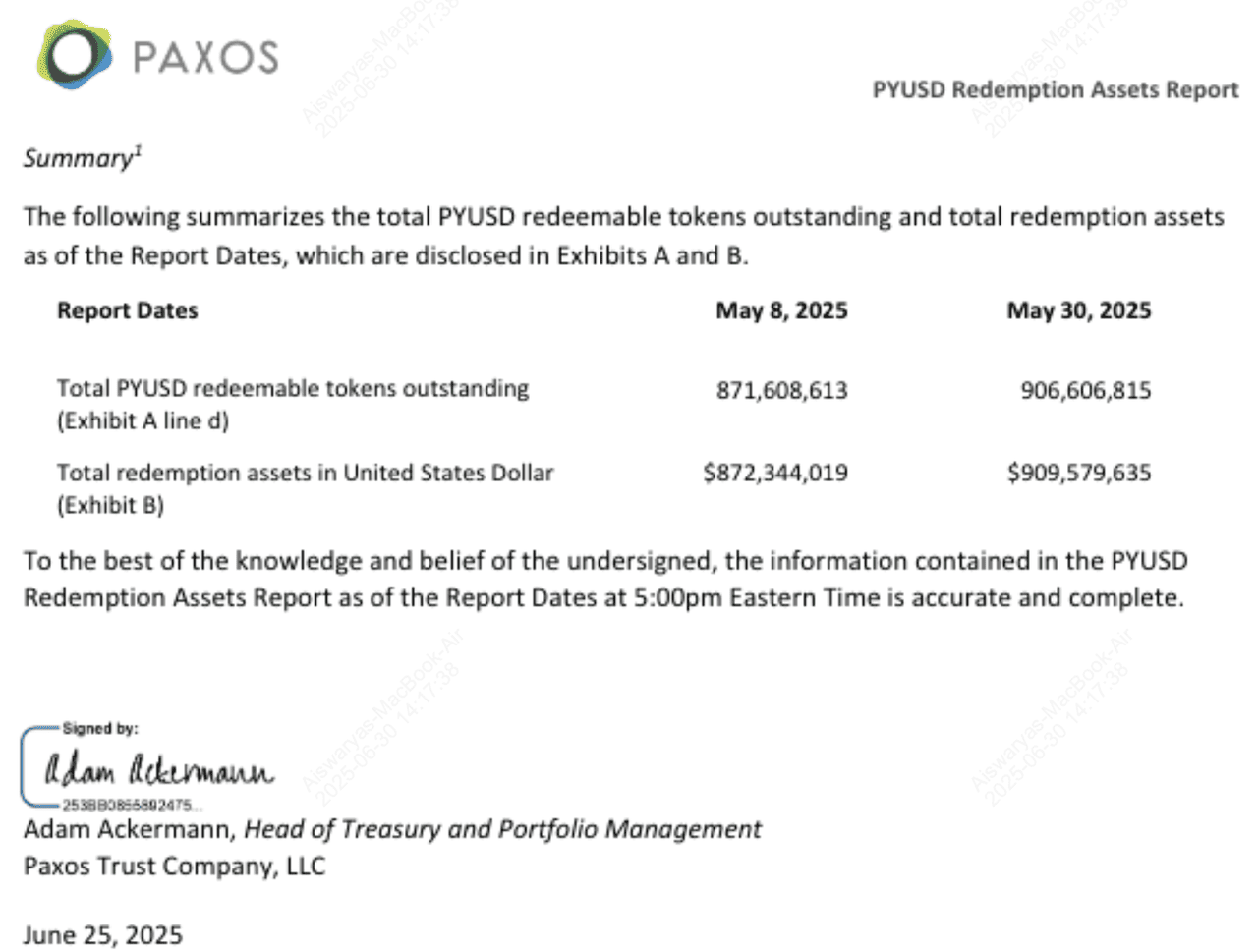 Raportul de atestare al PYUSD pentru mai 2025 | Sursă: PayPal
De la lansare, PYUSD s-a extins pe blockchain-uri majore. A debutat pe Ethereum ca un token ERC-20, oferindu-i acces la portofele și platforme DeFi. În mai 2025, PYUSD a fost lansat pe Solana, permițând tranzacții mai rapide și mai ieftine pentru uz zilnic. PYUSD este disponibil și pe blockchain-urile Berachain, Plume și Flow din iunie 2025. În iunie 2025, PayPal a anunțat și planuri de a face PYUSD disponibil pe Stellar, un blockchain construit pentru mișcarea globală de bani, ceea ce va întări poziția PYUSD în remitențe și plăți transfrontaliere.
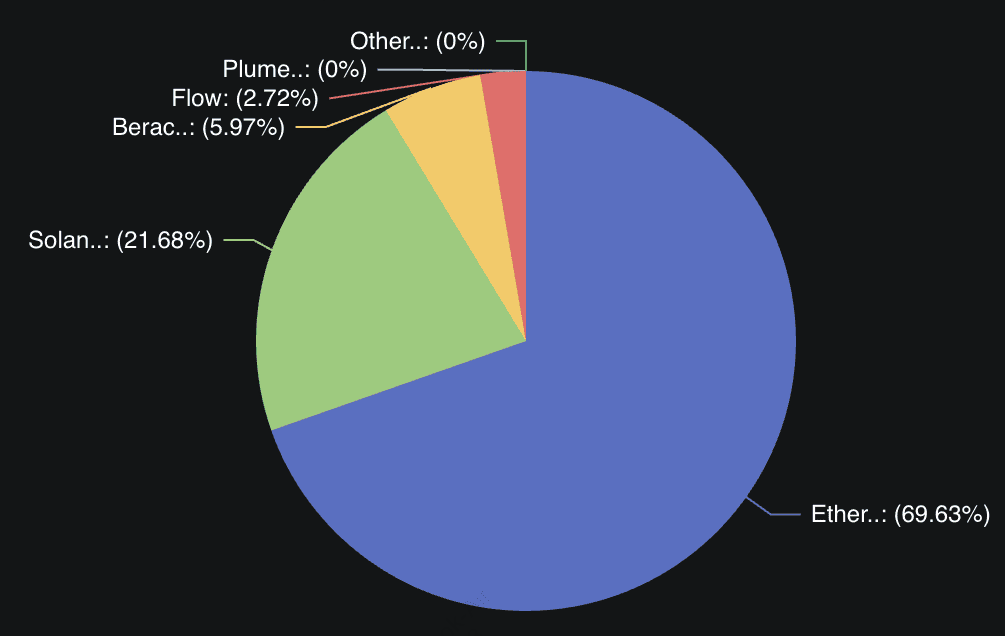 Disponibilitatea PYUSD pe diferite blockchain-uri | Sursă: DefiLlama
Cu o capitalizare de piață de aproximativ 1 miliard de dolari și parteneriate cu platforme precum Coinbase, Mastercard și Fiserv, PYUSD câștigă tracțiune atât în interiorul cât și în afara pieței crypto. Integrarea sa profundă cu ecosistemul PayPal îl face unul dintre stablecoin-urile cele mai prietenoase cu utilizatorul și cel mai accesibil disponibil astăzi.

Pe Ce Rețele Blockchain Este Emis PYUSD?
PYUSD este un stablecoin complet on-chain conceput pentru compatibilitatea largă cu blockchain-ul. A fost lansat ca un token ERC‑20 pe Ethereum, platforma lider pentru proiecte Web3 și dApps. Aceasta a oferit PYUSD acces instant la platforme DeFi, portofele crypto și aplicații Web3. Ethereum rămâne o fundație de încredere pentru adoptarea stablecoin-urilor.
În mai 2025, PYUSD s-a extins pe Solana, un blockchain de înaltă viteză cu comisioane mici. Această mișcare a făcut PYUSD mai practic pentru plăți zilnice, microtranzacții și activitate on-chain precum jocurile Web3 și piețele NFT.
În continuare, integrarea Stellar este așteptată mai târziu în acest an. Cunoscut pentru eficiența transfrontalieră și remitențele cu costuri reduse, Stellar va face PYUSD și mai util pentru plăți internaționale, în special în regiunile cu servicii bancare insuficiente.
Cu suport pe Ethereum, Solana și în curând Stellar, PYUSD devine unul dintre stablecoin-urile cele mai versatile și accesibile din ecosistemul crypto. Indiferent dacă folosești aplicații DeFi, trimiți plăți sau construiești pe Web3, PYUSD este gata să alimenteze următoarea ta tranzacție.
Cum Funcționează Stablecoin-ul PYUSD al PayPal
PYUSD îți ține banii stabili, mobili și gata de folosit, indiferent dacă plătești prietenii sau explorezi Web3. Iată cum:
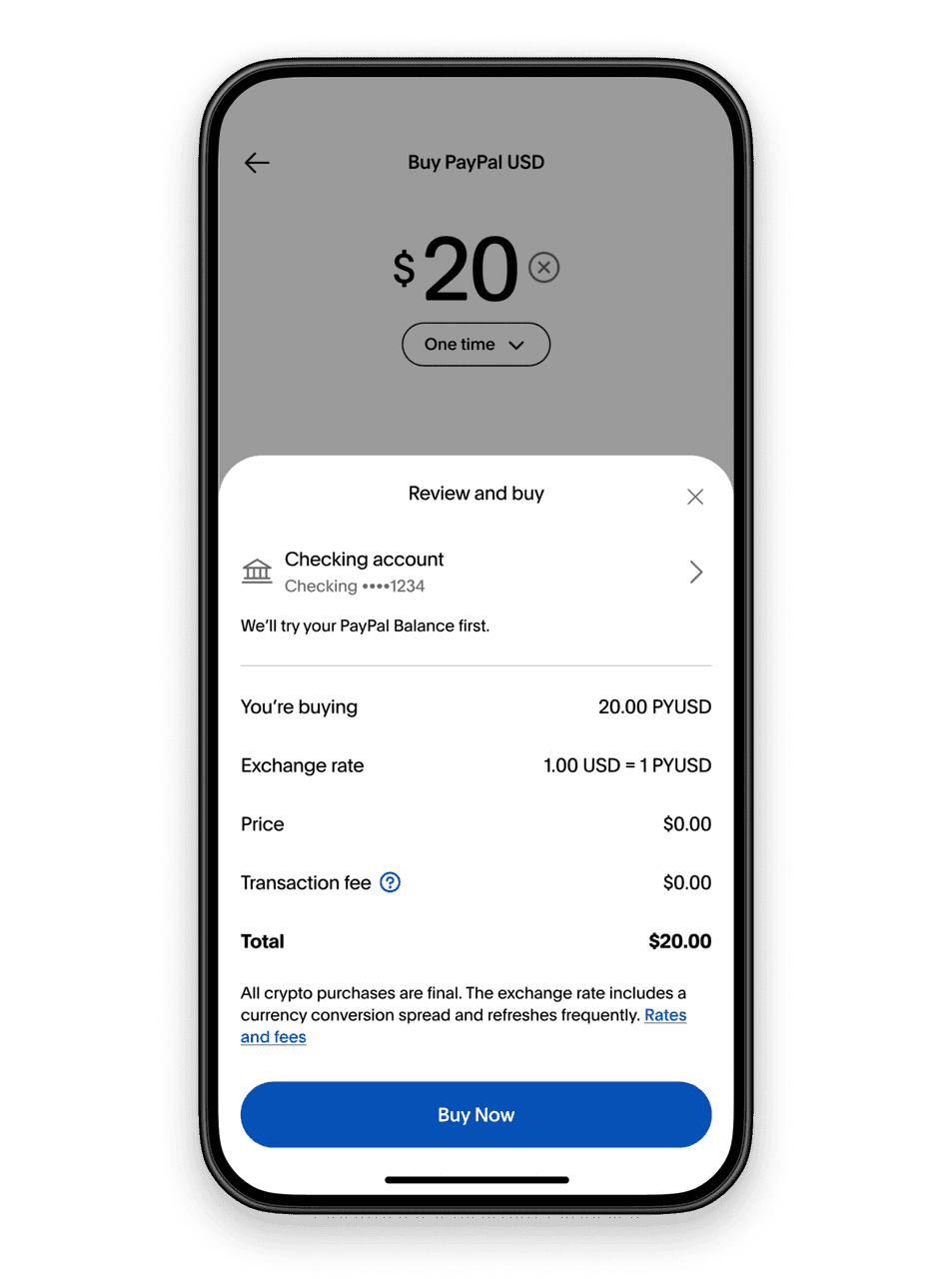
1. Ataşat 1:1 la Dolarul American: Fiecare token PYUSD este susținut de un dolar american sau un activ de rezervă echivalent. Când cumperi PYUSD în aplicația PayPal, acel dolar este ținut în rezervă. Dacă vinzi PYUSD, token-ul este distrus și îți primești banii înapoi. Acest mecanism menține valoarea stabilă la 1 dolar per PYUSD.
 Sursă: PayPal
2. Cumpără, Vinde sau Răscumpără Ușor: Poți cumpăra PYUSD folosind soldul PayPal, cardul de debit conectat sau contul bancar. Doar mergi la secțiunea Crypto din aplicația PayPal sau Venmo și alege suma. Poți, de asemenea, să îți răscumperi token-urile pentru USD oricând.
 Sursă: PayPal
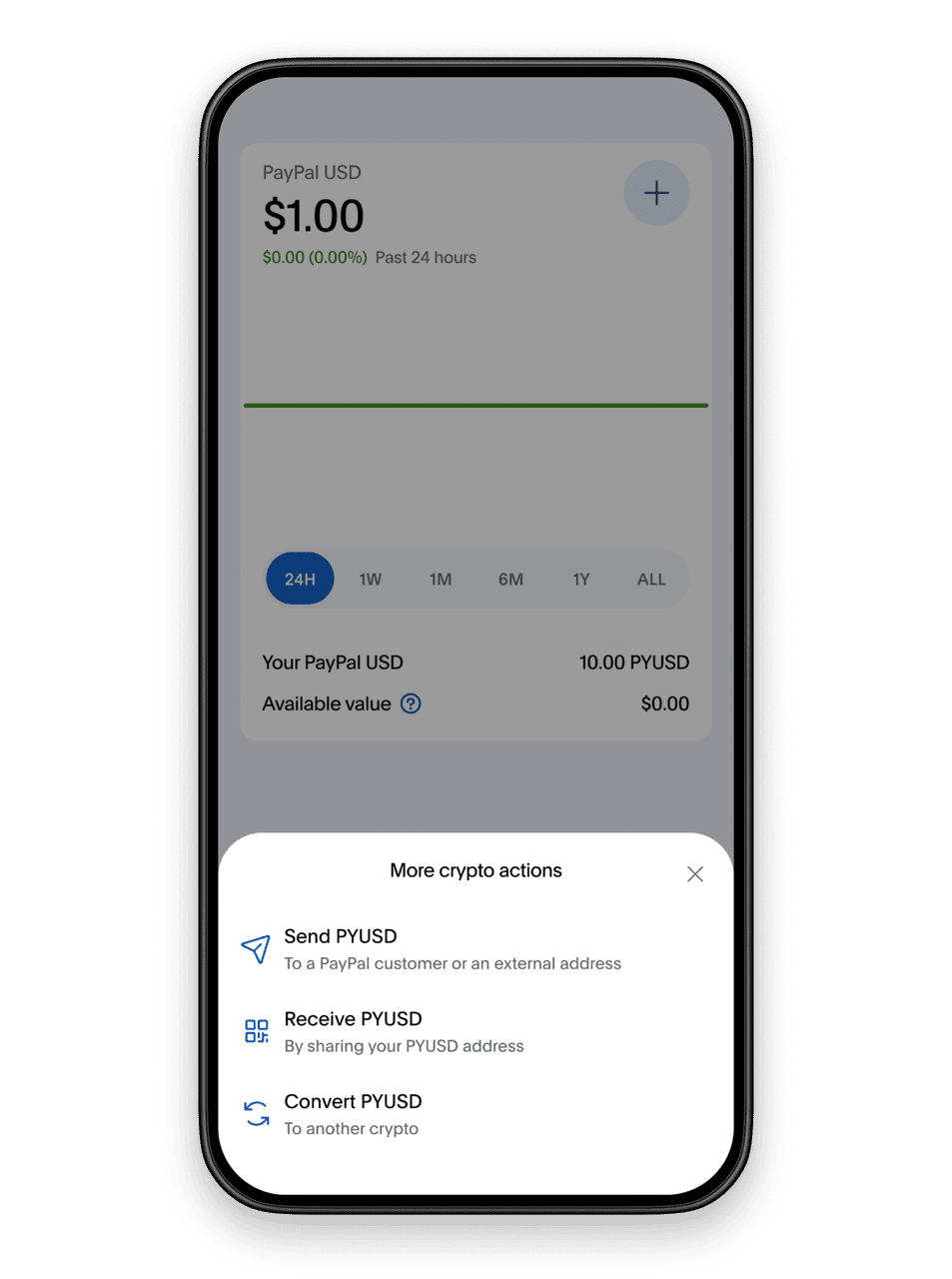
3. Trimite și Primește pe PayPal sau Portofele: Poți transfera PYUSD prietenilor sau comercianților folosind PayPal sau Venmo cu zero comisioane. Vrei să ieși de pe platformă? Poți, de asemenea, să trimiți PYUSD la adrese de portofel Ethereum sau Solana, doar asigură-te că portofelul care primește suportă PYUSD. Se pot aplica comisioane de rețea blockchain.
 Sursă: PayPal
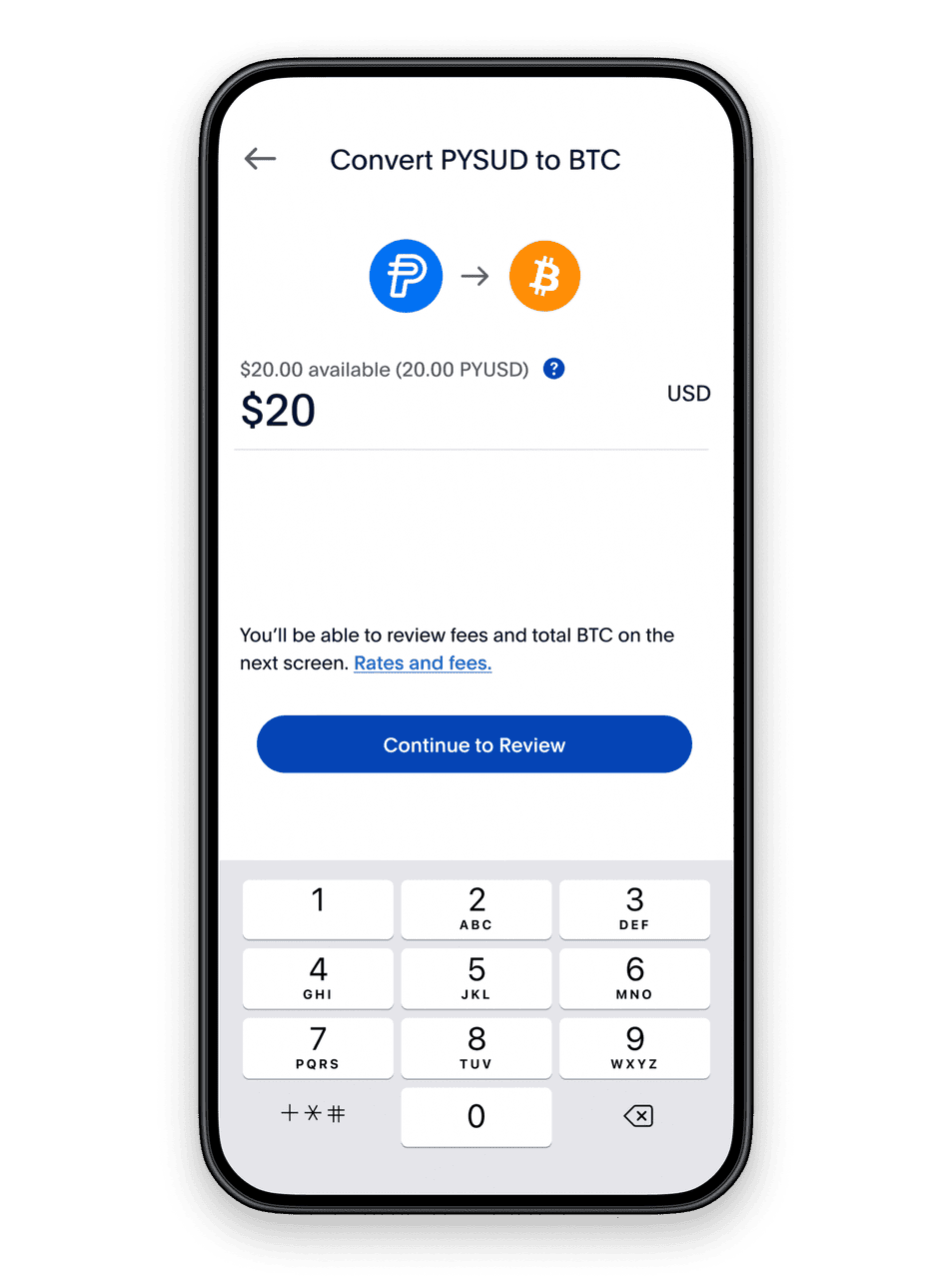
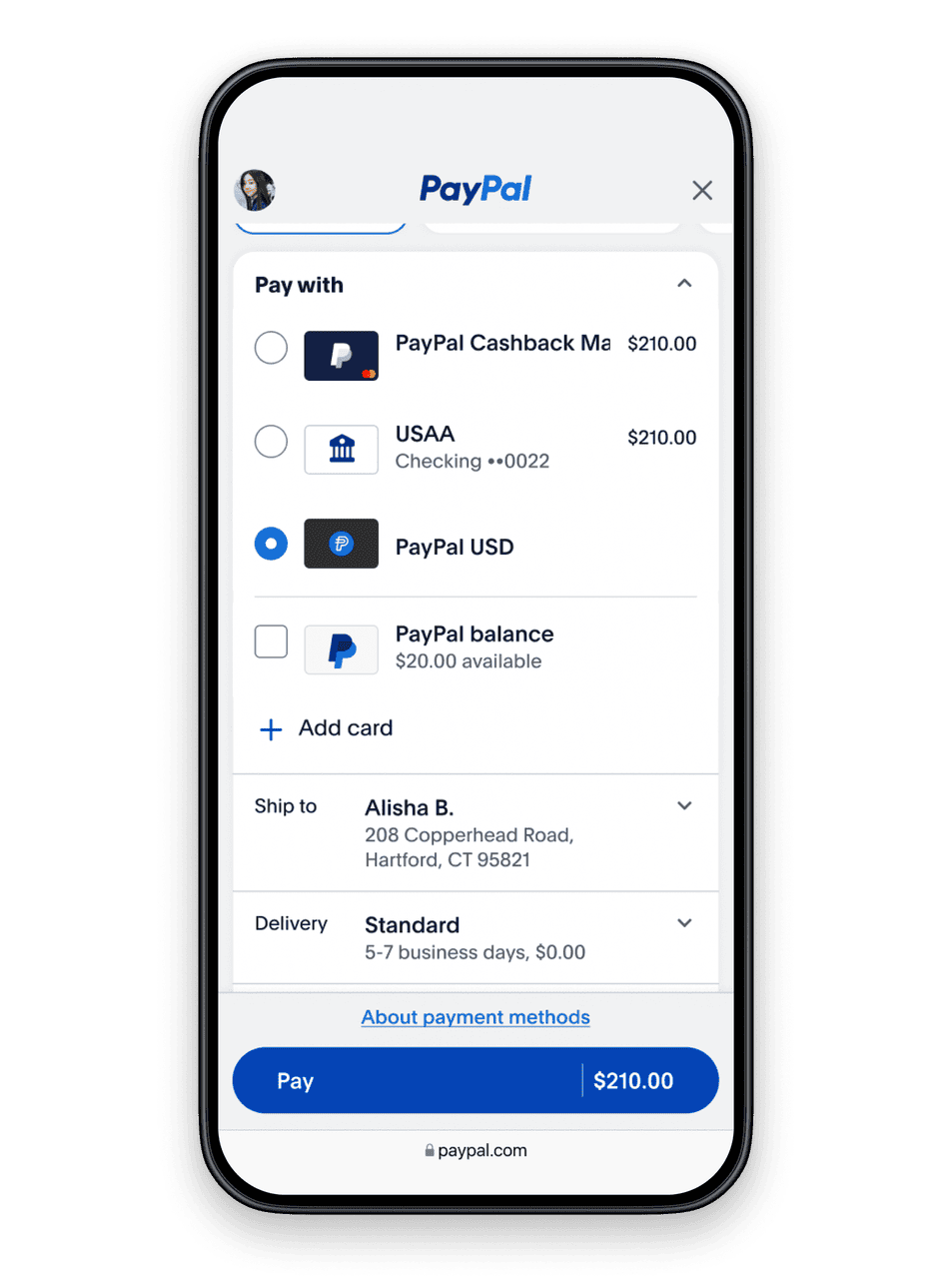
4. Folosește-l la Plată sau Convertește-l: Când faci cumpărături online, poți alege PYUSD ca metodă de plată în timpul plății. PayPal îl va converti automat în moneda locală a comerciantului. Poți, de asemenea, să converți PYUSD în alte criptomonede precum BTC sau ETH în aplicația PayPal, contra unui comision mic.
 Sursă: PayPal
De Ce Să Folosești PYUSD? Beneficiile Într-o Privire
PYUSD este o opțiune practică pentru utilizatorii de zi cu zi care sunt deja familiarizați cu PayPal sau Venmo. Dacă folosești aceste platforme, poți începe să trimiți și să cheltui PYUSD fără să descarci aplicații suplimentare sau să gestionezi portofele externe. Este, de asemenea, ideal pentru cumpărătorii online, permițându-ți să plătești la milioane de comercianți care acceptă PayPal, cu beneficiile adăugate ale vitezei și stabilității susținute de blockchain. Pentru cei care trimit remitențe, PYUSD oferă o alternativă cu costuri reduse și rapidă la transferurile transfrontaliere tradiționale, în special cu integrarea Xoom a PayPal și suportul viitor pentru blockchain-ul Stellar.
Dezvoltatorii și utilizatorii nativi crypto pot beneficia, de asemenea, de PYUSD. Structura sa deschisă și programabilă permite integrarea ușoară în contracte inteligente, aplicații Web3 și sisteme de plată pe Ethereum și Solana. Pentru traderi și utilizatorii DeFi, PYUSD oferă lichiditate stabilă pe bursele descentralizate și acces la oportunități de yield farming. Indiferent dacă ești începător sau constructor, PYUSD oferă o modalitate flexibilă și accesibilă de a folosi dolari digitali în ecosistemele atât tradiționale cât și descentralizate.
Beneficiile Cheie ale Stablecoin-ului PayPal
PYUSD a fost construit să facă stablecoin-urile utile pentru oamenii obișnuiți. Iată beneficiile cheie:
1. Mereu în valoare de 1 dolar: PYUSD este complet susținut de depozite în dolari americani, obligațiuni pe termen scurt și echivalente de numerar. Poți cumpăra sau vinde 1 PYUSD pentru 1 dolar oricând în PayPal sau Venmo. Paxos, emitentul, publică rapoarte mensuale ale rezervelor pentru transparență completă.
2. Integrat în PayPal și Venmo: Fără aplicații suplimentare. Fără portofele complicate. Poți cumpăra, deține, trimite sau cheltui PYUSD direct din contul tău existent PayPal sau Venmo.
3. Fără comisioane pentru transferurile P2P: Trimite PYUSD prietenilor sau familiei în S.U.A. instant, fără să plătești comisioane. Este la fel de ușor ca să trimiți o plată obișnuită PayPal. Aceasta face PYUSD ideal pentru plăți digitale și uz zilnic.
4. Deschis și programabil: Pe lângă folosirea lui pentru efectuarea de plăți, dezvoltatorii pot construi cu el și ei. Ca un activ bazat pe blockchain, poate fi folosit în aplicații Web3, contracte inteligente și protocoale DeFi. PYUSD poate fi integrat ușor în token-uri în joc sau sisteme de plată în dApps.
Cum să Câștigi Recompense cu PYUSD (Funcție Viitoare)
Începând cu vara 2025, utilizatorii PayPal pot câștiga recompense lunare prin simpla deținere a PYUSD. Programul oferă un APY variabil, în prezent stabilit la 3,7%, făcându-l una dintre cele mai accesibile modalități de a câștiga venit pasiv pe stablecoin-uri.
Iată cum funcționează:
• Recompensele se bazează pe soldul tău mediu zilnic de PYUSD.
• Sunt plătite o dată pe lună în PYUSD, direct în portofelul tău crypto PayPal.
• Nu trebuie să stake-uiești sau să blochezi fondurile; doar deții PYUSD în contul tău.
• Dacă vinzi sau transferi PYUSD-ul la mijlocul lunii, vei primi în continuare recompensele câștigate până atunci.
Această funcție transformă PYUSD în mai mult decât doar un token de plată. Devine un activ care generează randament pentru oricine cu un cont PayPal. Poți urmări câștigurile și rata curentă de recompensă în secțiunea Crypto a aplicației.
PYUSD vs. Alte Stablecoin-uri
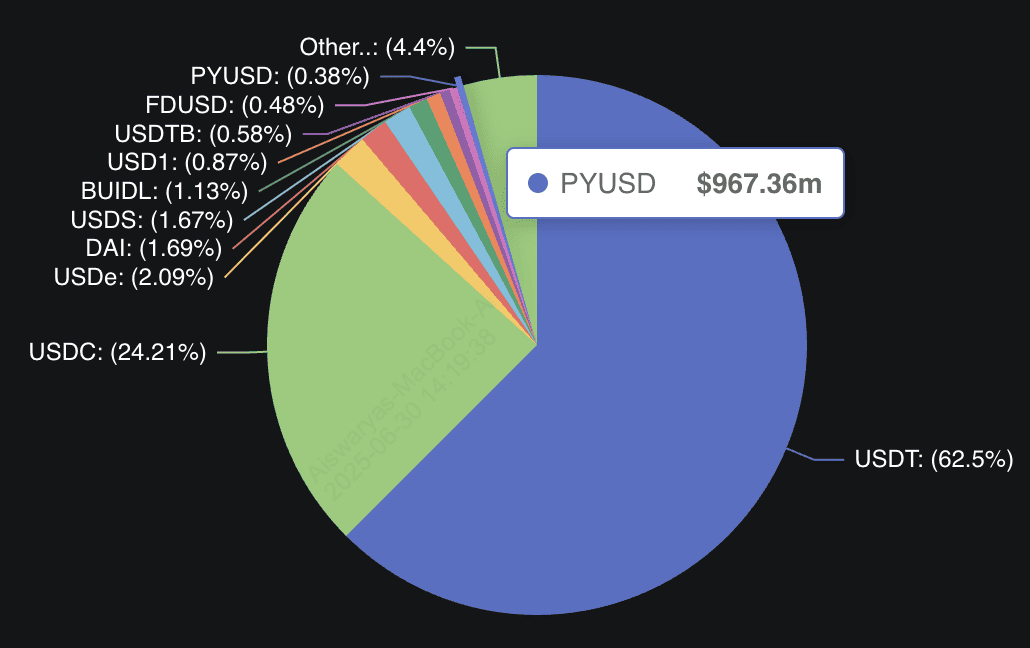 Dominația de piață PayPal USD vs. alte stablecoin-uri | Sursă: DefiLlama
Deși există mai multe stablecoin-uri disponibile pe piața crypto, fiecare operează diferit de celelalte. PYUSD se distinge prin conformitatea sa de reglementare, rezervele transparente și integrarea nativă PayPal.
Să analizăm.
1. PayPal USD (PYUSD) vs. Tether (USDT)
Tether (USDT) este stablecoin-ul cel mai folosit în crypto. Dar s-a confruntat cu ani de întrebări despre rezervele și transparența sa. Deși USDT este popular pentru tranzacționare, nu este la fel de strict reglementat. Este emis offshore și nu oferă audituri regulate de la regulatori americani de încredere.
2. PYUSD vs. USDC
USD Coin (USDC) împarte mai multe asemănări cu PYUSD. Este emis de Circle și susținut de numerar și obligațiuni pe termen scurt. Atât USDC cât și PYUSD sunt reglementate și oferă atestări regulate. Cu toate acestea, USDC are suport mai larg în DeFi, în timp ce PYUSD este mai concentrat pe plăți și uz retail.
Citește mai mult: USDC vs. USDT: Diferențele Cheie și Care Stablecoin să Alegi în 2025?
3. PayPal USD (PYUSD) vs. Ripple USD (RLUSD)
RLUSD este stablecoin-ul nou lansat de Ripple susținut de dolarul american, concentrat pe plăți instituționale și decontări transfrontaliere. Deși atât PYUSD cât și RLUSD sunt complet susținute și reglementate, PYUSD oferă un avantaj clar în accesibilitatea retail prin PayPal și Venmo. RLUSD vizează cazuri de uz de nivel enterprise, în timp ce PYUSD este construit pentru plăți zilnice, remitențe și finanțe personale.
Citește mai mult: Ce Este RLUSD? Un Ghid pentru Începători despre Stablecoin-ul Susținut de USD al Ripple
Ce Face PYUSD Diferit de Alte Stablecoin-uri?
Cel mai mare avantaj este accesul său integrat la PayPal și Venmo. Niciun alt stablecoin nu oferă utilizarea fără probleme pe două dintre aplicațiile de plată cele mai populare. Aceasta face PYUSD ideal pentru tranzacții din lumea reală, nu doar tranzacționare crypto.
Dacă cauți un stablecoin care combină claritatea de reglementare, utilitatea în timp real și suportul blockchain, PYUSD este o alegere potențială de luat în considerare.
Cum să Cumperi PYUSD pe BingX
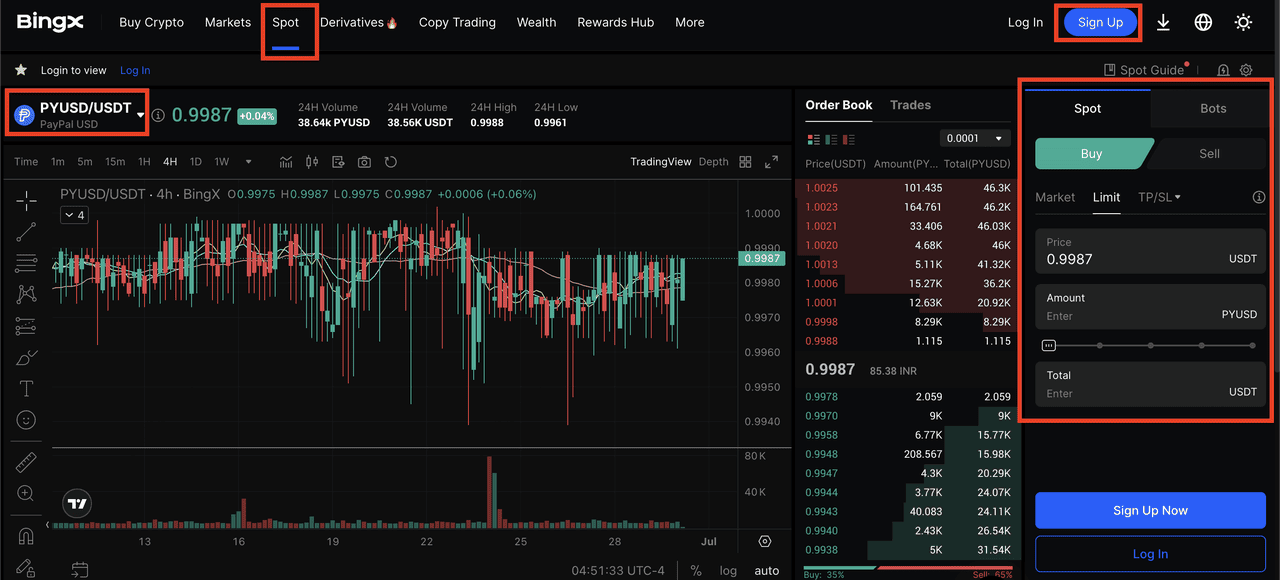
Cumpărarea PYUSD pe BingX este rapidă și prietenoasă cu începătorii. Urmează acești pași pentru a începe:
Pasul 1: Creează un Cont BingX: Vizitează bingx.com și înregistrează-te. Completează verificarea identității (KYC) pentru a debloca toate funcțiile.
Pasul 2: Depune Fonduri: Adaugă USDT sau altă cripto suportată în portofelul tău BingX. Poți, de asemenea, să depui fiat folosind canalele de plată ale BingX.
Pasul 3: Cumpără PYUSD: Mergi la secțiunea Spot. Caută perechea de tranzacționare PYUSD/USDT. Alege o Comandă de Piață pentru cumpărare instantă sau o Comandă cu Limită pentru a seta prețul preferat.
Pasul 4: Stochează sau Transferă: Poți deține PYUSD pe BingX sau să îl transferi într-un portofel extern Ethereum sau Solana. Asigură-te că portofelul tău suportă PYUSD înainte de trimitere.
Sfaturi Pro: Pentru securitate suplimentară, activează mereu autentificarea cu doi factori (2FA) pe contul tău și verifică de două ori toate comisioanele de rețea sau tranzacționare înainte de a face o tranzacție. Asigură-te să verifici adresele contractului PYUSD pe paxos.com pentru a evita interacțiunea cu token-uri false sau de înșelăciune.
Cu BingX suportând acum PYUSD, poți bucura de cel mai bun din ambele lumi: platforme de încredere și plăți fără frontiere.
Considerații Cheie Înainte de Folosirea PYUSD
PYUSD este conceput pentru stabilitate, dar ca toate activele digitale, vine încă cu riscuri pe care ar trebui să le înțelegi înainte de a-l folosi.
1. Comisioane de transfer on-chain: Trimiterea PYUSD către portofele Ethereum sau Solana implică comisioane de rețea blockchain. Aceste comisioane nu sunt percepute de PayPal sau BingX; depind de activitatea rețelei. În perioadele de congestie, comisioanele pot crește brusc, în special pe Ethereum.
3. Reglementări în evoluție: Stablecoin-urile precum PYUSD operează într-un peisaj de reglementare foarte dinamic. Deși PYUSD este reglementat de Departamentul de Servicii Financiare din New York (NYDFS), legile viitoare sau cadrele globale pot impacta modul în care este folosit, tranzacționat sau deținut.
4. Concentrarea ofertei: Rapoartele recente arată că peste 90% din PYUSD este deținut de un grup mic de portofele. Această concentrare de "balene" ar putea duce la îngrijorări în jurul lichidității și mișcării token-urilor. Deși nu este neobișnuit pentru stablecoin-urile noi, este ceva de urmărit pe măsură ce circulația se extinde.
5. Volatilitatea capitalizării de piață: PYUSD este ataşat la dolarul american și răscumpărabil 1:1. Dar capitalizarea sa totală de piață, deși peste 1 miliard de dolari, este încă mică comparativ cu liderii stablecoin precum USDT sau USDC. Aceasta înseamnă că adoptarea și lichiditatea sa pot fluctua pe măsură ce ecosistemul crește.
Ca orice stablecoin, PYUSD oferă simplitate și securitate, dar este important să rămâi informat și să monitorizezi actualizările de la PayPal, Paxos și bursa ta.
Concluzie și Perspectiva Viitoare a PYUSD
PayPal USD (PYUSD) combină stabilitatea fiat cu flexibilitatea blockchain, toate în platforme pe care le folosești deja, precum PayPal, Venmo și BingX. Susținut 1:1 de rezerve în dolari americani și reglementat de NYDFS, devine un stablecoin de referință pentru plăți, remitențe și activitate on-chain.
Cu suport pe Ethereum, Solana și în curând Stellar, plus funcții noi de recompense și parteneriate majore, PYUSD oferă utilitate practică atât pentru începători cât și pentru utilizatorii experimentați în crypto. Totuși, fii atent la riscurile precum comisioanele de rețea, schimbările de reglementare și concentrarea token-urilor. Pe măsură ce stablecoin-urile evoluează, PYUSD se remarcă prin încredere, transparență și utilitate zilnică.
Lectură Înrudită
Întrebări Frecvente despre Stablecoin-ul PayPal USD (PYUSD)
1. Cum cumpăr, trimit sau câștig recompense cu stablecoin-urile PYUSD?
Poți cumpăra PYUSD pe burse crypto precum BingX sau pe PayPal și Venmo. Folosește soldul PayPal, cardul de debit sau contul bancar pentru a-l cumpăra. Pe BingX, poți tranzacționa PYUSD pe Piața Spot. Pentru a trimite PYUSD, folosește PayPal sau Venmo pentru transferuri gratuite peer-to-peer în S.U.A., sau transferă-l on-chain către adrese de portofel Ethereum sau Solana (se aplică comisioane de rețea).
Pentru a câștiga recompense, deține PYUSD în portofelul tău crypto PayPal. Începând cu mijlocul lui 2025, vei primi recompense lunare, în prezent la 3,7% APY, bazate pe soldul tău mediu zilnic.
2. De ce este Stellar important pentru PYUSD?
Stellar este construit pentru plăți transfrontaliere cu costuri reduse. Lansarea viitoare a PYUSD pe Stellar îl va face mai rapid și mai ieftin să trimiți stablecoin-uri la nivel global. Este în special util pentru remitențe și plăți în țările în dezvoltare unde sistemul bancar tradițional este lent sau scump.
3. Este PYUSD sigur și reglementat?
Da. PYUSD este emis de Paxos, o companie de trust reglementată sub Departamentul de Servicii Financiare din New York (NYDFS). Este complet susținut 1:1 de rezerve de dolari americani de înaltă calitate și include rapoarte lunare de transparență. PayPal oferă, de asemenea, protecție pentru transferurile neautorizate (până la 50.000 de dolari).
4. Cum este PYUSD diferit de USDC sau USDT?
Ca USDC, PYUSD este reglementat, transparent și susținut de rezerve în dolari americani. Dar ceea ce îl distinge este integrarea sa nativă cu PayPal și Venmo, permițându-ți să folosești stablecoin-uri pentru plăți din lumea reală fără să părăsești aplicațiile pe care le folosești deja.
Comparativ cu USDT, PYUSD oferă supraveghere de reglementare mai puternică și mai multă transparență. Deși USDT este utilizat pe scară largă în tranzacționarea crypto, PYUSD se concentrează pe plăți zilnice, stocarea valorii stabile și adoptarea retail fără probleme.