

Monero (XMR) is currently the cryptocurrency with the highest level of privacy protection in the market, but precisely because of this characteristic, XMR trading is more complex than other mainstream coins. Many mainstream exchanges have delisted Monero in recent years, making compliant platforms available for selection much fewer than Bitcoin or Ethereum. For Taiwanese users, whether they want to buy XMR for long-term holding, sell it for USD withdrawal, or simply seek price exposure, they need to first understand which platforms still support it, their respective limitations, and the operational paths corresponding to different trading modes before taking action.
This article systematically organizes the most essential information Taiwanese users need to know when trading Monero in 2026, from exchange comparisons, the selection logic between CEX and DEX, to risk explanations of no-KYC platforms, and operational steps for BingX perpetual contracts.
Key Summary
- Due to regulatory pressure from privacy features, mainstream exchanges like BingX, Binance, and OKX have delisted XMR, leaving fewer compliant CEX platforms available than other cryptocurrencies.
- Major compliant CEX platforms currently supporting XMR spot trading include Kraken and Bitfinex, both requiring KYC completion for fiat withdrawals.
- Decentralized platforms (DEX) like Haveno can provide no-KYC XMR trading, but with limited liquidity and complex operations, suitable for users with technical expertise.
- Users who simply want to gain XMR price exposure without holding actual Monero can trade XMR/USDT perpetual contracts on BingX, which has a low operational threshold and supports Traditional Chinese interface.
- While no-KYC platforms exist, they do not constitute compliant withdrawal channels in Taiwan, suitable for short-term intermediate use after understanding risks, not recommended as long-term asset management tools.
What is Monero (XMR)?
Monero (XMR) is an open-source blockchain project founded in 2014, with privacy, fungibility, and decentralization as its three core principles. Unlike Bitcoin or Ethereum, Monero's blockchain encrypts and obfuscates all transaction information by default: through Ring Signatures to hide sender identity, Stealth Addresses to protect recipient information, and Ring Confidential Transactions (RingCT) to encrypt transaction amounts. This triple mechanism prevents external observers from reading any identifiable data from the public ledger, making it the cryptocurrency with the highest level of privacy protection among current mainstream cryptocurrencies.
Monero mining uses the RandomX algorithm, designed specifically for ordinary CPUs, maintaining the network's decentralization level. XMR adopts a Tail Emission mechanism, continuing to release small amounts of new coins as miner rewards annually after the main issuance phase ends, ensuring long-term network operation incentive structure. Monero has no known founding institution or foundation and is jointly developed and maintained by a global volunteer community.
It is precisely this thorough privacy design that makes Monero face higher thresholds in exchange compliance reviews than other cryptocurrencies. Multiple mainstream platforms, including BingX, currently do not support XMR spot trading and deposit/withdrawal services due to compliance considerations. Users should first consider compliance requirements before using Monero.
Why is Converting Monero to USD More Difficult Than Other Cryptocurrencies?
Most cryptocurrency blockchain transaction records are publicly viewable, allowing regulatory agencies and exchanges to track fund flows through on-chain analysis tools to confirm compliance with Anti-Money Laundering (AML) requirements. Monero is different - its Ring Signatures, Stealth Addresses, and RingCT mechanisms make the sender, recipient, and amount of each transaction unidentifiable by external parties, making it nearly impossible for exchanges to conduct compliant fund tracing of XMR transactions under the Financial Action Task Force (FATF) Travel Rule.
This technical characteristic directly led multiple mainstream exchanges to choose to delist Monero. Binance removed all XMR spot trading pairs in February 2024; OKX and multiple European exchanges also followed suit due to the implementation of EU MiCA regulations. Kraken stopped XMR services for European Economic Area (EEA) users in 2024 but still maintains support for US and some other regional users. BingX currently also does not support XMR spot trading and deposit/withdrawal services due to compliance considerations.
For Taiwanese users, this means that before choosing XMR trading platforms, they must first confirm whether the platform offers XMR deposit, trading, and withdrawal functions for Taiwan region, as related policies may adjust with changing regulatory environments. It is essential to confirm the latest status before use.
Technical Preparations Needed Before Converting XMR to USD
Before selecting a platform and starting the conversion, there are several Monero-specific technical details that need to be understood in advance. Ignoring these details may lead to asset delays or even losses.
- Wallet Preparation: Before transferring XMR to an exchange, you need a wallet capable of properly managing Monero private keys. Current mainstream options include the official desktop wallet Monero GUI (supporting full node and lightweight modes), lightweight desktop wallet Feather Wallet, and mobile wallets like Cake Wallet (iOS/Android). For large amounts of XMR, it's recommended to use Ledger or Trezor hardware wallets combined with the above software for cold storage, where private keys never touch the network, providing the highest security. Regardless of which wallet is used, be sure to complete synchronization with the exchange blockchain before first use, ensuring balance displays correctly before making transfers.
- Payment ID and Deposit Address: Some exchanges use the same XMR deposit address for all users and identify different accounts through Payment ID. If Payment ID is not filled in during transfer, funds may not be properly credited, requiring customer service contact for resolution, which can take days or longer. Some exchanges have recently switched to using Integrated Addresses instead of Payment ID. The correct format should be confirmed on the platform's deposit page before use.
- Network Confirmation Time: Monero transactions require about 10 network confirmations to be credited on exchanges, with each block taking about 2 minutes, resulting in a total waiting time of approximately 20 minutes. This waiting time is longer than Bitcoin or Ethereum. This should be considered in advance when arranging withdrawal schedules to avoid losses due to exchange rate timing caused by confirmation delays.
- Network Fees: Monero's on-chain fees are usually lower than Bitcoin but fluctuate with network usage. Before arranging large XMR transfers, check current network rates and choose to operate during less congested network periods to reduce fee costs.
Extended Reading: 2026 Monero Wallet Recommendations: Which XMR Wallet is Most Suitable for Taiwanese Users?
CEX vs DEX: Comparing Advantages and Disadvantages of Centralized and Decentralized Platforms for Buying and Selling Monero
For most users, the first decision point when trading XMR is choosing between centralized exchanges (CEX) or decentralized platforms (DEX). The two differ significantly in liquidity, compliance, and operational thresholds.
Centralized Exchanges (CEX) are operated by corporate institutions, requiring users to complete KYC identity verification to use fiat withdrawal functions. From a compliance perspective, CEX are supervised by regulatory agencies in their jurisdictions and must comply with Anti-Money Laundering (AML) and Counter-Terrorism Financing (CFT) regulations. Fiat withdrawals must be completed through the banking system, and the entire process can be tracked by regulatory agencies, making it the only viable path for Taiwanese users to compliantly withdraw XMR to bank accounts. CEX advantages include high liquidity, small bid-ask spreads, relatively user-friendly interfaces, and support for compliant withdrawal channels like SWIFT wire transfers. Main disadvantages include the need to submit personal identity information, and platforms may adjust XMR support status at any time due to regulatory pressure. Major CEX currently supporting XMR include Kraken and Bitfinex.
Decentralized Platforms (DEX) allow users to conduct peer-to-peer trading directly without submitting identity information, usually without KYC requirements. From a compliance perspective, DEX themselves are not subject to traditional financial regulatory oversight and do not provide fiat withdrawal functions. Funds remain in the crypto world after transaction completion. If you need to convert XMR to USD for withdrawal to Taiwanese bank accounts, you still need to introduce compliant CEX in subsequent steps. Taking Haveno, the XMR-specific decentralized exchange, as an example, the platform runs on the Tor network, allowing users to buy and sell XMR without KYC, but liquidity is relatively low and technical requirements are high.
|
Aspect |
CEX (Centralized Exchange) |
DEX / Decentralized Services |
|
KYC Requirements |
Required |
Usually not required |
|
Liquidity |
High |
Low to Medium |
|
Bid-Ask Spread |
Small |
Larger |
|
Fiat Withdrawal |
Supported (SWIFT wire transfer, etc.) |
Usually no direct fiat withdrawal |
|
Operational Difficulty |
Low to Medium |
Medium to High |
|
Representative Platforms |
Kraken, Bitfinex |
Haveno, ChangeNOW |
Monero to USD Platform Recommendations: Kraken vs Bitfinex Comparison
Considering Taiwanese users' compliance needs and fiat withdrawal capabilities, the most worthy XMR spot exchanges currently are Kraken and Bitfinex. Both maintain XMR trading support and can withdraw USD to foreign currency bank accounts via SWIFT wire transfer.
1. Kraken
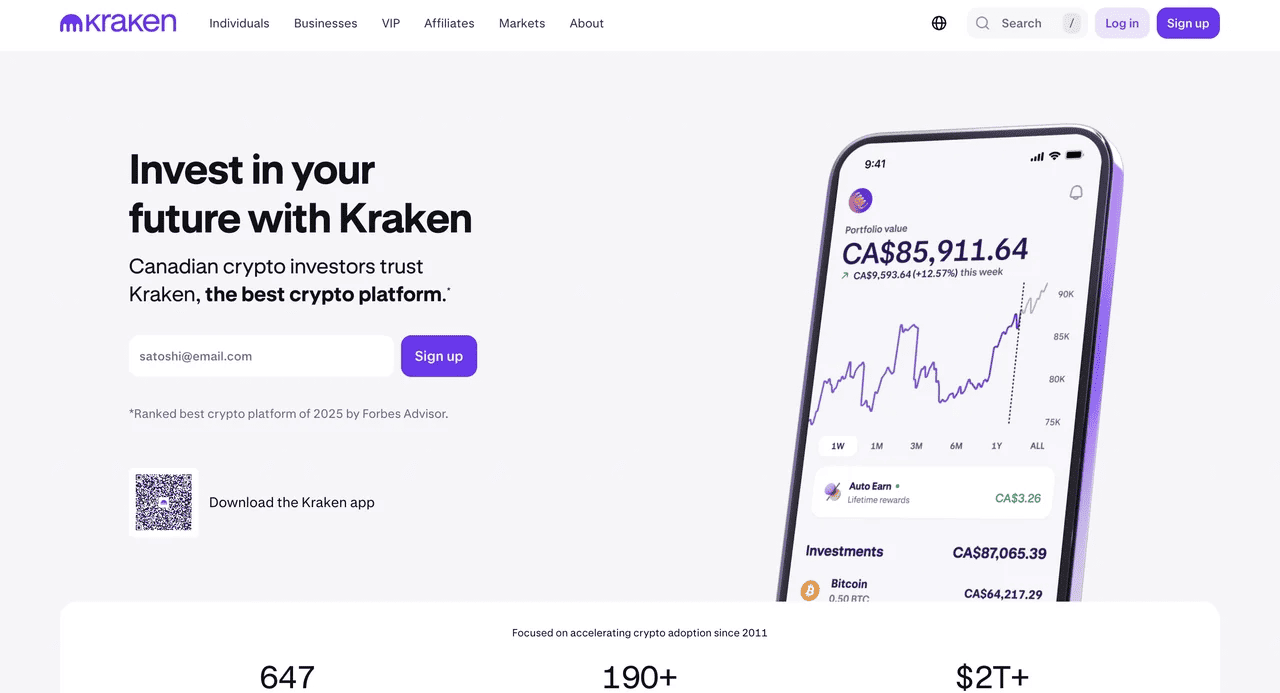
Since its establishment in 2011, Kraken has never experienced customer fund loss, with a security record among the industry's best, and holds a Wyoming State Bank license in the US, making its compliance framework closer to traditional financial institutions. The platform provides direct XMR/USD trading pairs, one of the few compliant CEX supporting direct XMR/USD trading, eliminating the need for stablecoin intermediary steps. Kraken Pro's XMR taker fees start at approximately 0.26%, decreasing with trading volume; supports SWIFT international wire transfer withdrawals with fees around $25 (fixed), taking 1-5 business days to arrive. The interface is primarily in English with complete operational functions, suitable for users with basic exchange operation experience. Note that Kraken has stopped providing XMR services to European Economic Area users. Taiwanese users should confirm current regional support status before use.
2. Bitfinex
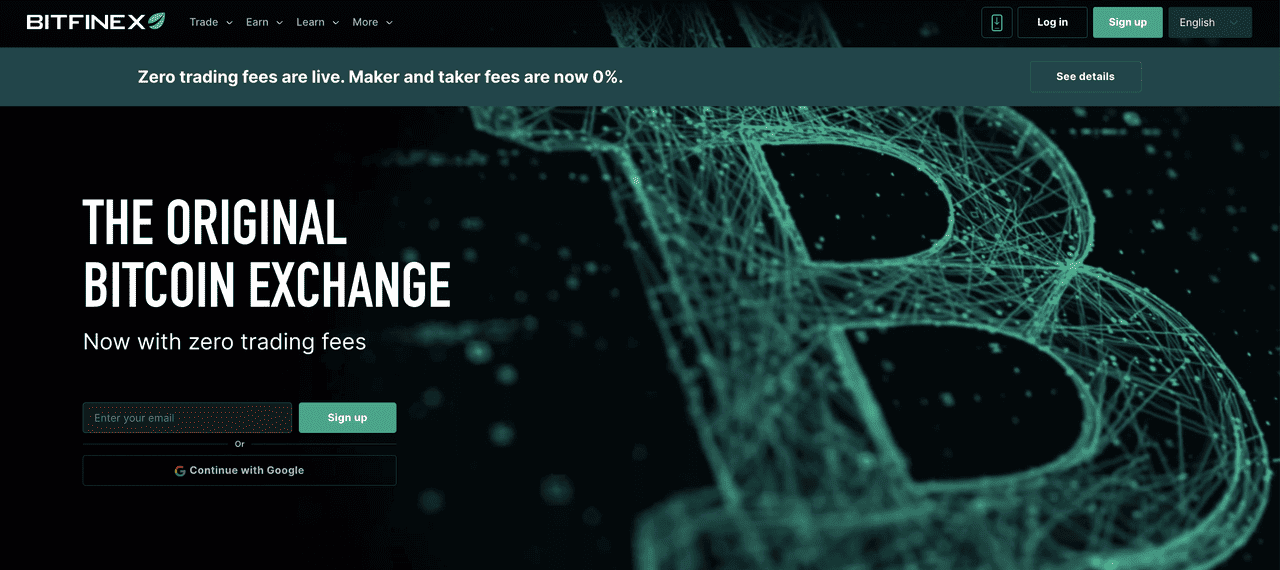
Bitfinex is one of the oldest cryptocurrency exchanges, established in 1988, holding both XMR/USD and XMR/USDT trading pairs. Among mainstream XMR exchanges, it has relatively deep liquidity with better spread control capability for large transactions. The platform provides complete spot and margin trading functions, with fee structure using tiered Maker/Taker system, where high-volume users enjoy lower rates. Supports SWIFT wire transfer withdrawals to international bank accounts, but the withdrawal process is relatively cumbersome, and KYC review times are longer in some regions. Bitfinex's interface design targets advanced traders with rich features but a steeper learning curve for beginners, suitable for users with exchange experience.
XMR (Monero) Centralized Trading Platform Comparison Overview
|
Platform |
Supported Trading Pairs |
Taker Fee (Entry Level) |
USD Withdrawal Method |
Suitable for |
|
Kraken |
XMR/USD, XMR/USDT, XMR/BTC |
~0.26% |
SWIFT wire transfer (~$25 fee) |
Users prioritizing compliance and asset security |
|
Bitfinex |
XMR/USD, XMR/USDT |
~0.20% |
SWIFT wire transfer |
Users with trading experience who prioritize liquidity |
No-KYC Monero Platform Recommendations: Haveno vs Instant Exchange Services Comparison
Some users, based on privacy considerations, prefer to trade Monero without submitting identity information. There are indeed several no-KYC channels available in the market, but each comes with liquidity limitations and usage risks that need careful evaluation.
It's important to note that no-KYC platforms do not constitute compliant fiat withdrawal channels in Taiwan. If the ultimate goal is to convert XMR to USD and remit to Taiwanese bank accounts, you still need to complete the withdrawal process through compliant exchanges with KYC verification. In comparison, no-KYC platforms are more suitable as tools for obtaining or intermediating XMR, rather than final withdrawal channels.
Compliance Considerations for Using No-KYC Platforms in Taiwan
Taiwan's regulatory framework for Virtual Asset Service Providers (VASP) is continuously improving. The Financial Supervisory Commission requires compliant cryptocurrency operators to implement AML/CFT regulations, including identity verification for specific transactions. No-KYC platforms themselves operate on the regulatory edge and do not constitute compliant fiat withdrawal channels in Taiwan. XMR obtained through Haveno, ChangeNOW, or Trocador, if ultimately intended to be converted to USD or TWD and remitted to Taiwanese bank accounts, still requires completing the withdrawal process through compliant exchanges with KYC verification - this step cannot be skipped. Using no-KYC platforms as intermediate tools for obtaining XMR and ultimately completing withdrawals through compliant channels are two different steps that need to be considered together when planning the overall process.
1. Haveno: XMR-Specific Decentralized Exchange
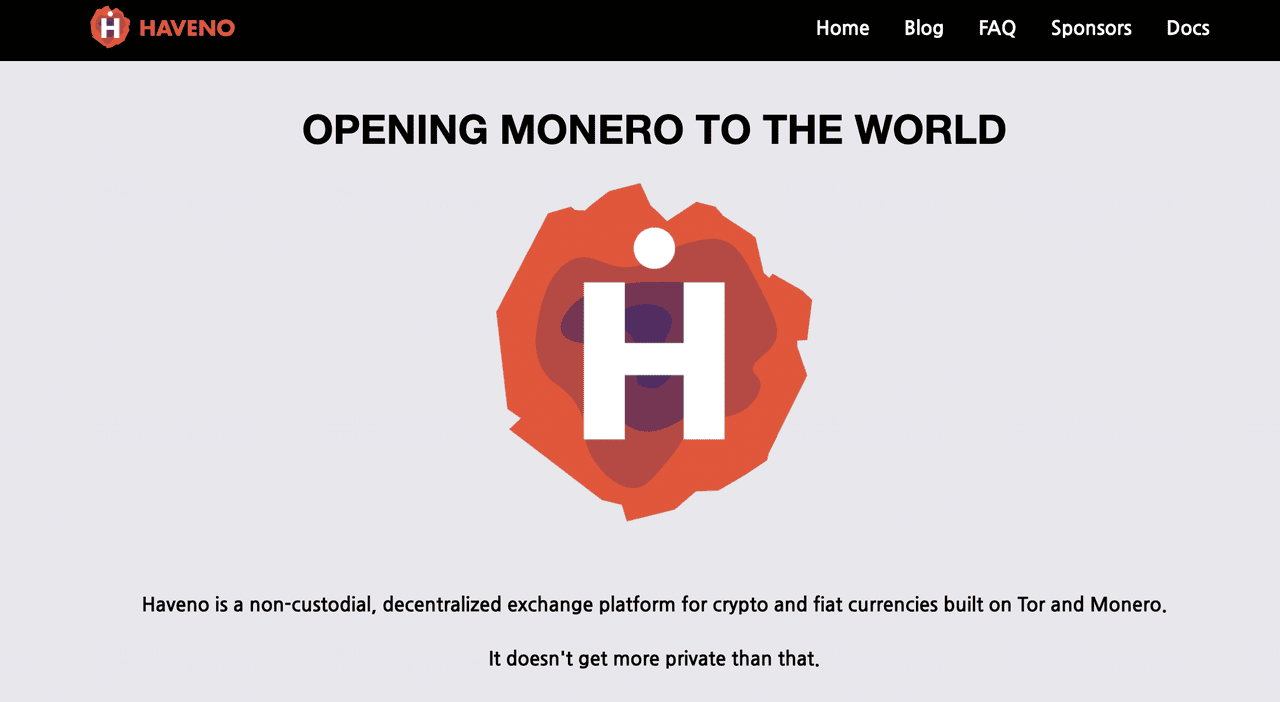
Haveno is currently the most recognized decentralized exchange by the Monero community, running on the Tor network, completely decentralized, maintained autonomously by the community with no central institution control. The platform supports direct peer-to-peer buying and selling of XMR with fiat currencies (including TWD and USD) throughout the process without KYC, providing the highest level of privacy protection among all XMR trading channels. Main limitations include low liquidity and longer transaction matching times compared to CEX; counterparty risk needs self-assessment, and the platform's dispute resolution mechanism is relatively limited. Technical setup also has certain thresholds, requiring Tor installation and familiarity with P2P trading processes, suitable for users with high privacy requirements and technical expertise.
2. ChangeNOW: No-Account Instant Exchange Service
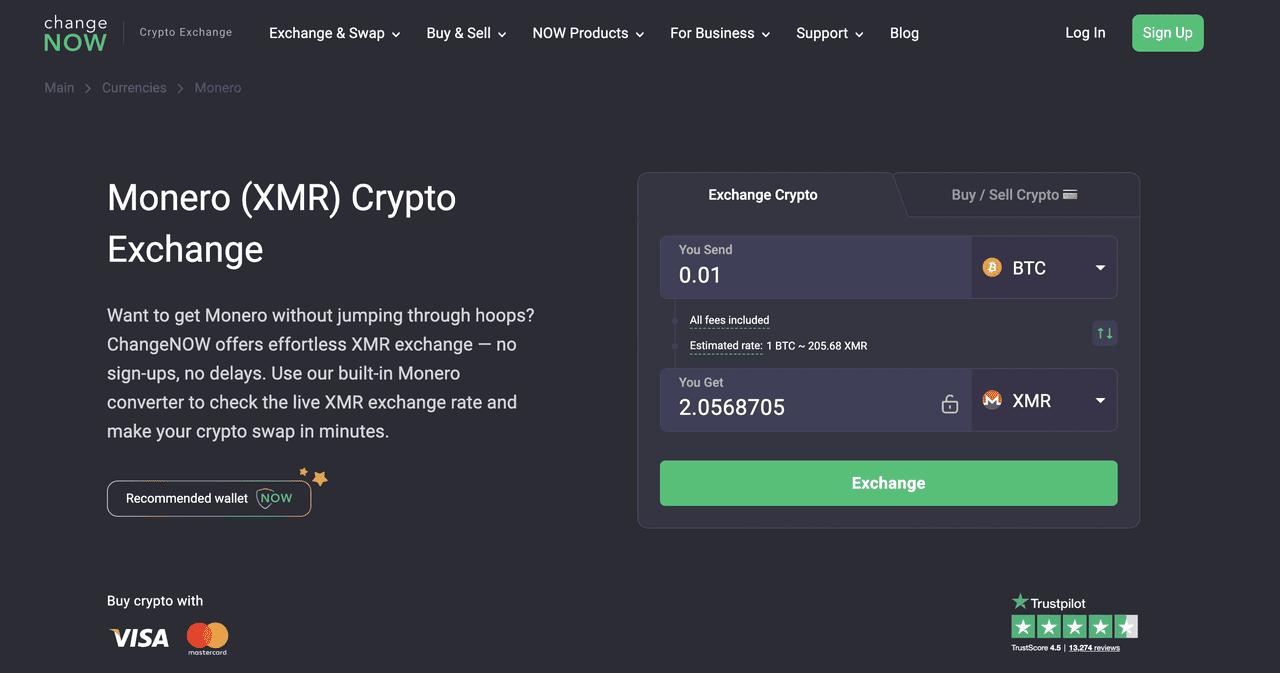
ChangeNOW allows users to exchange BTC, ETH, or USDT and other cryptocurrencies for XMR (or vice versa) without opening an account. Some transaction volumes below thresholds do not require KYC, with relatively simple operational processes, suitable for users who temporarily need to obtain XMR. Main disadvantages include exchange rates that usually contain high service fees (approximately 0.5% to 2%), higher than CEX spot trading fees; the service itself does not provide fiat withdrawal functions, and funds remain in the crypto world after exchange completion, requiring separate withdrawal path planning.
3. Trocador: Instant Exchange Aggregation Comparison Platform
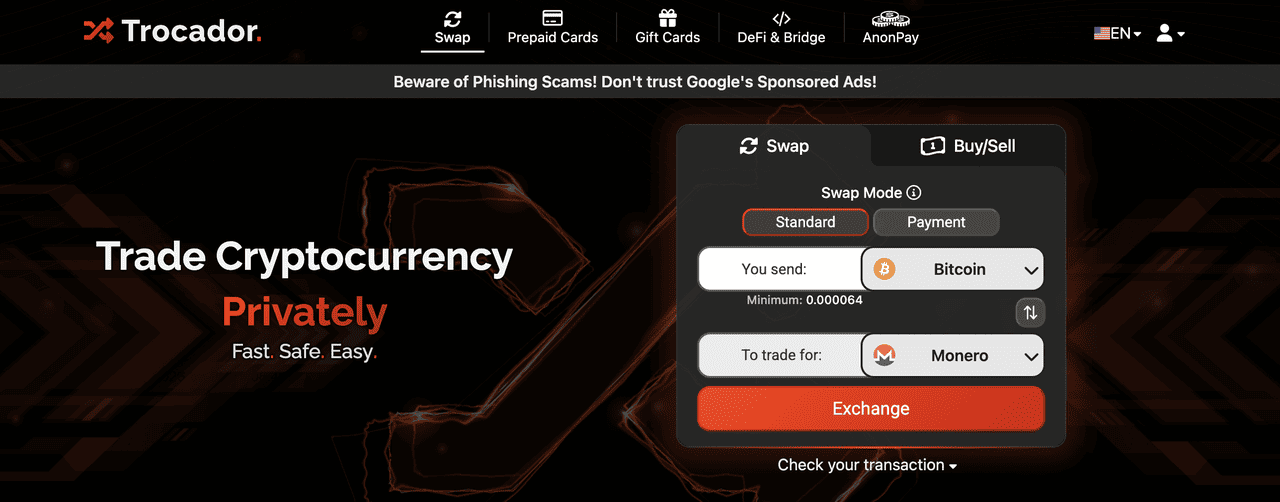
Trocador is an instant exchange aggregator that simultaneously queries exchange rates from multiple exchange services and lists comparison results, allowing users to choose the channel with the best current conditions to execute XMR exchanges. The platform itself does not directly execute transactions but serves as an intermediary directing to various exchange service providers. Similar to ChangeNOW, Trocador small-amount transactions usually do not require KYC, but similarly cannot directly withdraw to bank accounts, and cannot guarantee that all aggregated service providers meet the same security and compliance standards. Users should confirm the background and reputation of selected service providers before use.
XMR (Monero) No-KYC Trading Platform Comparison Overview
|
Platform |
Type |
KYC Requirements |
Liquidity |
Fiat Withdrawal |
Suitable for |
|
Haveno |
Decentralized P2P Exchange |
Not required |
Low |
No direct withdrawal support |
Users prioritizing privacy with basic technical capabilities |
|
ChangeNOW |
Instant Exchange Service |
Small amounts usually not required |
Medium |
No direct withdrawal support |
Users wanting quick exchanges without account registration |
|
Trocador |
Exchange Aggregation Platform |
Small amounts usually not required |
Medium |
No direct withdrawal support |
Users wanting to compare multiple exchange prices and paths |
How to Trade Monero (XMR/Monero) Compliantly? Participating in Price Fluctuations Through BingX Perpetual Contracts
For users who only want to profit from XMR price fluctuations without actually holding Monero, perpetual contracts provide an advantage in compliance that spot XMR exchanges cannot match: the entire trading process does not involve XMR deposits, withdrawals, or on-chain transfers. Margin and settlement are all denominated in USDT, operating entirely within the traditional crypto asset regulatory framework. Compared to opening accounts on Kraken or Bitfinex for XMR spot trading, this path eliminates the compliance complexities specific to Monero and doesn't require managing XMR wallets or handling technical details like Payment IDs.
BingX offers XMR/USDT perpetual contracts, allowing users to go long (bullish on XMR) or short (bearish on XMR), suitable for the following scenarios: traders who are bullish or bearish on XMR short-term trends but don't want to handle wallet and on-chain processes; users who already hold XMR spot and want to hedge prices through contracts; and Taiwanese users who want to participate in XMR market movements on a compliant platform with Traditional Chinese interface using USDT as margin. BingX perpetual contract maker fees are 0.02% and taker fees are 0.05%, competitive rates in the industry.
Trading XMR/USDT Perpetual Contracts on BingX
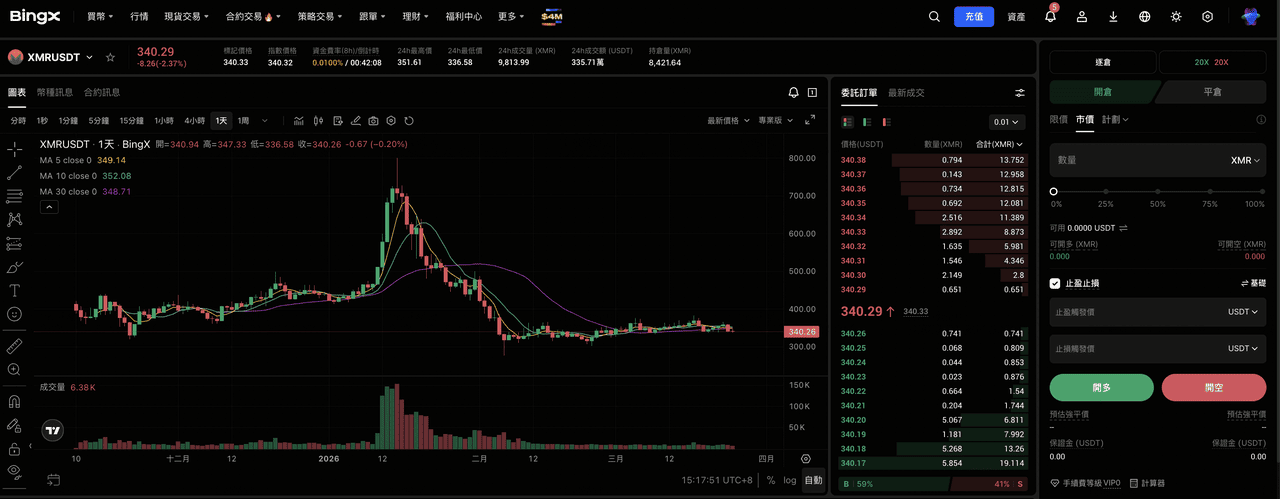
- Register and Complete KYC: Visit the BingX official website or download the app, complete account registration then upload identity documents for KYC verification. After approval, you can deposit and trade. It's recommended to handle this in advance.
- Deposit USDT as Margin: On the "Assets" page, click deposit, select USDT and copy the deposit address, transfer from your personal wallet or other exchanges. TRC-20 network usually has the lowest on-chain fees.
- Transfer USDT to Futures Account: After USDT arrives, it defaults to the spot account. You need to manually transfer to the futures account on the assets page - this step is fee-free.
- Search for XMR/USDT Perpetual Contract: Enter the "Futures Trading" page, search for XMR to find the XMR/USDT perpetual contract, enter the trading interface to confirm current quotes and funding rates.
- Set Leverage Multiplier: Choose opening leverage. Beginners are recommended to start with low leverage from 2-5x. Higher leverage amplifies both profit and loss proportionally, and liquidation distance is also closer.
- Choose Direction and Place Order: After judging XMR trends, choose long (bullish) or short (bearish), select market order (immediate execution) or limit order (set target price), enter amount and submit.
- Confirm Order and Set Take Profit/Stop Loss: Before placing order, verify margin, fees, and liquidation price. After execution, set take profit/stop loss orders on the positions page to control risk.
5 Things to Note Before Trading Monero
- Confirm Platform's XMR Support Status for Taiwan Region Before Operating: Monero platform support policies change frequently due to regional and regulatory dynamics. XMR service scope of exchanges like Kraken and Bitfinex may adjust at any time. Before use, be sure to confirm on the platform's official website whether Taiwanese users can currently conduct XMR deposits, trading, and withdrawals.
- Be Sure to Confirm Address and Payment ID When Withdrawing: Some exchanges use the same XMR deposit address for all users and distinguish different accounts through Payment ID. If Payment ID is not filled during transfer, funds may not be properly credited, requiring customer service contact for resolution, which can take days or longer. Be sure to verify before transfer and test with small amounts first.
- Wait for Sufficient Network Confirmations: Monero transactions require about 10 network confirmations to be credited on exchanges, with waiting time of approximately 20 minutes. Before confirmation completion, funds will not appear in account balance. No need to repeatedly check or repeat operations.
- No-KYC Platforms Don't Equal Compliant Withdrawal Channels: XMR obtained through Haveno or instant exchange services, if ultimately needed to be converted to USD for deposit to Taiwanese bank accounts, still requires completing withdrawal processes through compliant exchanges with KYC verification. Platforms that skip KYC cannot provide direct fiat withdrawal services. This needs to be considered together when planning withdrawal paths.
- Perpetual Contract Positions Need Attention to Funding Rates and Liquidation Risk: While holding XMR/USDT perpetual contracts on BingX, funding rates are charged every 8 hours. Cumulative costs for long-term positions need to be included in calculations. Additionally, leveraged trading has liquidation risk when prices move in unfavorable directions. It's recommended to set stop loss orders and control margin ratio for each trade to avoid forced liquidation due to short-term volatility.
Conclusion
Trading Monero in 2026 requires more upfront preparation than most cryptocurrencies. For compliant CEX, Kraken is currently the most direct XMR/USD spot trading option for Taiwanese users, while Bitfinex has certain advantages in liquidity. Both require KYC and can withdraw USD to foreign currency accounts via SWIFT wire transfer. If you only need XMR price exposure without handling wallet and withdrawal processes, BingX's XMR/USDT perpetual contracts provide an alternative path with lower operational thresholds and Traditional Chinese support. Regardless of which method you choose, be sure to confirm platform regional support status before formal operation and complete KYC verification for each platform in advance.
Related Reading
- Monero Wallet Recommendations: Complete Guide to XMR Hardware Cold Wallets and Fund Security
- 2026 Monero Wallet Recommendations: Which XMR Wallet is Most Suitable for Taiwanese Users?
- What Are the 7 Major Privacy Coins Worth Watching in 2026?
- Zcash (ZEC) vs. Monero (XMR): Which is the Better Privacy Coin in 2026?
- Ledger vs. Trezor: How to Choose Between These Two Cryptocurrency Hardware Wallets? (2026)