
As of February 2026, the Ethereum price (ETH) is trading within the $1,850 to $1,950 range. Compared to its all-time high of approximately $4,950 reached in August 2025, it remains in a deep correction and consolidation phase. However, most institutional analysts generally believe that this period of low-level consolidation is an accumulation phase for the continued strengthening of Ethereum's network fundamentals. With the Pectra protocol upgrade deployment, continued capital inflows into Ethereum spot ETFs, and accelerated institutional adoption, Ethereum's long-term structure continues to demonstrate relatively stable development trends.
In this market environment, for Taiwanese users, the key focus at the operational level is selecting platforms with high security, sufficient liquidity, and support for ETH spot trading. This article will outline the key considerations when evaluating exchanges for purchasing Ethereum in Taiwan in 2026, and use BingX as an example to explain the complete process from registration and deposit to actually buying Ethereum, helping users successfully complete their first or advanced allocation.
2026 Ethereum Price Trend Analysis: $1,900 Consolidation Bottom-Building, Standard Chartered and VanEck Year-End Targets Range from $7,500 to $15,000
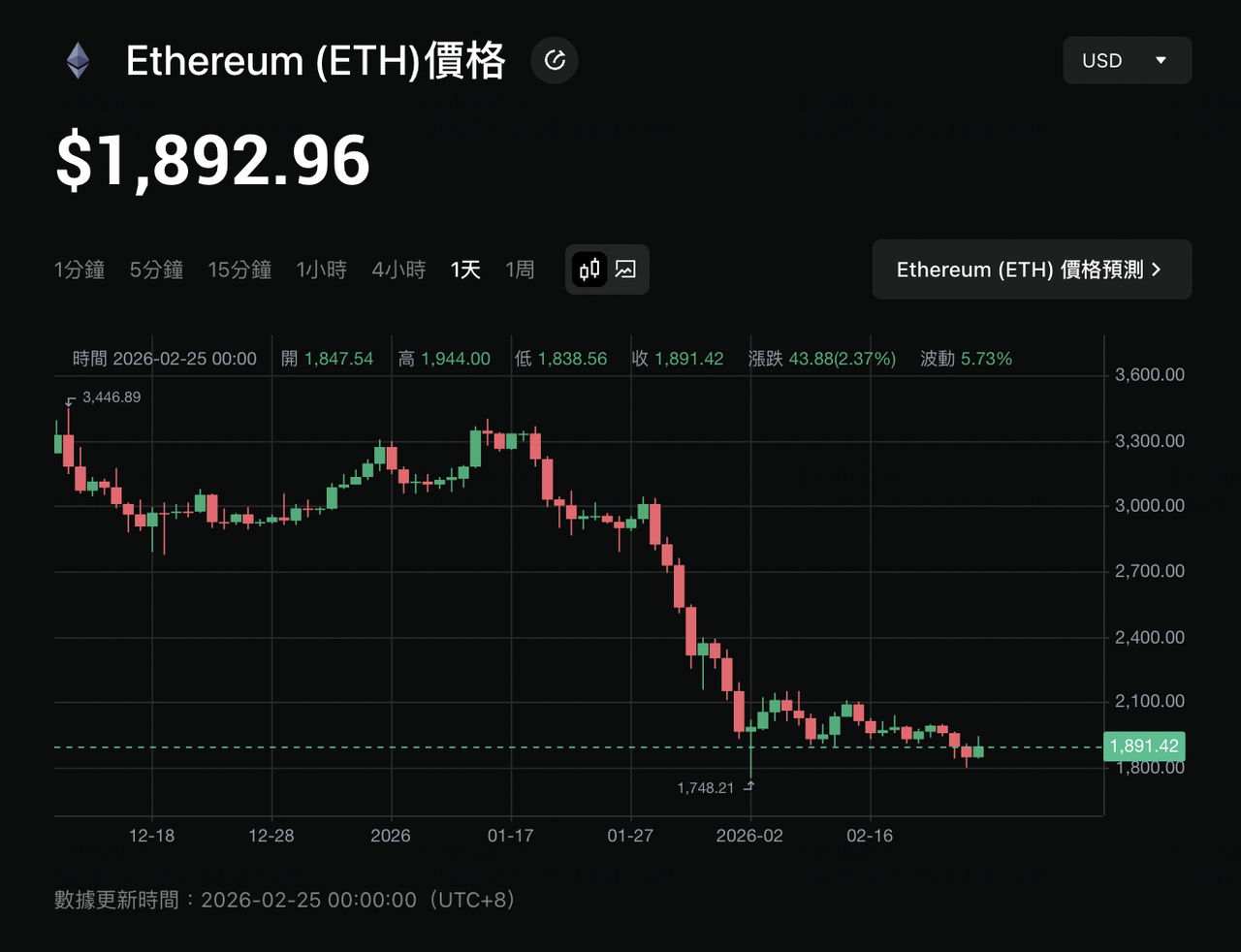
2025 could be considered a highly representative year for Ethereum. Ethereum broke through $4,950 in August, setting a new all-time high. The driving force behind this rally came from several key factors, including the official approval of Ethereum spot ETFs in the United States, the Pectra protocol upgrade significantly improving network performance, and institutional funds continuing to strategically position Ethereum as the core infrastructure for DeFi and RWA (Real World Asset tokenization). However, since the fourth quarter of 2025, the macroeconomic environment has become more conservative, market risk appetite has declined, and crypto assets have entered a correction phase amid profit-taking and capital rotation. Ethereum has fallen nearly 60% from its high and dropped below $2,000 in early 2026, entering a consolidation range.
As of late February 2026, Ethereum price predictions show it oscillating around $1,850 to $1,950. While the short-term technical outlook remains under pressure, looking at a longer time horizon, market focus has shifted to whether fundamentals can continue to strengthen during this period of consolidation. The Pectra upgrade brings Account Abstraction and validator performance improvements, laying a new foundation for user experience and network efficiency. Meanwhile, Ethereum maintains its leading position in Layer 2 scaling ecosystems, stablecoin settlement, and real-world asset tokenization, continuously solidifying its advantages as an infrastructure layer and providing support for long-term bullish narratives.
In terms of institutional predictions, Standard Chartered analysts have raised their end-2026 Ethereum target price to $7,500, citing reasons including continued expansion of DeFi and stablecoin usage scale, and steady accumulation of spot ETF fund scale. VanEck presents a more aggressive target of $15,000, positioning Ethereum as a core asset with simultaneous asset preservation, financial application, and value storage functions. Overall, the consensus range among most mainstream institutions for 2026 falls between $4,000 and $8,000; under specific macroeconomic scenario assumptions, institutions like JPMorgan even provide potential assessments above $10,000. These predictions show that despite short-term price pressure, the market maintains high expectations for Ethereum's long-term structure and application prospects.
What Are the Common Channels for Buying Ethereum in Taiwan?
In Taiwan, the methods for purchasing Ethereum (ETH) can be mainly divided into four categories: through cryptocurrency exchanges, through over-the-counter (OTC/P2P) trading, through international third-party deposit services, and through converting stablecoins after transfer to exchanges. Different channels have significant differences in security, cost structure, operational difficulty, and risk tolerance, and are suitable for different types of users. The following will explain the characteristics and considerations of each method according to practical usage scenarios.
1. Buying Ethereum Through Cryptocurrency Exchanges
Features: Taiwan's most mainstream option, combining security and liquidity.
For most Taiwanese investors, purchasing Ethereum through cryptocurrency exchanges is the most balanced approach between risk and efficiency. The general process involves completing registration and KYC identity verification, then using New Taiwan Dollar deposits or first obtaining stablecoins (such as USDT), then buying ETH in the spot market.
The advantage of exchanges lies in transparent pricing and sufficient liquidity, effectively reducing slippage risk. Especially during periods of high market volatility, sufficient market depth can ensure execution efficiency. Additionally, exchanges typically support both market orders and limit orders, allowing investors to implement gradual positioning strategies according to market rhythm, rather than taking on price volatility risk all at once.
Unlike Bitcoin, Ethereum trading demand extends beyond long-term holding to frequently involve subsequent transfers to wallets, participation in staking, Layer 2 ecosystems, or DeFi applications. Therefore, selecting platforms that support diverse withdrawal networks with transparent fees is particularly important. For example, BingX provides ETH/USDT spot trading and supports multiple network withdrawal options, allowing users to complete deposits, trading, and asset management on the same platform, offering relatively high operational efficiency for users who simultaneously engage in investment and ecosystem participation.
2. Buying Ethereum Through Over-the-Counter (OTC/P2P) Trading
Features: High trading flexibility, but significantly higher counterparty risk.
Over-the-counter trading and P2P refer to direct Ethereum buying and selling between individuals or merchants without going through public matching markets. This type of method is relatively flexible in payment conditions, such as using bank transfers or other settlement methods, but also increases information asymmetry and counterparty risk.
In practical Taiwan market experience, P2P scam cases are not uncommon. Common situations include not receiving Ethereum after payment, forged transfer certificates, and inducement to conduct private transactions outside platform guarantee mechanisms. Once funds are transferred out, recovery is extremely difficult. Additionally, OTC prices typically involve premiums, and pricing may not synchronize with public markets, making it difficult for investors to immediately judge reasonableness. Since Ethereum can be quickly transferred and transactions are irreversible, dispute resolution becomes more challenging once issues arise. Therefore, unless users have sufficient experience and use platforms with protection mechanisms, OTC/P2P should not be considered the primary purchasing method.
3. Buying Ethereum Through Credit Card or Third-Party Services
Features: Low entry barrier, fast speed, but higher overall cost.
Some Taiwanese users choose to purchase Ethereum directly through international third-party services, such as using credit cards or debit cards for purchases, or first obtaining stablecoins before transferring to exchanges. Common services include MoonPay, Simplex, Transak, etc., which are often integrated into exchange or crypto wallet interfaces, allowing users to complete the purchase process directly.
The advantage of this method is simplified processes, suitable for first-time small-amount trials or temporary top-ups; however, one should note credit card fees, exchange rate differences, and platform service fees, with actual acquisition costs usually higher than exchange spot prices. For users with long-term investment or higher trading frequency, continued use of this method may accumulate higher costs, with relatively limited overall benefits.
4. Buying Ethereum Through Stablecoin Conversion
Features: Lowest cost, suitable for investors with crypto asset foundation.
Investors who already hold USDT or other stablecoins can directly transfer stablecoins to exchanges and then exchange for ETH in the spot market. This method eliminates fiat deposit processes, has relatively transparent fee structures, and is closer to real-time market prices, making it a commonly adopted operational model for investors with higher trading frequency or larger single amounts. For Taiwanese users familiar with crypto market operations, stablecoin conversion is typically the most cost-effective method. However, attention should still be paid to transfer network selection and address confirmation to avoid asset loss due to incorrect chain selection.
Which Method Is Most Suitable for Taiwanese Investors to Buy Ethereum?
Considering the above channels, while OTC trading offers flexibility, it poses relatively high risks in the practical Taiwan market and is not suitable as the primary purchasing method for most investors; purchasing through international third-party platforms or credit cards is convenient but involves higher fees and exchange rate costs, making it less cost-effective for long-term use; stablecoin transfer is the lowest cost but requires higher operational familiarity.
In comparison, purchasing Ethereum through cryptocurrency exchanges with KYC mechanisms, sufficient liquidity, and transparent pricing remains the most stable choice with relatively controllable risk for current Taiwanese investors. Exchanges can complete deposits, trading, and asset management on the same platform, and are more suitable for implementing gradual positioning and strategy adjustments in response to different market environments. Therefore, for most Taiwanese users hoping to enter or continue allocating to Ethereum in 2026, choosing a suitable cryptocurrency exchange is often the most balanced approach between overall cost and security.
2026 Taiwan Ethereum Purchase Trading Platform Recommendations
Entering 2026, Taiwanese investors are no longer just focused on single transaction fees when choosing platforms to purchase Ethereum, but are more comprehensively evaluating platform stability, security mechanisms, ETH market depth, and whether they support staking, dollar-cost averaging, and other advanced features. The following outlines the main platforms currently available to Taiwanese users that are representative in Ethereum trading.
1. BingX Exchange
Positioning: Comprehensive cryptocurrency platform providing Ethereum spot trading and diversified strategy tools.
Founded in 2018, BingX has served over 40 million users across more than 100 countries and regions as of 2026. For Taiwanese investors, they can directly purchase stablecoins through credit cards on BingX, or deposit stablecoins and then directly buy Ethereum (ETH) in the spot market for medium to long-term holding or gradual positioning. In terms of Ethereum spot trading, BingX offers ETH/USDT trading pairs with sufficient market depth, supporting both market orders and limit orders. BingX spot trading fees are approximately 0.1%, offering a clear cost advantage compared to some international exchanges' 0.2%–0.4%.
In terms of trading tools, BingX offers social copy trading functionality, publicly displaying performance indicators such as historical win rates and maximum drawdown, helping Ethereum investors evaluate the risk characteristics of different strategies. The platform also integrates BingX AI auxiliary analysis modules, providing market trend analysis and trading behavior observations. Additionally, the dollar-cost averaging (DCA) feature allows users to set fixed amounts for automatic ETH purchases, helping to average entry costs during volatile market periods.
In terms of security, BingX employs cold-hot wallet separation and multi-signature mechanisms, and provides BingX Shield Fund and 100% Proof of Reserves for users to independently verify asset status. The platform features Traditional Chinese interface and customer support, making it relatively user-friendly for Taiwanese users.
2. Kraken Exchange
Positioning: Long-established Ethereum trading platform focused on security and compliance.
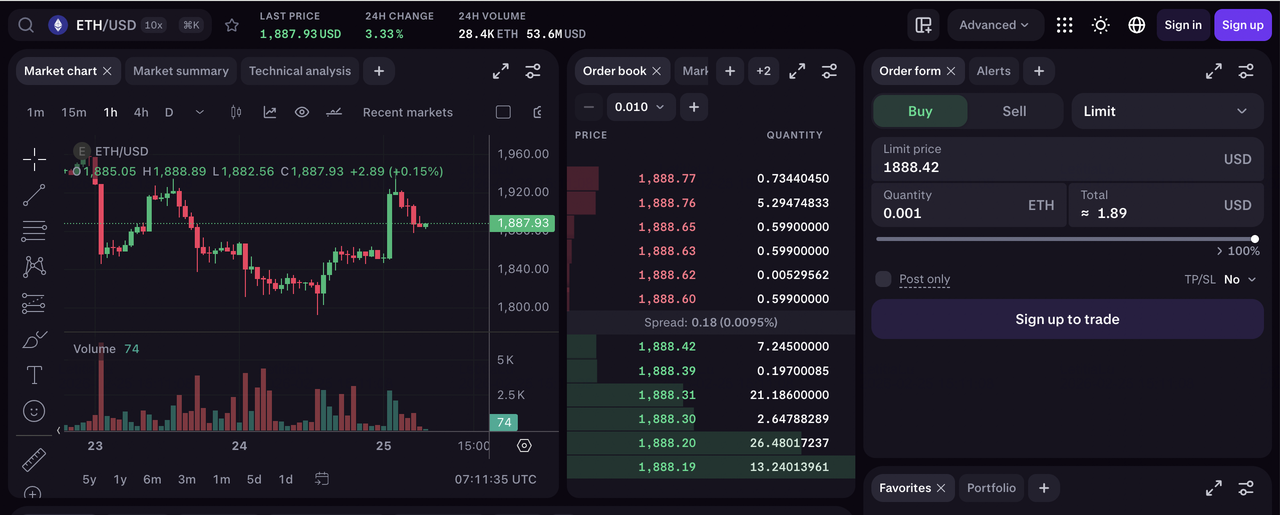
Founded in 2011, Kraken is one of the earliest international cryptocurrency exchanges to support Ethereum (ETH) trading and has long been known in the industry for its security standards and regulatory compliance image. Entering 2026, Kraken plans to complete its initial public offering (IPO), targeting a valuation of approximately $15 billion, demonstrating its desire to further integrate digital asset trading into traditional financial system frameworks, enhancing institutional transparency and market trust foundation.
In terms of Ethereum trading functionality, Kraken offers ETH spot trading, margin trading, and staking services, allowing users to complete holding and yield allocation on the same platform. Its advanced interface Kraken Pro supports complete order types and technical analysis tools, making it more suitable for investors with trading experience who wish to conduct swing or strategic operations on Ethereum. For users hoping to simultaneously participate in staking yields or long-term holding, Kraken's integration is relatively complete.
In terms of security, official data shows that over 95% of user assets are stored in cold wallets, and no major security incidents have occurred to date. However, its operating interface is relatively complex for beginners, and some services vary due to regional regulatory restrictions, so Taiwanese users still need to confirm available functionality and deposit methods before use.
3. Coinbase Exchange
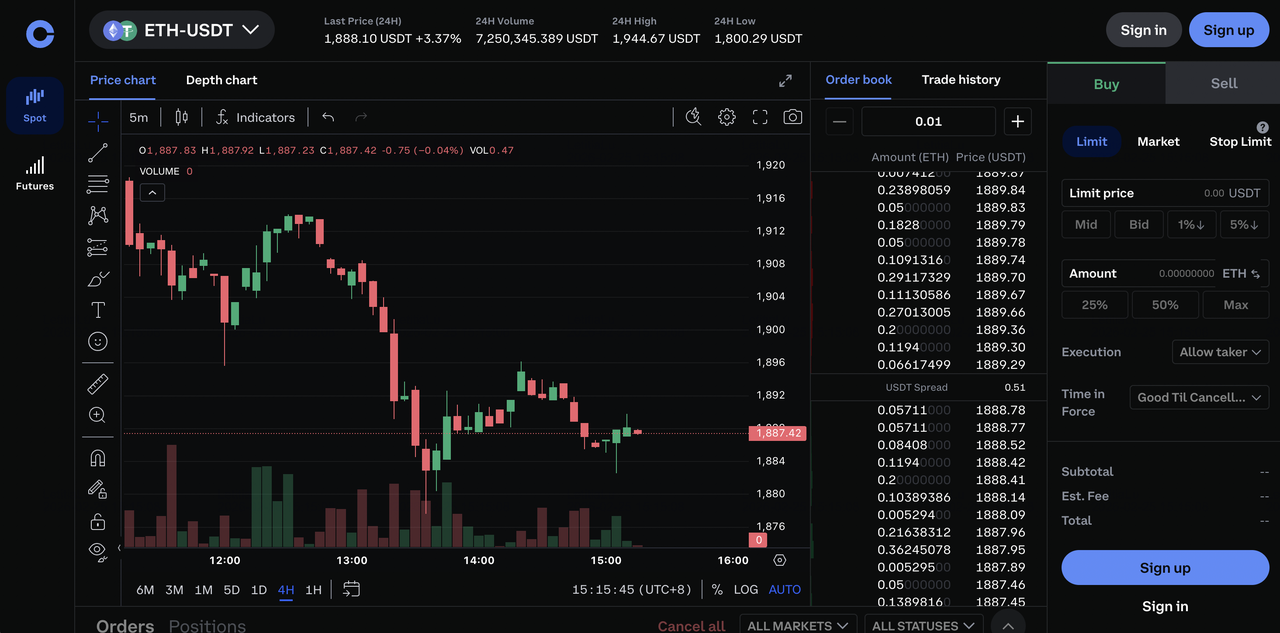
Positioning: Ethereum trading platform with high institutional transparency, focused on compliance and institutional trust.
Coinbase is one of the largest cryptocurrency exchanges in the United States, listed on NASDAQ in 2021, with high transparency in institutional and financial disclosure aspects. Entering 2026, Coinbase continues to strengthen its positioning as an institutional asset custody and trading platform, with Ethereum occupying an important proportion in its asset structure.
In terms of ETH trading, Coinbase offers spot buying and selling and Coinbase Advanced Trade advanced interface, the latter supporting more complete order types and lower fees, more suitable for investors with operational needs. As of 2026, Coinbase manages assets under management of approximately $516 billion, with institutional client proportion continuing to rise, demonstrating its market influence in large-scale fund allocation to Ethereum.
However, in practical usage, using the general trading interface may result in higher fees and spreads, up to 3.49%. Additionally, the platform does not provide direct New Taiwan Dollar deposit services, so Taiwanese users typically need to go through third-party payments or first obtain stablecoins before conducting ETH trading, making the overall process more cumbersome compared to local exchanges. Therefore, Coinbase is more oriented toward compliance-focused and asset custody advantage platforms, rather than options prioritizing low cost and operational convenience.
4. Crypto.com Exchange
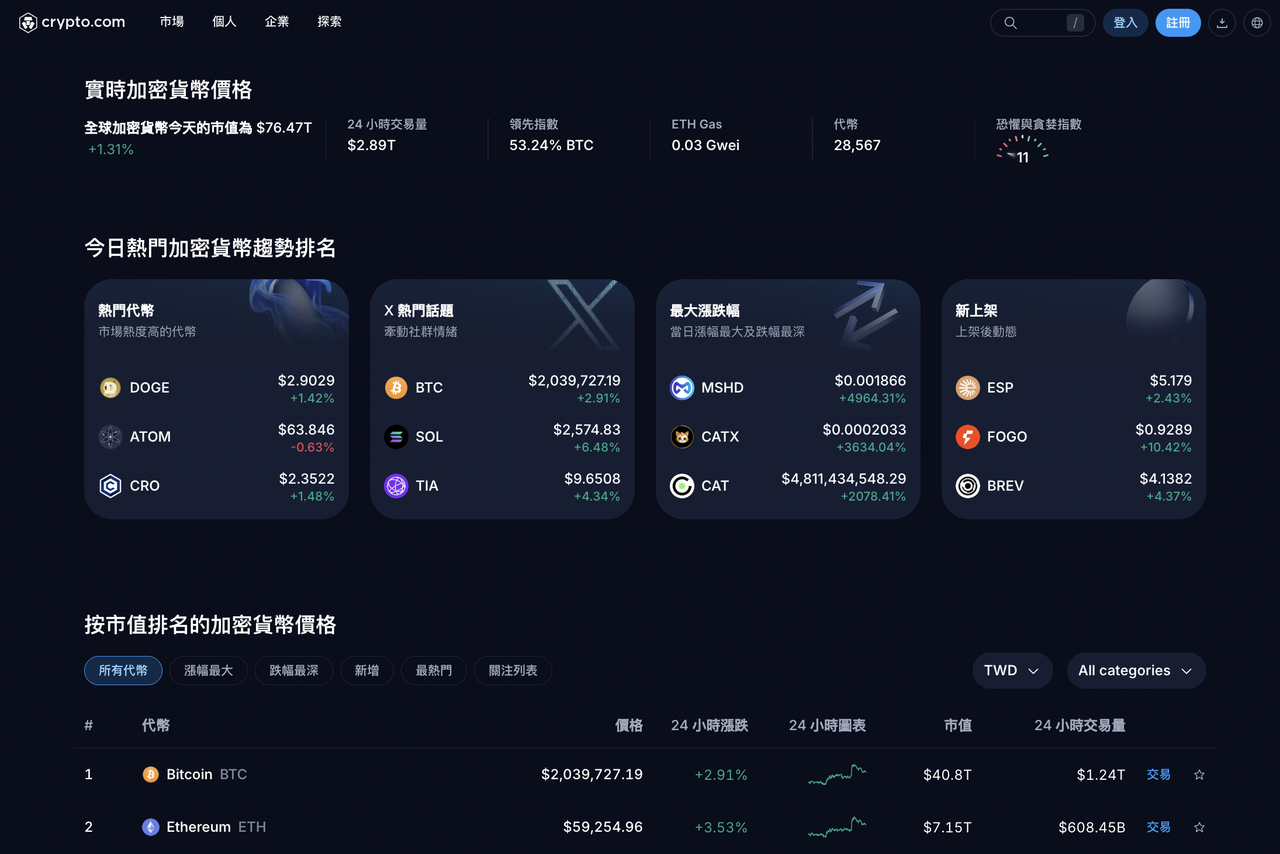
Positioning: Mobile operation-oriented Ethereum trading platform combining trading and ecosystem application scenarios.
Crypto.com is centered around mobile applications, focusing on integrating crypto assets into daily financial usage scenarios. The platform provides ETH spot trading and extends to payment cards, wealth management, and staking services, making Ethereum not only an investment target but also a functional role in the platform ecosystem.
In terms of fee structure, the platform's spot base trading fee is up to about 0.4%. If users stake the platform's native token CRO and reach specified levels, they can gradually reduce ETH trading costs, with some high-tier levels reducing to close to 0%–0.075% range. This mechanism helps reduce fees long-term but also means users need to simultaneously bear CRO price volatility risk, with fee advantages not being cost-free.
For Taiwanese users, Crypto.com does not provide direct New Taiwan Dollar deposit channels, typically requiring credit card or stablecoin methods to complete ETH purchases, with attention needed for exchange rates and credit card fees. Overall, Crypto.com is more suitable for investors who value mobile experience and are willing to participate in platform token mechanisms; if only pursuing the lowest cost Ethereum allocation, fee structure and usage complexity still need evaluation.
5. MAX Exchange
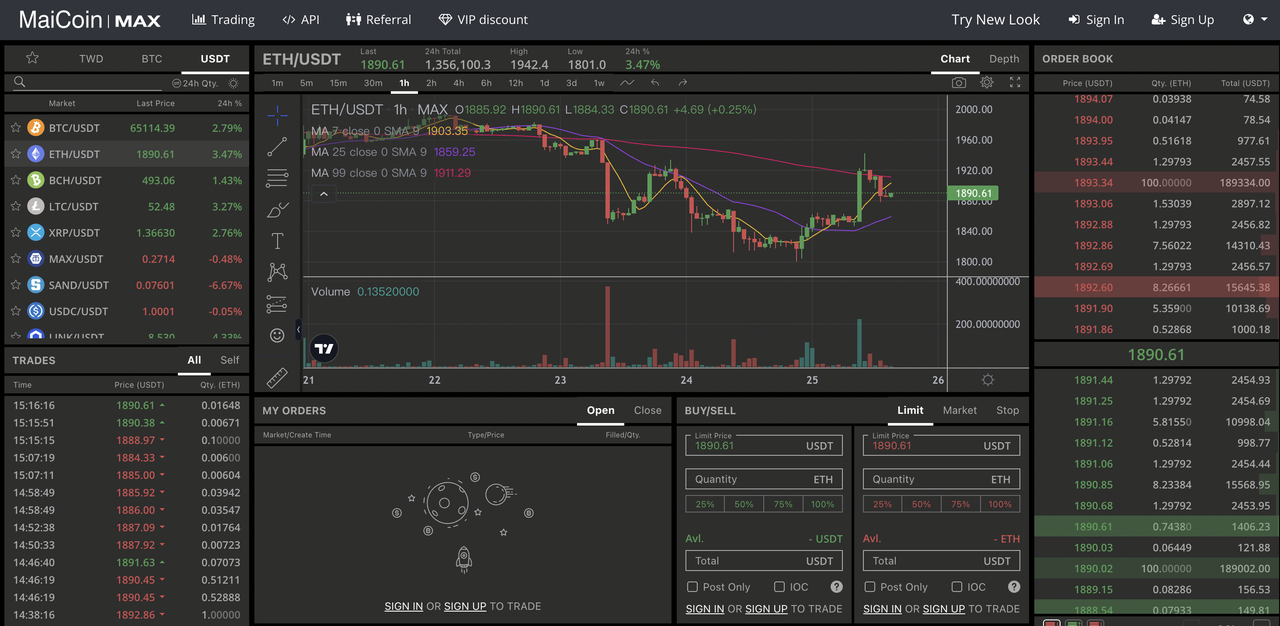
Positioning: Taiwan local Ethereum trading platform providing direct New Taiwan Dollar deposits.
MAX is operated by MaiCoin Group and is one of the earlier established cryptocurrency exchanges in Taiwan. Its main advantage is supporting ETH/TWD trading pairs, allowing users to directly buy and sell Ethereum with New Taiwan Dollars. The platform cooperates with banks to establish New Taiwan Dollar trust custody mechanisms, separating user fiat funds from company operational funds, providing certain protection for investors who prioritize local compliance and fund security.
In trading practice, MAX's spot trading fee is around 0.15%, which is typical for Taiwan local exchanges. For investors hoping to regularly allocate to Ethereum with Taiwan Dollars, the deposit process is relatively simple. However, due to limited market depth compared to large international exchanges, slippage may occur when single transaction amounts are large, making it more suitable for gradual buying or long-term allocation operations.
Overall, MAX is more suitable as an entry platform for direct Taiwan Dollar purchases of ETH. For subsequent large-scale operations or on-chain application needs, some investors choose to transfer ETH to other platforms or self-custody wallets for management.
6. BitoPro Exchange
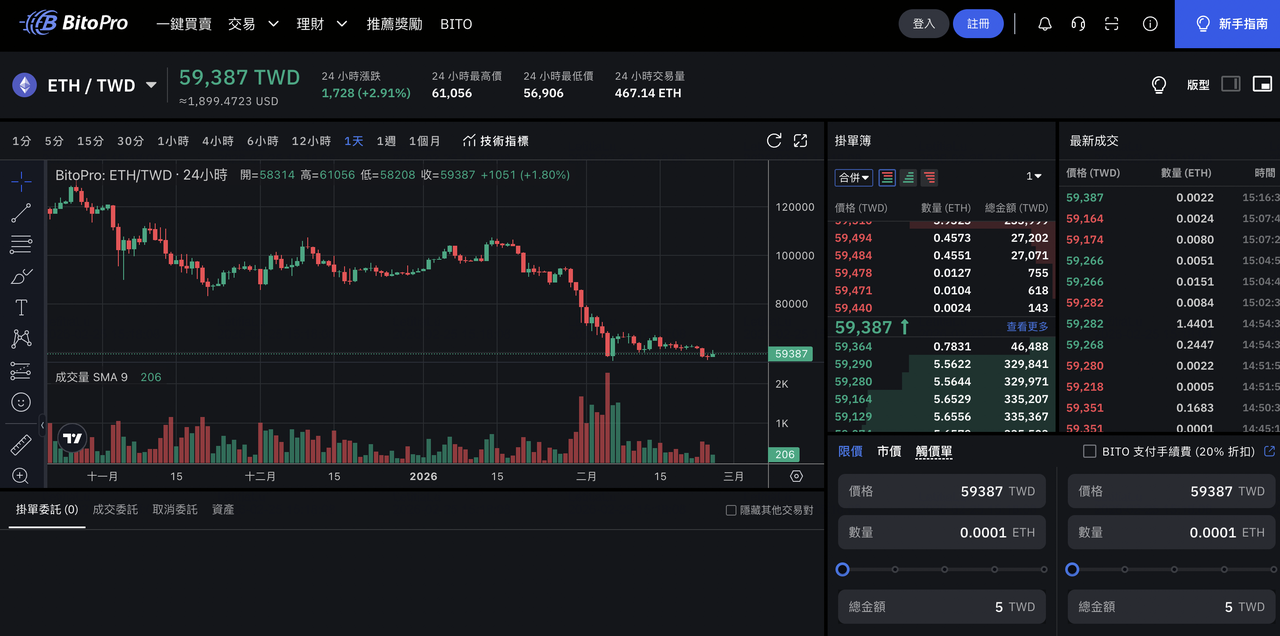
Positioning: Taiwan Ethereum trading platform combining New Taiwan Dollar deposit channels with OTC services.
BitoPro is one of Taiwan's major cryptocurrency exchanges, providing ETH/TWD spot trading pairs, allowing users to directly purchase Ethereum with New Taiwan Dollars. Spot trading fees fall within the 0.1%–0.2% range, typical for the local market.
The platform also provides OTC large-volume trading services with dedicated personnel assistance for matching, focusing on reducing market impact and slippage risk. For investors needing one-time large-scale ETH purchases, this service has certain appeal. However, even when conducting OTC transactions through the platform, process transparency and settlement methods should still be confirmed to avoid potential disputes.
In overall positioning, BitoPro is more suitable for investors who prefer local platforms and direct New Taiwan Dollar entry for Ethereum allocation. For long-term holding, staking, or cross-platform operations, it still needs to be combined with comprehensive risk management and asset diversification strategies.
How to Buy Ethereum in Taiwan in 2026?
For Taiwanese users, purchasing Ethereum through international exchanges remains one of the methods with the best liquidity and most stable transaction prices. In practical operations, many Taiwanese investors choose to use BingX for Ethereum trading, as its ETH/USDT spot market has sufficient depth and supports dollar-cost averaging, automated strategies, and social copy trading functions, achieving a good balance between trading efficiency and asset security.
Step 1: Register Account and Complete Identity Verification
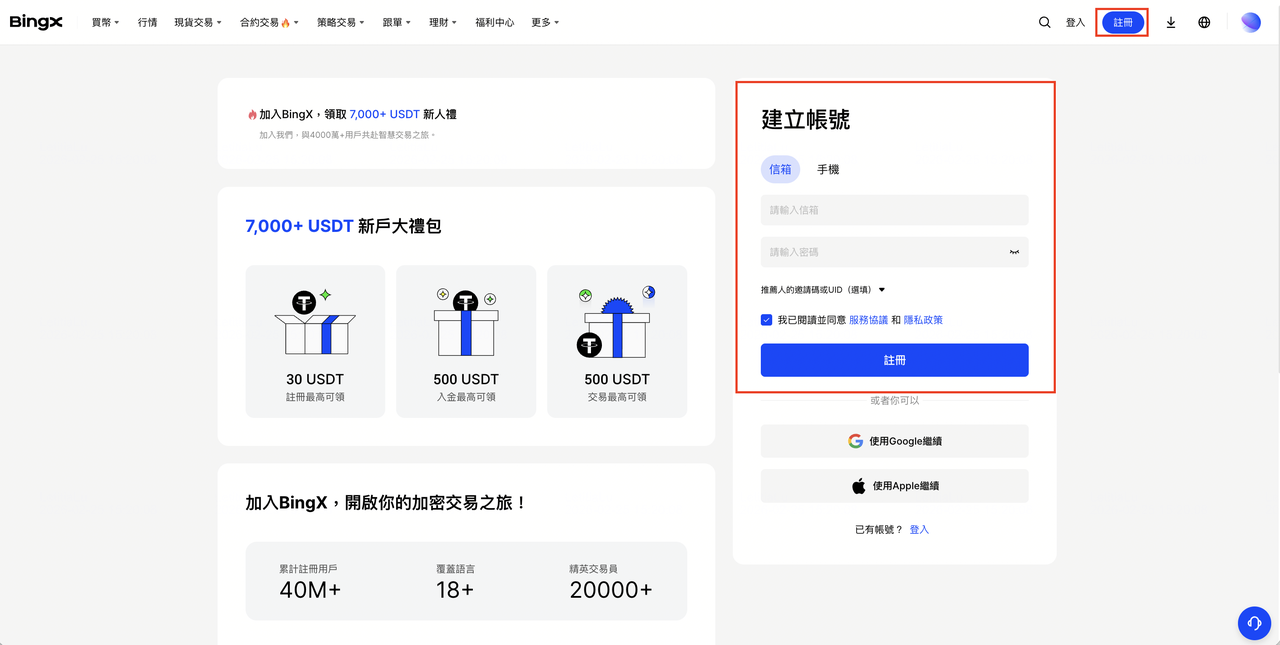
Go to BingX official website or App to register an account, follow instructions to complete KYC identity verification, then activate spot trading and full account functionality. It's recommended to also enable Google Two-Factor Authentication (2FA) to enhance account security. After completing verification, you can enjoy full Ethereum spot trading privileges.
Step 2: Prepare Trading Funds (USDT)
1. Purchase Ethereum After USDT Deposit
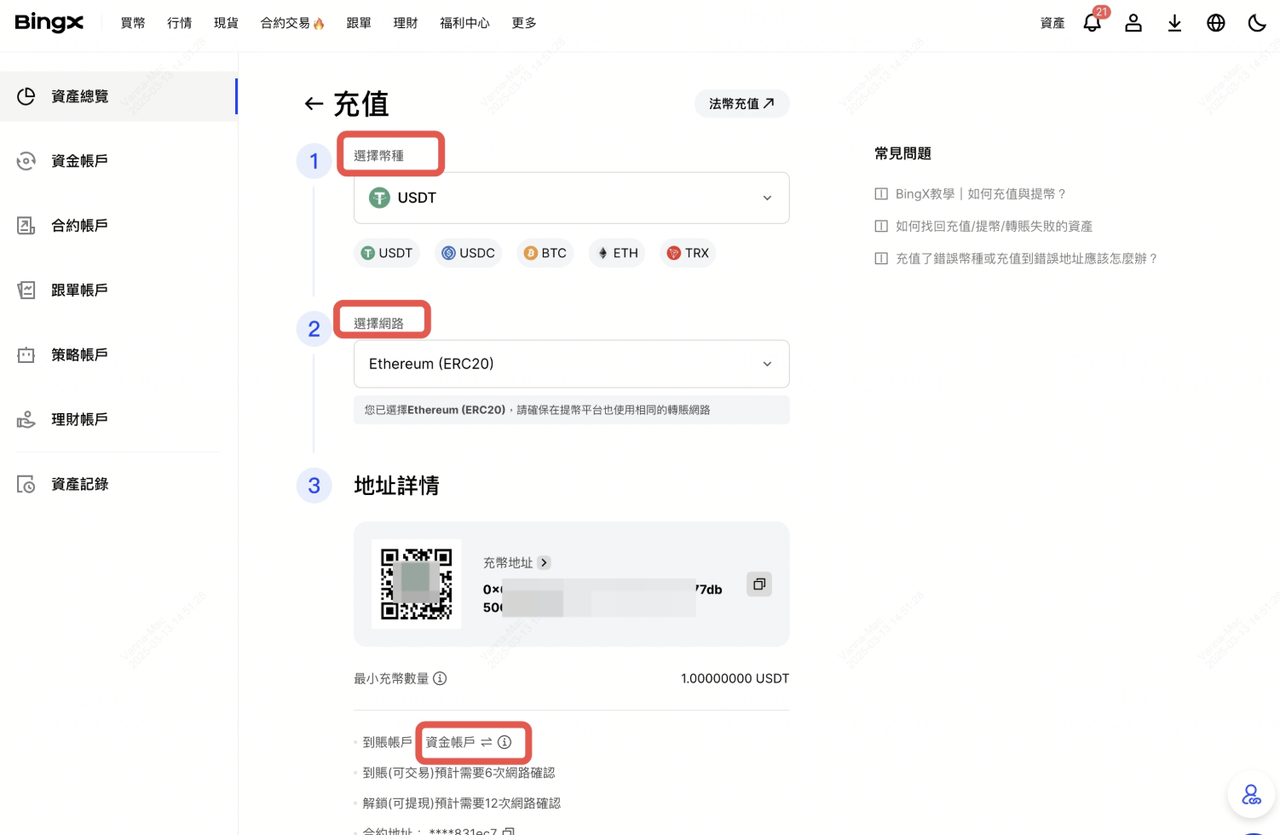
For users who already have crypto assets, they can obtain USDT from other platforms or wallets and transfer it to the designated BingX wallet address. After funds arrive, they can enter the ETH/USDT spot market for trading. This method has the most transparent fee structure and lowest overall trading cost, suitable for investors prioritizing cost control.
2. Use Credit Card or Debit Card to Directly Purchase Ethereum
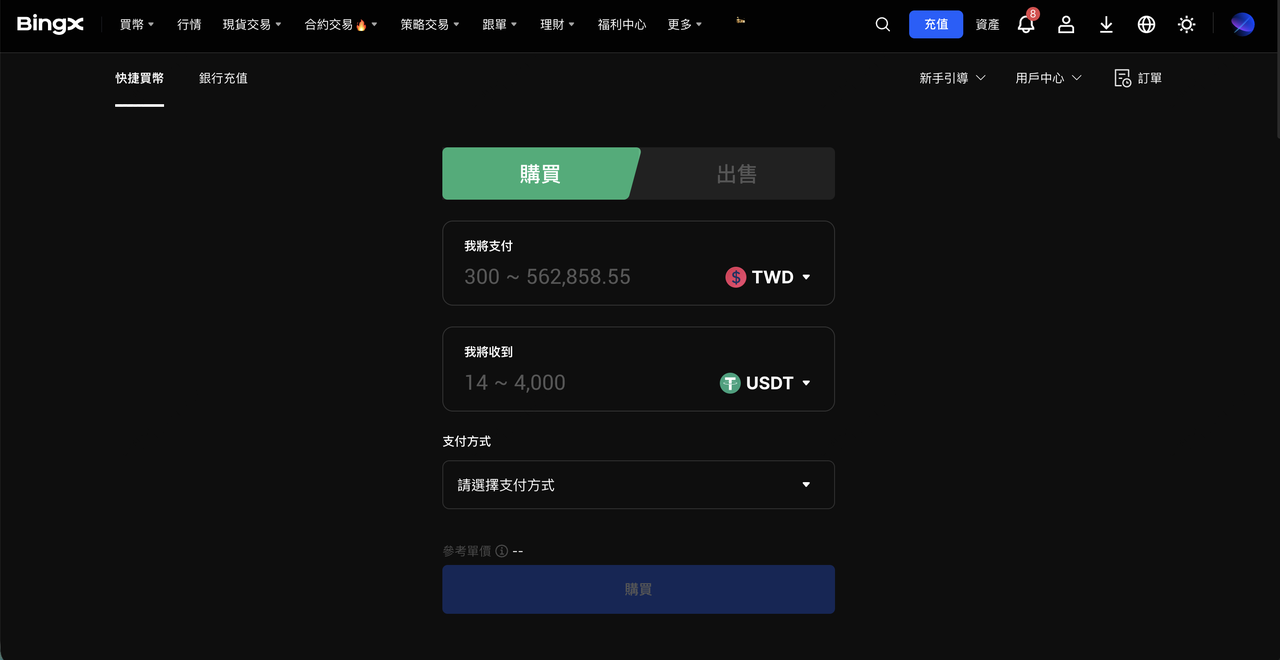
BingX also supports purchasing stablecoins or Ethereum directly with New Taiwan Dollars using credit cards or debit cards through third-party payment services. The process is simplified with fast arrival times, suitable for users hoping to complete transactions quickly. However, attention should be paid to credit card fees and exchange rate differences, with overall costs typically higher than stablecoin deposit methods.
Step 3: Enter Spot Market, Select ETH/USDT
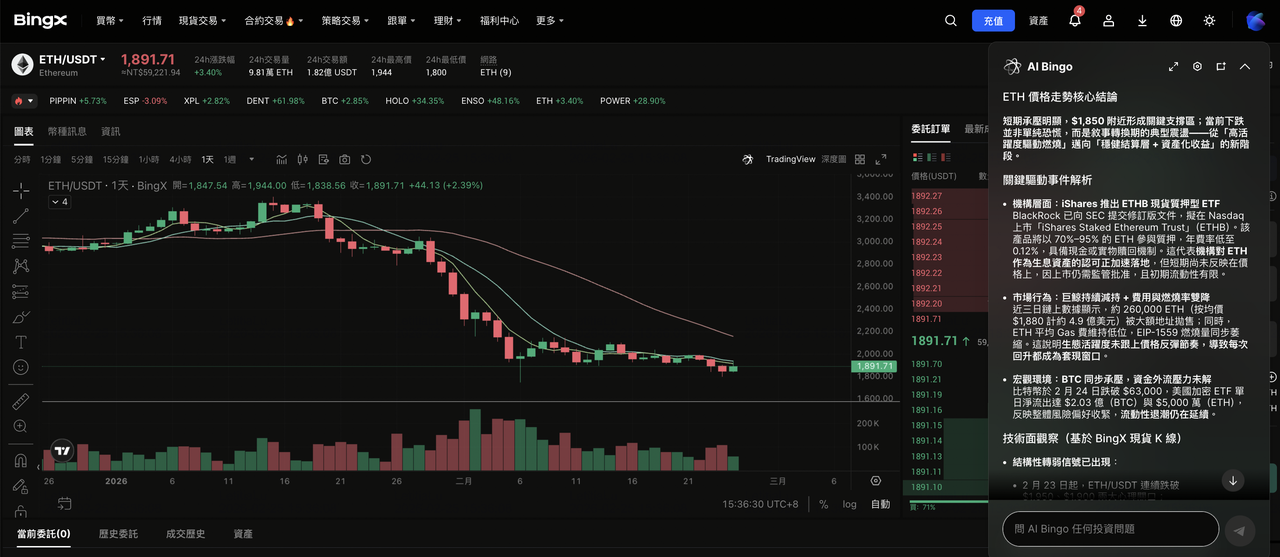
Select the ETH/USDT trading pair on the spot trading page. BingX's Ethereum market has sufficient liquidity, supporting both market orders and limit orders, allowing you to choose one-time purchases or gradual positioning based on current market rhythm. You can also combine with BingX AI's market data analysis functionality to assist in judging Ethereum's short-term volatility direction and order timing.
Step 4: Place Order to Buy Ethereum
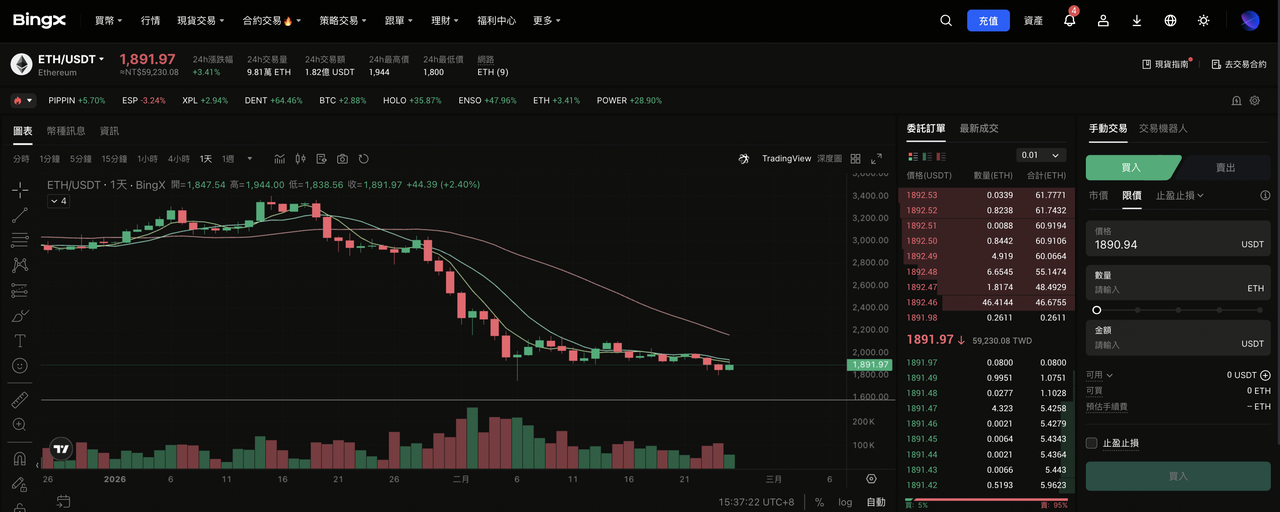
Enter the desired USDT amount or ETH quantity and confirm the order. After execution, Ethereum will appear in your spot wallet. BingX spot trading fees are approximately 0.1%, providing cost competitiveness among major international exchanges. Combined with dollar-cost averaging (DCA) strategy, you can set daily or weekly automatic fixed-amount ETH purchases, helping to average position costs during volatile markets.
Step 5: Hold or Withdraw Ethereum
After completing the purchase, you can choose to hold Ethereum in your BingX spot wallet or transfer it to hardware cold wallets for long-term self-custody according to your risk preference. For users with staking needs, you can also evaluate earning ETH network yields through platform or third-party staking services. Ethereum staking annual percentage yield currently falls around 3%–5%, offering certain appeal for long-term holders.
6 Key Considerations Before Buying Ethereum in Taiwan
Before buying Ethereum (ETH) in Taiwan, besides understanding the purchasing process and platform selection, the following practical risks and details should not be overlooked:
1. Platform Security and Fund Custody: Even when conducting Ethereum trading through large exchanges, it's recommended to enable two-factor authentication (2FA) and avoid concentrating large amounts of assets on a single platform long-term. When holding larger amounts, transferring to cold wallet self-custody can effectively reduce platform risk.
2. On-Chain Transfer Network Type Confirmation: When transferring Ethereum, ensure you select the Ethereum mainnet (ERC-20) and avoid mistakenly selecting other networks like BNB Chain or Polygon, which could result in asset loss. Cryptocurrency transfers are usually irreversible once executed, so addresses and network types must be repeatedly verified before operation.
3. Gas Fee and Transaction Cost Management: Ethereum mainnet Gas fees may be higher during peak periods. For small transfers, consider using Layer 2 networks (such as Arbitrum, Optimism) to reduce fees. Keeping purchases on exchanges without immediate withdrawal can avoid mainnet Gas fee impact.
4. P2P and OTC Fraud Risk: P2P and OTC fraud cases related to Ethereum occur from time to time in the Taiwan market. In comparison, conducting Ethereum trading through exchanges with KYC and risk control mechanisms has relatively controllable overall risk and is a safer choice.
5. Market Volatility and Emotional Trading Risk: Ethereum price volatility is significant, with dramatic short-term fluctuations not uncommon. It's recommended to plan trading strategies in advance (such as gradual buying or dollar-cost averaging) to avoid emotional buying high or panic selling during high volatility periods, which could affect long-term holding performance.
6. Regulatory and Tax Awareness: Taiwan currently does not prohibit individual holding or trading of Ethereum, but related regulatory policies are still evolving. It's recommended to maintain complete trading records and maintain basic awareness of potentially involved tax reporting obligations to reduce future compliance risks.
Conclusion: Buying Ethereum in Taiwan in 2026, BingX Trading Platform Offers Greater Integration Advantages
In the 2026 market environment, while Ethereum has corrected significantly from its 2025 highs, Ethereum's fundamentals have not experienced structural changes. Network upgrades continue to advance, staking mechanisms operate stably, spot ETF funds accumulate long-term, and DeFi and real-world asset tokenization applications expand, all providing support for medium to long-term recovery. For Taiwanese investors, the current consolidation range is more like a time window for position building and gradual positioning, rather than a phase for emotional chasing.
From a practical perspective, purchasing Ethereum through exchanges with high liquidity, transparent fees, and comprehensive security mechanisms remains the foundation for reducing trading risk and cost friction. Compared to potential counterparty risks in over-the-counter trading or high fees from credit card deposits, exchange spot markets provide more real-time pricing and complete transaction records, and are more suitable for combining with dollar-cost averaging (DCA) or gradual entry strategies for disciplined allocation.
Among many platforms, BingX has advantages in trading functionality integration and operational flexibility, providing ETH spot trading and strategy tools, allowing users to complete asset management and risk control within the same account. Overall, the key to buying Ethereum in Taiwan in 2026 lies in understanding market rhythm, choosing safe and compliant platforms, and establishing positions in a stable and disciplined manner, laying the foundation for participating in Ethereum's long-term development.
Taiwan Ethereum Purchase Frequently Asked Questions (FAQs)
1. Is buying Ethereum legal in Taiwan?
Currently, Taiwan does not prohibit individuals from holding or trading Ethereum. General investors can legally purchase and hold ETH through cryptocurrency exchanges, but should still pay attention to relevant platform compliance requirements and future regulatory developments.
2. What's the difference between Ethereum and Bitcoin, and why buy ETH?
Bitcoin is primarily positioned as digital gold and a store of value tool, while Ethereum is the core fuel of the Ethereum ecosystem, with application scenarios covering DeFi, NFT, stablecoin issuance, smart contract execution, etc. Besides price appreciation potential, Ethereum can also earn annual yields through staking mechanisms (currently around 3%–5%), providing cash flow attributes that Bitcoin doesn't have.
3. Can I directly buy Ethereum with New Taiwan Dollars in Taiwan?
Yes. Some Taiwan local exchanges (such as MAX, BitoPro) provide ETH/TWD trading pairs for direct Ethereum purchases with New Taiwan Dollars; international exchanges (such as BingX) typically complete transactions through USDT or credit card deposit methods.
4. Do I have to buy whole Ethereum coins?
No. Ethereum supports decimal purchases, with minimum purchases as small as 0.0001 ETH or even smaller units. For investors with limited funds or those hoping to try small amounts, purchase quantities can be flexibly adjusted according to budget.
5. Can Ethereum be staked to earn interest?
Yes. After Ethereum completed the "Merge" upgrade in 2022, it officially transitioned to a Proof-of-Stake mechanism. Holders can participate in network validation and earn yields by staking ETH, currently around 3%–5% annually. Some exchanges also provide liquid staking services, allowing users to participate without reaching the native staking threshold of 32 ETH.
6. What strategy is suitable for buying Ethereum in 2026?
In an environment of price consolidation with positive long-term expectations, dollar-cost averaging (DCA) or gradual buying is a more stable allocation method, helping to diversify the risk of single-point entry. If confident in Ethereum's long-term narrative, combining low-position gradual positioning with long-term holding typically provides a better cost basis in the next cycle.
7. Do I need to pay taxes on buying Ethereum in Taiwan?
Current Taiwan cryptocurrency taxation regulations are still being continuously improved. It's recommended to maintain complete records of each transaction, including purchase price, date, and amount, for potential future income or property-related tax reporting needs.