
In 2025, Donald Trump has become one of the most prominent figures driving momentum in the crypto space. His post-election shift toward digital assets helped push Bitcoin above $104,000 earlier this year, with a fresh bull run recently sending it past $123,000. But beyond market gains, Trump’s return has set the stage for a broader transformation in how crypto is approached in the United States.
Backed by pro-innovation policies and strategic appointments, Trump is now closely tied to a growing lineup of crypto projects. These include a fully fiat-backed stablecoin USD1, an infrastructure and payments platform World Liberty Financial, memecoins like TRUMP and MELANIA, and a series of digital collectibles and NFT campaigns. Together, these projects reflect a coordinated effort to expand his presence in the digital asset space.
What began as a few separate launches has grown into one of the most closely watched trends in crypto this year.
Trump’s Crypto Agenda in 2025: Key Policies and Market Impact
Trump’s return to office has brought a sharp policy shift in favor of digital assets. His administration has made crypto a national talking point, blending regulation, strategy, and public messaging into a coordinated effort that has already impacted both market sentiment and institutional participation.
1. Strategic Bitcoin Reserve: A National Treasury Bet on BTC
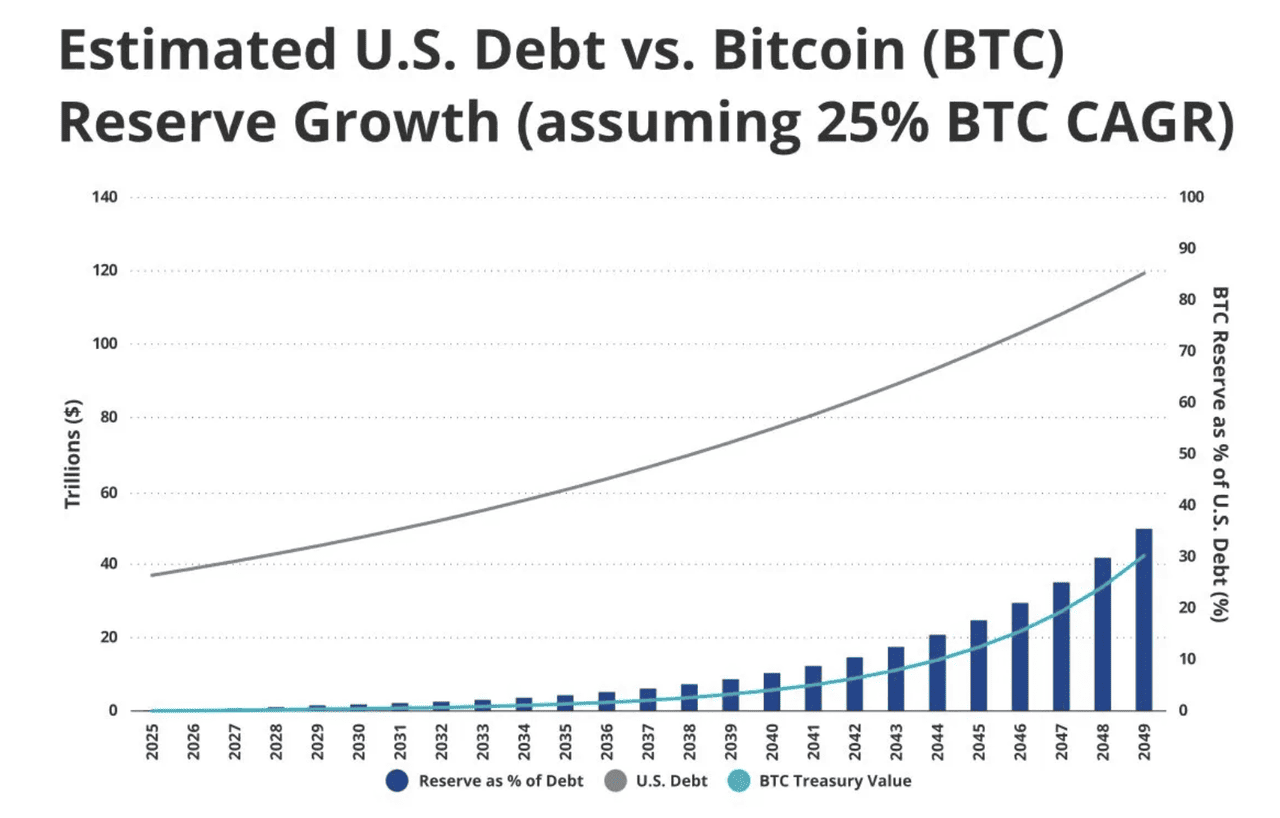
How a U.S. Bitcoin Reserve could offset US debt over time | Source: VanEck
In a bold and highly symbolic move, the administration proposed the creation of a Strategic Bitcoin Reserve, which would allocate a portion of U.S. national reserves to Bitcoin. If implemented, this would mark the first time the U.S. government formally recognizes Bitcoin as a sovereign-grade asset, placing it alongside gold and U.S. Treasuries in long-term holdings.
The proposal echoes similar moves by corporate treasuries and global sovereign funds that have turned to Bitcoin as a hedge against monetary debasement and geopolitical instability. It also reflects the administration’s broader belief that digital assets, particularly Bitcoin, will play a foundational role in future monetary systems. While details around custody, purchase schedules, and the size of allocation are still under discussion, the message is clear: Bitcoin is no longer being treated as a fringe asset.
2. Legislative Push: Genius Act and U.S. Crypto Week
During U.S. Crypto Week, the administration unveiled a coordinated set of legislative proposals designed to lay the groundwork for a more structured and competitive digital asset environment in the United States.
• Genius Act: Aims to establish a national framework for stablecoin issuance and adoption. The bill focuses on supporting U.S.-backed stablecoins as a strategic financial instrument, encouraging public-private collaboration, and ensuring that stablecoin providers meet clear standards for transparency, reserve backing, and cross-platform interoperability. It is framed as part of a broader effort to promote U.S. dollar dominance in digital payments.
• Clarity Act: Designed to establish clearer regulatory categories for digital tokens, determining whether they fall under SEC or CFTC oversight, with most expected to be regulated by the CFTC. The legislation aims to resolve regulatory uncertainties that have pushed crypto projects overseas. Passed the House during "Crypto Week" and is now under Senate consideration.
• Anti-CBDC Act: Blocks the Federal Reserve from issuing a retail-facing central bank digital currency, citing concerns over privacy and financial surveillance. It supports the use of privately issued stablecoins instead.
These bills, while still making their way through Congress, represent a significant shift in tone. Together, they form the policy backbone of what could become the most comprehensive federal crypto strategy to date.
3. Key Appointments: Pro-Crypto Leadership at the Top
One of the administration’s first moves was appointing David Sacks as the official “Crypto and AI Czar.” Sacks has been tasked with leading cross-agency coordination on emerging technologies, with a focus on innovation-friendly regulation.
Meanwhile, Paul Atkins, a former SEC commissioner known for his deregulatory views, has been tapped to lead the SEC again. His appointment signals a push for reduced enforcement-heavy tactics and a clearer path for crypto firms seeking compliance.
4. Market Response: Bullish Sentiment and Renewed Momentum
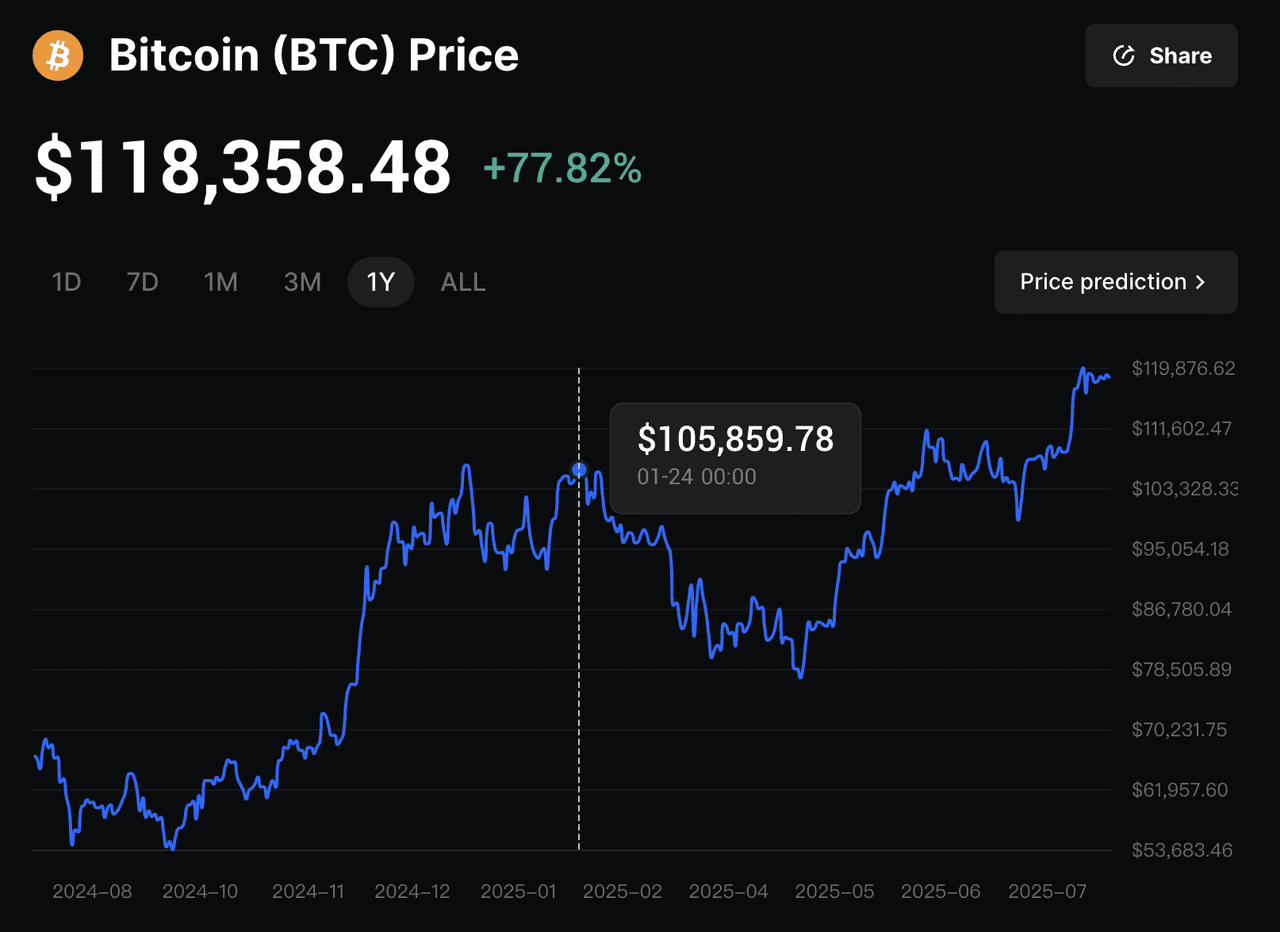
The crypto market responded quickly to the Trump administration’s shift in stance. Bitcoin climbed past $104,000 shortly after the election, then surged beyond $123,000 in a renewed bull run. Altcoins followed, with capital flowing back into both established and emerging assets, and potential altcoin season in sight.
Investors see this as a potential turning point, not just for prices but for U.S. crypto policy overall. Venture funding and project development are picking up, and major exchanges are preparing for deeper domestic expansion.
The policy shift has also coincided with rising institutional adoption, supported by inflows into a growing range of U.S.-listed crypto ETFs. These include spot Bitcoin and Ethereum ETFs, as well as diversified digital asset funds covering sectors like DeFi and Web3 infrastructure. With regulatory uncertainty easing, these products are gaining traction as more accessible and compliant entry points for investors. Dozens of additional ETF applications, including those for Solana ETF, XRP ETF, and broader sector indexes, are currently under review.
For many builders, the clearer regulatory environment has reopened the door to U.S.-based growth. Sentiment is no longer driven by speculation alone. Policy direction now plays a central role in shaping confidence.
Top 6 Major Trump-Related Crypto Projects to Watch in 2025
Trump’s pro-crypto stance isn’t limited to policy. A growing ecosystem of tokens, stablecoins, platforms, and collectibles linked to his brand has emerged across the market. While some began as political memes or novelty experiments, several have gained significant traction, blending ideological appeal with real on-chain utility. Together, they reflect a broader effort to turn crypto into both a cultural and financial platform for Trump-aligned audiences.
1. World Liberty Financial (WLFI)

World Liberty Financial (WLFI) has emerged as the central hub of Trump’s growing crypto ecosystem. Positioned as a politically aligned infrastructure project, WLFI aims to build an alternative financial network that supports digital assets aligned with values like free markets, privacy, and national sovereignty. It markets itself as a response to what it describes as overreach by traditional institutions and centralized platforms.
WLFI functions as more than just a token. It powers a broader suite of products, including the USD1 stablecoin, the BUILDon developer platform, and integrations across various pro-crypto platforms. Its positioning reflects a deliberate strategy: combining ideological messaging with practical financial tools to appeal to users seeking censorship-resistant alternatives.
Originally launched as a non-transferable governance token, WLFI transitioned to tradability in 2025 following a 99.94% tokenholder vote in favor of enabling peer-to-peer and secondary market transactions. The project has also raised a total of $550 million through two token sales, positioning itself as a well-funded and high-visibility player in the evolving digital asset space. While still early in adoption, WLFI is increasingly seen as the foundational layer of the Trump-branded digital asset push.
2. USD1 Stablecoin (USD1)

USD1 is a fully fiat-backed stablecoin launched in early 2025 by World Liberty Financial, marketed as the first politically aligned digital dollar directly endorsed by Donald Trump. Designed to promote U.S. dollar dominance in global crypto payments, USD1 positions itself as a zero-fee, institution-grade alternative to offshore stablecoins like USDT and USDC.
The token is backed 1:1 by short-term U.S. Treasuries and held in custody by BitGo Trust, with a focus on regulatory compliance, fast settlement, and censorship resistance. USD1 is already integrated into WLFI-affiliated platforms, where it serves as the default stablecoin for payments, transfers, and DeFi activity. Branded with the tagline “America’s Stablecoin,” it also reflects WLFI’s broader goal of making U.S.-pegged assets the global settlement standard for the digital economy.
3. Memecoin: Official Trump (TRUMP)

Official Trump (TRUMP) is a politically themed memecoin that gained momentum during the 2024 election cycle. Launched on January 17, 2025, just days before Trump’s second inauguration, the token marked a clear shift from his earlier crypto skepticism. Trump announced it on social media with the message, "My NEW Official Trump Meme is HERE!" featuring his rallying cry "FIGHT FIGHT FIGHT" in reference to his response after surviving an assassination attempt in 2024. The token hit an all-time high of $75.35 just hours before the inauguration.
While rooted in meme culture, TRUMP offered more than just online hype. Its most exclusive perk was the Trump Gala Dinner, held on May 22, 2025, at Trump National Golf Club in Washington, D.C. The top 220 TRUMP holders were invited based on their average token balance, with the top 25 receiving VIP perks like a private White House tour. Notable attendees included Tron founder Justin Sun, Messari CEO Ryan Selkis, and other crypto leaders.
80% of the token supply is held by Trump-affiliated entities under a three-year vesting schedule. Though labeled not an investment, TRUMP has become a case study in how political branding and crypto can merge, with over $148 million spent by holders for a chance to dine with the sitting U.S. President.
4. Memecoin: Melania Trump (MELANIA)
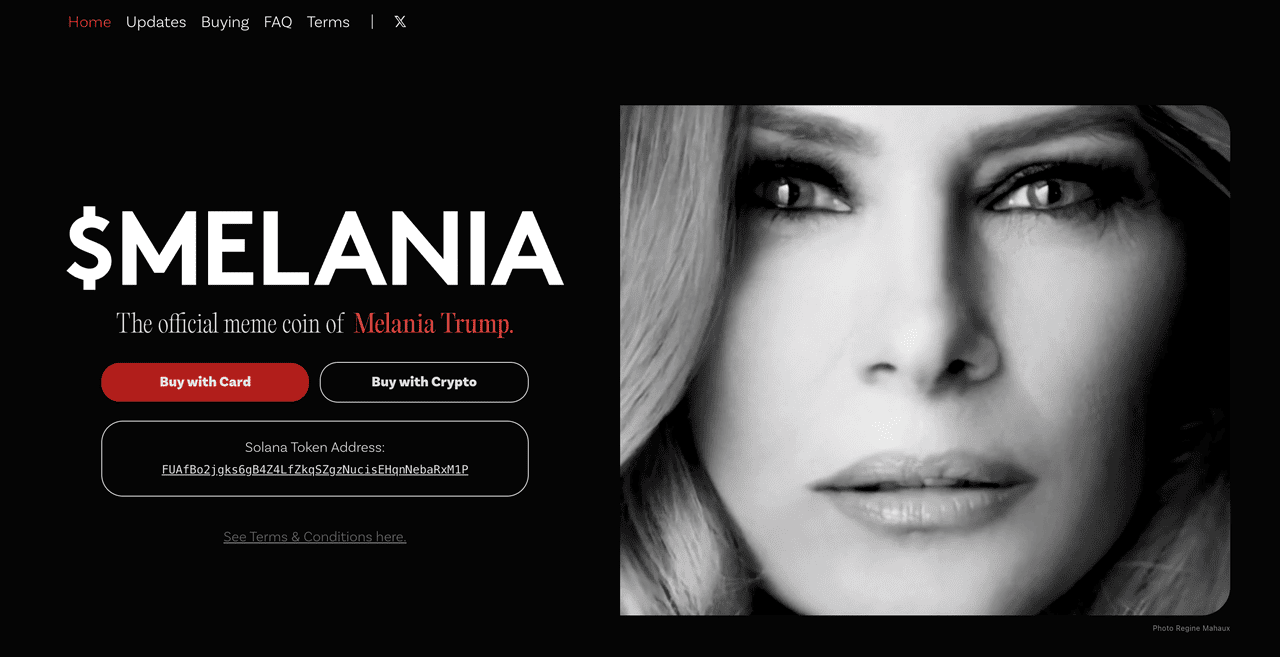
Melania Trump (MELANIA) is a memecoin launched on January 19, 2025, one day after her husband's $TRUMP token, creating immediate market disruption that caused Trump's coin to crash more than 45% as investors rushed to the new offering.
The token featured elegant black and white imagery of the First Lady, creating a visual contrast to Trump's aggressive "FIGHT FIGHT FIGHT" branding. Unlike Trump's token, $MELANIA had different tokenomics with only 35% reserved for the team and a faster 13-month unlocking schedule.
The coin was handled by MKT World LLC, the same entity Melania used for her previous digital ventures. It reached an all-time high of $13.73 on inauguration day. The launch raised insider trading concerns when investigation revealed that 24 wallets purchased $2.6 million worth of tokens just two and a half minutes before the public announcement, netting early buyers a $99.6 million windfall.
5. BUILDon (B)

BUILDon(B) is an AI-powered memecoin that serves as a utility layer within the World Liberty Financial ecosystem, designed to merge meme culture with real DeFi functionality on the BNB Chain. Launched in April 2025 through a fair launch on Four.meme, BUILDon utilizes Agent-to-Agent (A2A) architecture that allows autonomous AI smart agents to automate on-chain research, decision-making, and execution cycles.
The project transformed from a modest memecoin to a central player in USD1 stablecoin infrastructure when it integrated USD1 as its primary trading pair in mid-May 2025. BUILDon quickly became the largest source of non-stablecoin USD1 trading volume, accounting for over 90% of USD1 activity on decentralized exchanges(DEXs).
World Liberty Financial's endorsement and purchase of over 636,000 B tokens triggered a 1,340% price surge, establishing BUILDon as both a governance token and ecosystem incentive mechanism for real-world asset (RWA) tokenization and smart contract applications within the USD1 ecosystem.
6. Trump Digital Trading Cards NFTs
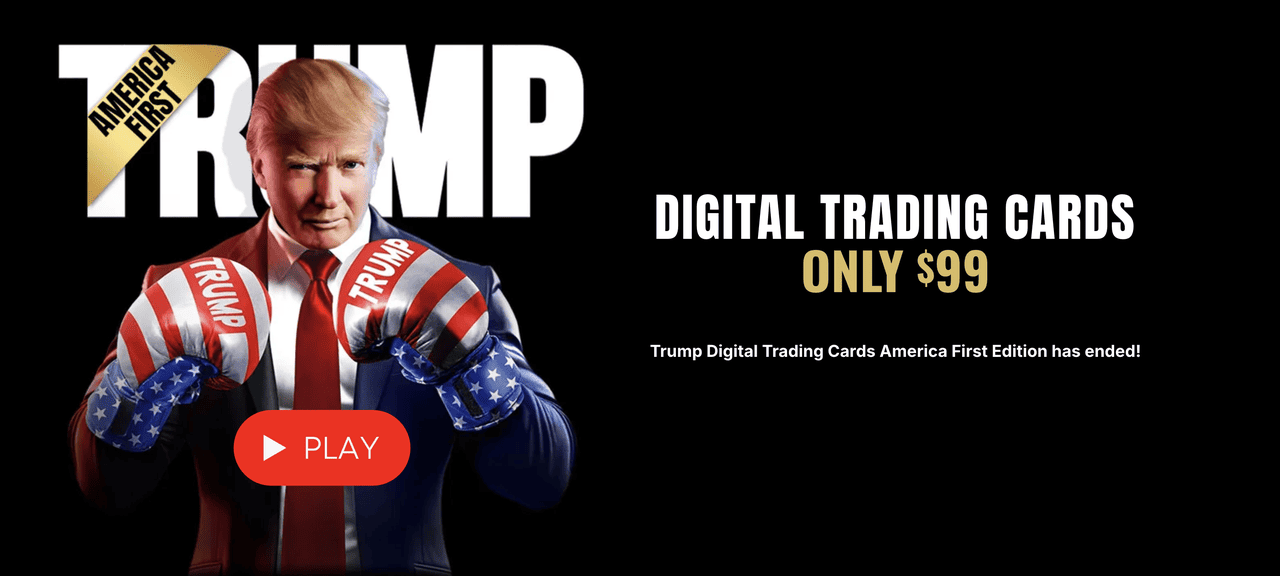
The Trump Trading Cards NFTs were one of the earliest crypto initiatives linked directly to Donald Trump's personal brand. First launched in December 2022 on the Polygon blockchain, the collection featured 45,000 digital artworks portraying Trump in various themed outfits, including superhero costumes, cowboy hats, astronaut gear, and patriotic settings. Despite initial skepticism, the project sold out quickly at $99 each.
The NFT ecosystem evolved across multiple collections and blockchains, expanding from Polygon to Bitcoin Ordinals with exclusive releases. Trump launched at least four collections, with premium packages reaching $24,750 that included Trump-branded golden sneakers, physical cards, and exclusive dining invitations.
Rather than remaining novelty collectibles, the NFTs became a form of digital membership granting access to exclusive perks such as signed memorabilia, VIP dinners, and golf outings. The success generated over $7 million in revenue and established a template for politically-branded digital collectibles, helping normalize real-world rewards tied to digital asset ownership.
How to Trade Trump-Related Crypto Projects on BingX
BingX makes it easy to trade Trump-related crypto assets like TRUMP, WLFI, and USD1, all within a single platform. Whether you're using spot market, perpetual futures, or copy trading, BingX offers a full-featured suite designed for both beginners and advanced traders. Built-in BingX AI helps you analyze market trends, detect patterns, and plan smarter entries with real-time insights.
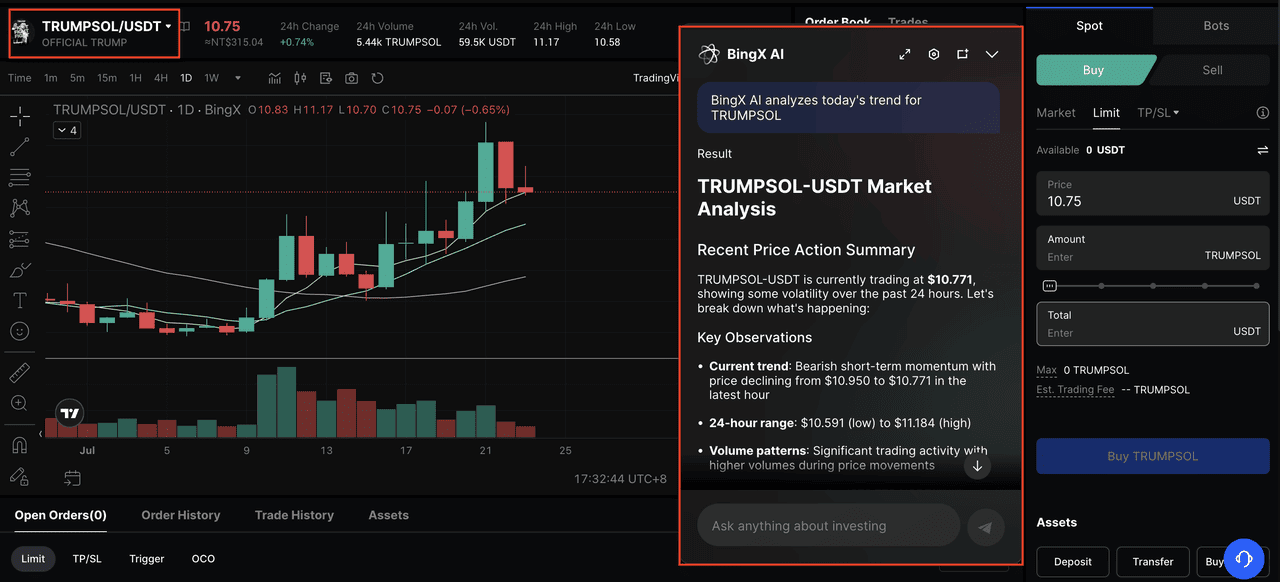
Source: TRUMPSOL/USDT
Step 1: Search and Trade Type the trading pair (such as TRUMPSOL/USDT) into the search bar on the BingX spot market or perpetual futures. Choose between a market order or limit order based on your trading strategy.
Step 2: Use BingX AI for Analysis On the trading interface, click the AI icon to activate BingX AI. It will analyze real-time price movements, detect patterns, and explain their potential significance in the current market environment.
Step 3: Plan Smarter Entries Leverage BingX AI insights to evaluate entry points, track trend momentum, and identify key resistance or support levels before placing a trade.
Future Outlook
As the Trump-aligned crypto ecosystem continues to expand, it reflects a growing convergence between political identity, cultural branding, and financial infrastructure. From policy shifts to project launches, the former president’s embrace of digital assets has become both a narrative driver and a structural force in U.S. crypto markets.
Looking ahead, much will depend on how these initiatives evolve beyond the current hype cycle. Questions remain around long-term utility, regulatory response, and sustained community participation. But if current momentum continues, Trump-backed tokens and platforms may play an increasingly visible role in shaping the mainstream perception of crypto in America.
Whether as a marketing vehicle, policy catalyst, or experimental financial system, the Trump crypto movement has already left a mark. And it may just be getting started.