
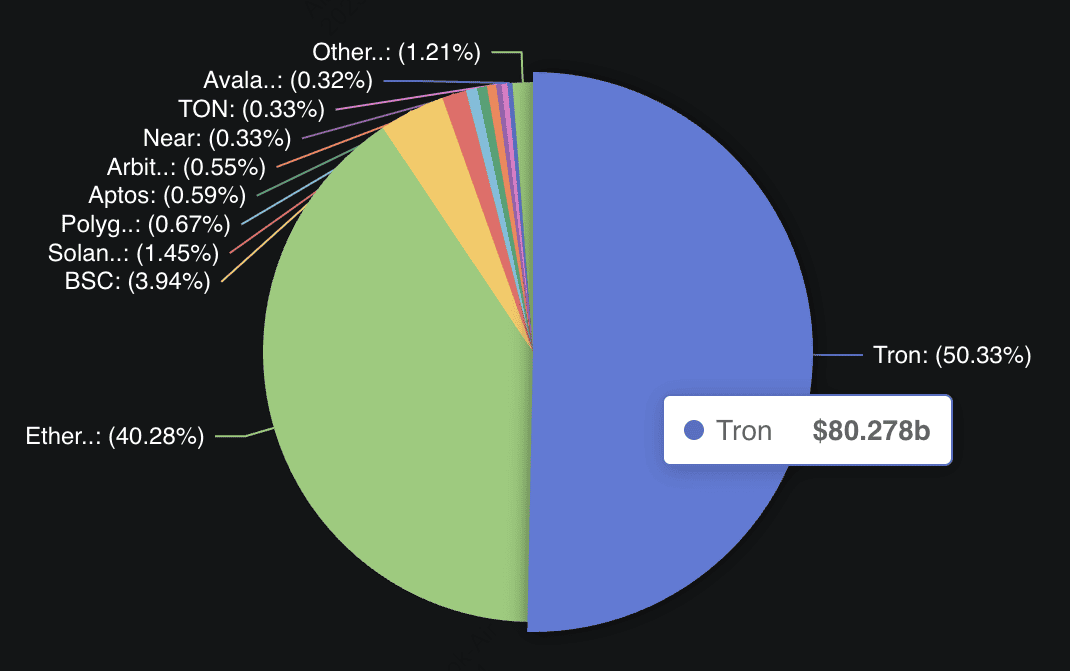
Tether (USDT) TRC‑20 (a.k.a. USDT‑TRON) is one of the largest and fastest-growing stablecoins globally in mid-2025. Operating on the TRON blockchain under the TRC‑20 token standard, it currently holds over $81 billion in circulation, making up more than 50% of all USDT issuance worldwide. In early July, TRON saw a 100% surge in USDT transactions, reflecting strong use from both retail users and institutions.
This explosive growth has turned USDT TRC‑20 into the backbone of TRON’s DeFi ecosystem, fueling lending, staking, trading, and payments. In this guide, we’ll dive into what USDT TRC‑20 is, why it’s booming, how it compares to ERC‑20, and how you can buy and securely use it on BingX.
What Is Tether (USDT) TRC‑20 on TRON?
USDT TRC‑20 is a USD-pegged stablecoin issued by Tether Limited on the TRON blockchain. It adheres to the TRC‑20 token standard, which allows seamless smart contract execution and token operations within the TRON Virtual Machine (TVM). Launched in 2020, USDT TRC‑20 rapidly gained traction due to TRON’s technical advantages, sub‑cent transaction fees averaging $0.0005–$0.001, and high throughput of 2,000 transactions per second (TPS), far exceeding Ethereum’s 15–30 TPS capacity.
As of mid‑2025, USDT TRC‑20 dominates Tether’s total supply, accounting for over $81 billion, more than 50% of USDT’s global market cap of $160 billion. This makes the TRON ecosystem the largest carrier of Tether USDT, surpassing Ethereum in early 2023. The surge reflects the token’s strong appeal in emerging markets, where low fees and fast transfers are crucial for remittances, P2P trading, and DeFi activities.
Unlike USDT ERC‑20 on Ethereum, USDT TRC‑20 relies on TRON’s Delegated Proof-of-Stake (DPoS) model, which uses a smaller validator set of 27 Super Representatives to process transactions almost instantly, with block times of ~3 seconds. This efficiency enables users to send stablecoin payments globally without worrying about high gas fees or network congestion.
Why Has USDT TRC‑20 Become So Popular in 2025?
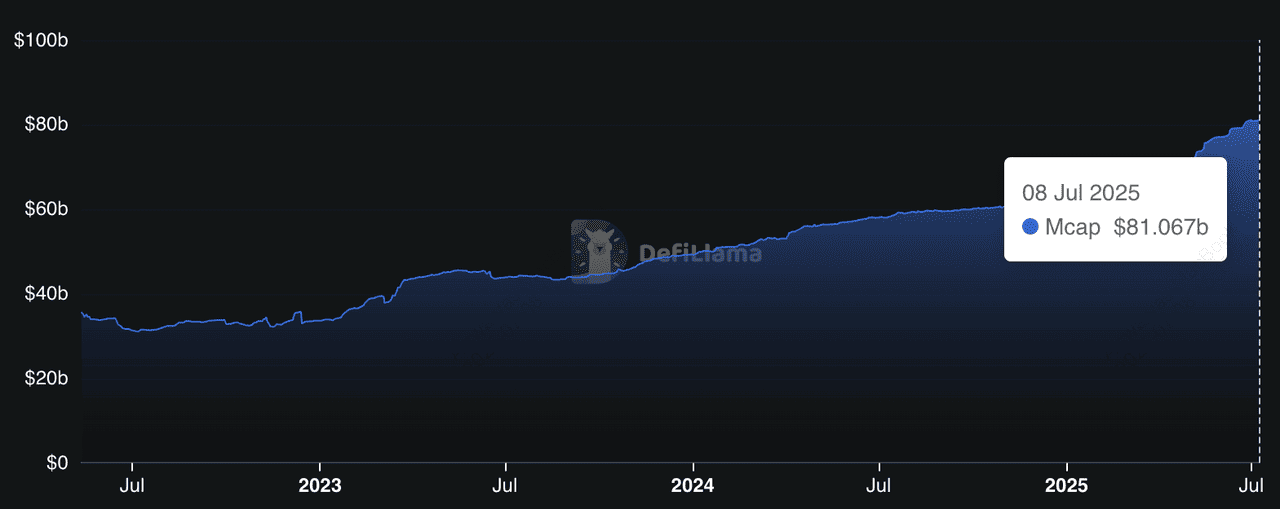
Tether (USDT) market cap on TRON Network | Source: DefiLlama
On July 1, 2025, daily USDT TRC‑20 transactions more than doubled, with over 1 million small transfers of <$1,000 alongside institutional-sized flows. Here are some reasons behind Tether's rising popularity in the TRON ecosystem:
• Massive adoption: Circulation grew from $6.7 billion in early 2021 to over $81 billion by mid‑2025, a nearly 1,100% increase.
• Minimal fees: Transactions on the TRON network typically cost a few cents, around ~$0.01–$0.50, and can even be free via TRX-staked bandwidth/energy.
• Lightning-fast transfers: Confirmations occur within 1–3 seconds, supporting high-frequency and micro-transfer use cases.
• Network efficiency: TRON offers near-instant transactions with negligible fees, ideal for micro‑payments and high‑volume DeFi activity.
• Ecosystem growth: As of July 2025, TRON’s DeFi TVL is around $5 billion, with USDT TRC‑20 covering over 99% of all stablecoins there.
• Ideal for everyday use: Particularly suited for remittances, micropayments, and trading, especially in regions with high Ethereum fees.
• Global relevance: With a nearly 60% market share, Tether dominates stablecoins, with deep liquidity, especially in Asia and emerging markets.
USDT TRC‑20 vs. USDT ERC‑20: A Comparison
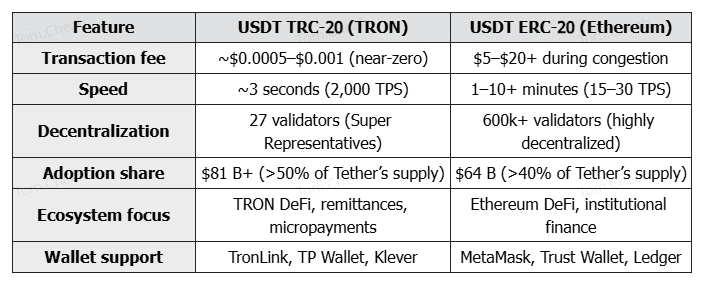
USDT TRC‑20 and USDT ERC‑20 are two variants of the same Tether stablecoin, each operating on a different blockchain with distinct technical and economic characteristics. As of mid‑2025, TRON hosts over $81 billion worth of USDT, representing more than 50% of Tether’s total $160 billion market cap, while Ethereum accounts for approximately around 40% of the share at $64 billion. This shift reflects a growing preference for TRC‑20 in high-frequency transactions and remittances, driven by TRON’s near-zero fees, averaging around ~$0.0005–$0.001 per transfer, and sub‑3 second confirmation times. In contrast, USDT ERC‑20, while still critical for DeFi and institutional applications, suffers from higher gas fees, often $5–$20 per transaction during peak demand, and slower confirmation times ranging from 1 to 10+ minutes.
The choice between the two often depends on user needs. TRC‑20 shines in emerging markets and P2P ecosystems, where affordability and speed are paramount, powering platforms like SunSwap, JustLend, and BitTorrent Chain. ERC‑20 remains dominant in Ethereum’s extensive DeFi landscape, supporting integrations with protocols like Aave, Uniswap, and Compound. Additionally, Ethereum’s decentralized network comprising 600k+ validators offers higher security and resilience compared to TRON’s 27 Super Representatives, which, while enabling faster block times, introduces centralization concerns.
How to Buy USDT TRC‑20 on BingX
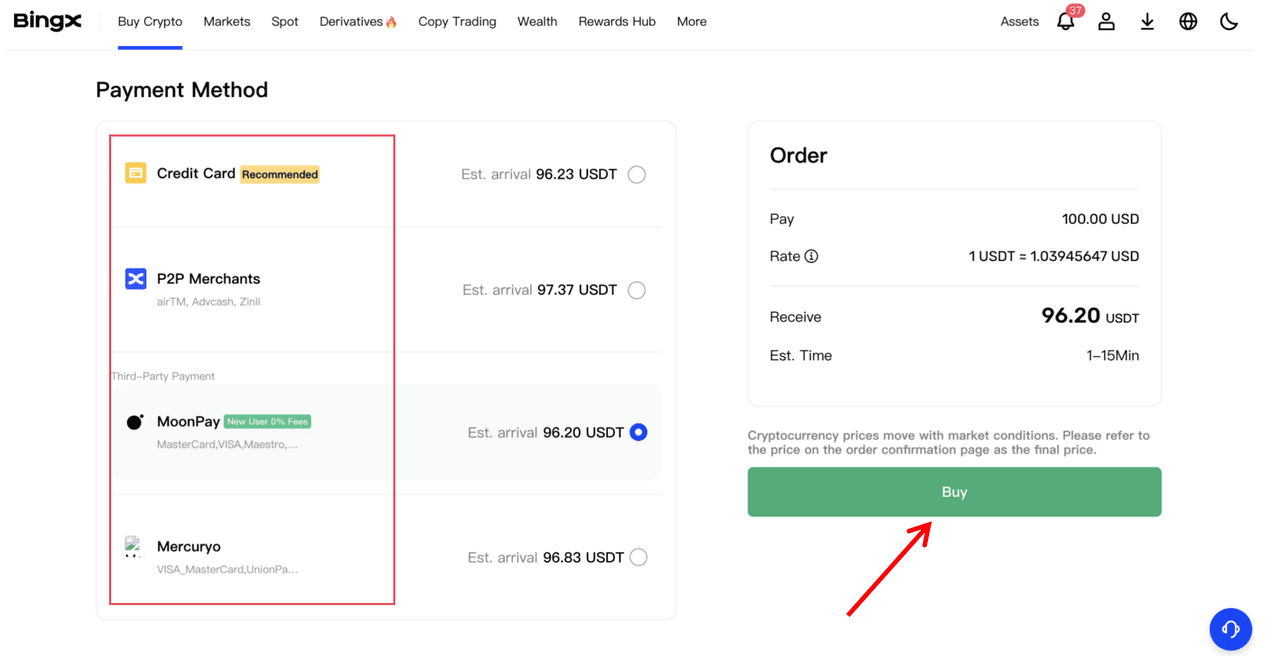
Buying USDT TRC‑20 on BingX is simple, fast, and suitable for both beginners and experienced traders. Follow these easy steps to get started:
1. Sign Up for a BingX Account: Go to bingx.com or download the BingX app. Register using your email or mobile number, then complete the quick identity verification process for better security and full access to trading features.
2. Fund Your Account with USDT: Easily buy USDT (TRC‑20) on BingX using Quick Buy or Fiat Deposit. With Quick Buy, you can purchase USDT instantly using a credit/debit card or supported payment methods in your local currency. Alternatively, use Fiat Deposit to add funds to your account and convert them to USDT (TRC‑20) directly on the platform.
3. Choose the TRC‑20 Network for Deposits: When adding USDT to your account, select the TRC‑20 network to ensure your funds are sent securely to the TRON blockchain, which supports USDT TRC‑20 transactions.
Next Steps (Optional): Fund your TRON-compatible wallet like TronLink, TP Wallet, or Klever, with your newly acquired USDT TRC-20 tokens. Always verify wallet addresses on TronScan to avoid scams and stake TRX if you want to save on network fees for frequent transactions.
Key Considerations Before Investing in USDT TRC‑20
Before adding USDT TRC‑20 to your portfolio, it’s important to understand the potential risks and factors that could impact its use and value.
• Centralization risk: TRON relies on just 27 Super Representatives to validate transactions, making it faster but less decentralized than Ethereum’s thousands of nodes—raising concerns about censorship or network control.
• Regulatory exposure: Global stablecoin regulations, including the US GENIUS Act passed in June 2025 and Europe’s MiCA framework, could impose stricter reserve and reporting requirements on issuers like Tether. These changes may affect USDT’s availability, cross-border liquidity, and operational flexibility across all supported networks.
• Contract authenticity: To avoid fake tokens, always confirm the official USDT TRC‑20 contract address on TronScan before sending or receiving funds.
• Market dependency: USDT maintains its peg through Tether’s reserves; any doubts about its backing could affect stability, as seen in past market stress events.
• Exchange compatibility: While TRC‑20 is widely supported on P2P platforms and smaller exchanges, ERC‑20 USDT still enjoys broader integration across DeFi protocols and institutional trading platforms.
Conclusion
USDT TRC‑20 has emerged as the fastest, cheapest, and most widely used stablecoin standard, especially across TRON’s growing DeFi ecosystem and Asia. With over $81 billion in circulation, minimal fees, and near-instant transfers, it's ideal for micro-transactions, remittances, and everyday crypto use in 2025.
However, users should weigh centralization risks, regulatory changes, and token authenticity. If your activity involves frequent small transfers or you’re active in TRON’s ecosystem, then USDT TRC‑20 on BingX is a compelling choice.
Disclaimer: This article is for informational purposes only, and not financial advice. Always perform your own research (DYOR) before trading or investing.